
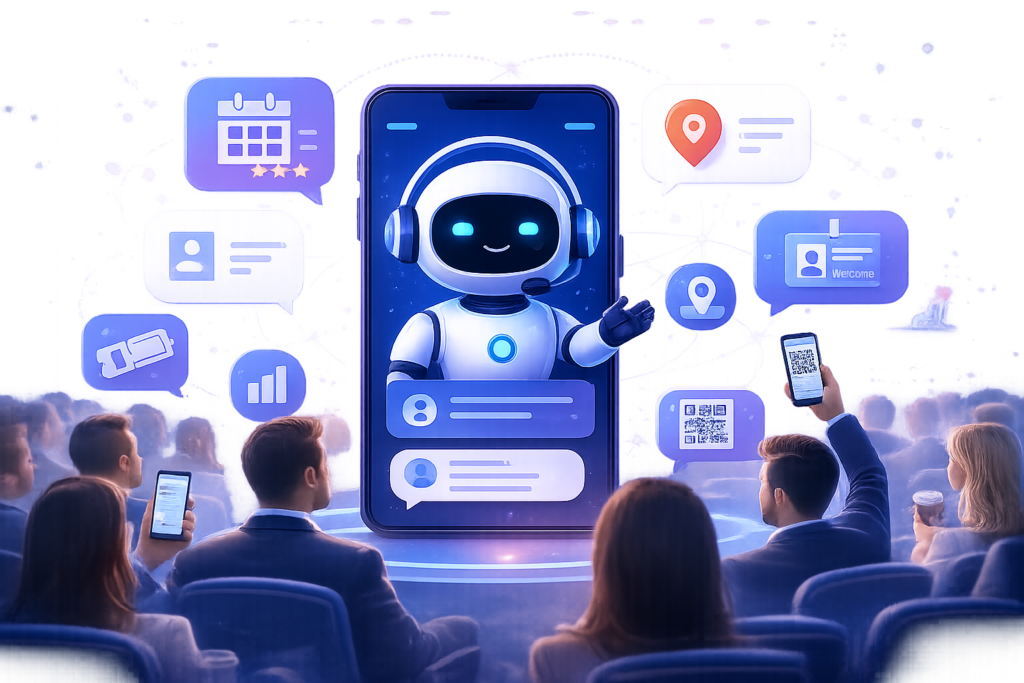
Discover how an Events & Conferences Chatbot improves attendee engagement, automates registrations, streamlines communication, enhances networking, and transforms modern event experiences with AI-powered automation.
Introduction
The events and conference industry has experienced a dramatic shift in recent years. From hybrid conferences and virtual summits to in-person corporate gatherings, organizers face increasing pressure to deliver seamless experiences while managing registrations, attendee communication, networking, schedules, and real-time support. This growing complexity has pushed businesses toward smarter digital solutions, and one of the most powerful technologies transforming the industry is the Events & Conferences Chatbot.
An AI-powered event chatbot acts as a virtual assistant that simplifies communication between organizers and attendees before, during, and after an event. Instead of manually answering repetitive questions, handling registration concerns, or providing schedule updates, businesses can automate these interactions with intelligent conversational systems. This results in improved efficiency, stronger attendee satisfaction, and reduced operational workload.
At ChattBotz, businesses increasingly recognize the importance of conversational AI for conferences, trade shows, webinars, exhibitions, and networking events. A well-designed chatbot helps event organizers deliver personalized attendee experiences while improving operational scalability. From answering FAQs to sending reminders and collecting attendee feedback, chatbot technology creates smarter event ecosystems that benefit both businesses and participants.
In this guide, you will explore how event chatbots work, their major benefits, implementation strategies, common mistakes, best practices, and future opportunities in the event management industry.
What Is an Events & Conferences Chatbot?
An Events & Conferences Chatbot is an AI-driven conversational assistant designed to automate communication and support for attendees, speakers, sponsors, exhibitors, and event organizers. These chatbots are typically integrated into websites, mobile applications, messaging platforms, or registration systems to provide instant support and personalized experiences.
Unlike traditional customer support systems, event chatbots can answer attendee questions instantly at any hour. Whether attendees want directions to a venue, information about keynote sessions, ticket confirmations, networking opportunities, or speaker schedules, a chatbot provides immediate responses without delays. This automation significantly improves convenience and reduces frustration among participants.
Modern chatbots use technologies such as natural language processing (NLP) and machine learning to understand user questions more accurately. Instead of requiring exact keywords, intelligent event bots can interpret conversational language and provide relevant answers naturally. For example, if an attendee asks, “When does the marketing panel start?” the chatbot can instantly deliver session timing, venue details, and even speaker information.
Another important capability of event chatbots is personalization. They can recommend relevant sessions based on attendee interests, remind participants about bookmarked sessions, or facilitate networking opportunities with like-minded professionals. This creates a highly customized conference experience that attendees increasingly expect in modern events.
Businesses organizing conferences, trade shows, workshops, educational summits, virtual expos, and networking events benefit greatly from automation because it minimizes repetitive administrative work while improving service quality. As event expectations continue to rise, chatbots are becoming essential digital assistants for modern event ecosystems.
Why Events and Conferences Need Chatbots More Than Ever
The event landscape has evolved significantly, and attendee expectations have changed just as rapidly. Today’s attendees expect fast responses, personalized communication, and seamless experiences from registration through post-event engagement. Traditional event management processes often struggle to meet these expectations, especially when organizers handle large attendee volumes. This is where event chatbots become increasingly valuable.
One of the biggest challenges event organizers face is handling repetitive attendee inquiries. Questions such as “Where can I park?”, “How do I access my ticket?”, or “Which room hosts the keynote?” consume countless hours of staff productivity. An event chatbot eliminates this burden by automating responses instantly and consistently.
Another major reason chatbots are becoming essential is the rise of hybrid and virtual events. Online conferences require continuous attendee support because participants join from different regions and time zones. A chatbot provides 24/7 attendee assistance, ensuring nobody feels unsupported regardless of when they access the event platform.
Personalization has also become a major expectation. Generic event experiences no longer satisfy attendees who want recommendations tailored to their professional goals or interests. AI chatbots can analyze attendee preferences and suggest sessions, workshops, speakers, or networking opportunities that align with their objectives.
Real-time communication is another key factor. During live events, schedules may change unexpectedly. Speakers may switch time slots, rooms may change, or important announcements may need immediate distribution. Chatbots make instant communication possible by sending live updates and notifications.
Additionally, businesses are becoming increasingly data-driven. Chatbots provide valuable attendee insights, including frequently asked questions, engagement patterns, popular sessions, and attendee behavior. These insights help organizers improve future event planning while maximizing return on investment.
The increasing demand for efficiency, scalability, personalization, and engagement makes chatbots more important than ever in the events and conference industry.
Key Benefits of an Events & Conferences Chatbot
Businesses implementing event chatbots often experience substantial improvements in attendee engagement, operational efficiency, and event success rates. The benefits extend far beyond simple automation and significantly influence the overall attendee experience.
One of the strongest benefits is instant attendee support. Traditional event help desks can quickly become overwhelmed, especially at large conferences with thousands of participants. Chatbots eliminate waiting times by answering common questions immediately. This improves attendee satisfaction while reducing staff pressure.
Another critical advantage is streamlined registration support. Many attendees abandon registrations because processes become confusing or time-consuming. Chatbots guide users through ticket selection, payment assistance, registration troubleshooting, and confirmation details, reducing friction and improving conversion rates.
Personalized attendee journeys also improve significantly. Instead of overwhelming users with generic schedules, AI chatbots can recommend customized agendas based on attendee interests, industries, or career goals. This level of personalization increases session participation and attendee satisfaction.
Chatbots also improve communication consistency. Human support teams may accidentally provide conflicting answers due to miscommunication, but chatbots deliver standardized information across every interaction. This creates a more reliable attendee experience.
For event organizers, cost efficiency is another substantial benefit. Hiring large customer support teams for conferences can be expensive. Event chatbots reduce operational costs by automating repetitive tasks while allowing human staff to focus on complex issues requiring personal assistance.
Lead generation opportunities improve as well. During conferences and trade shows, chatbots can collect attendee preferences, qualify leads, and share relevant information with exhibitors or sponsors. This creates stronger business networking opportunities and increases sponsor value.
Finally, post-event engagement becomes easier through chatbot-driven surveys, content sharing, follow-up communication, and attendee feedback collection. This strengthens long-term relationships and improves future event performance.
How Events & Conferences Chatbots Improve Attendee Engagement
Attendee engagement is one of the strongest indicators of event success. Even the most well-planned conference can fail to create value if attendees remain disconnected or overwhelmed. Event chatbots solve this problem by creating more interactive, personalized, and responsive experiences.
One of the primary ways chatbots improve engagement is through proactive communication. Rather than waiting for attendees to search for information, chatbots can send reminders about upcoming sessions, networking opportunities, speaker panels, or workshops aligned with attendee interests. These proactive notifications encourage participation and reduce missed opportunities.
Networking is another area where engagement improves dramatically. Conferences often struggle to facilitate meaningful professional connections because attendees may not know who to approach. AI-powered networking chatbots can recommend people with similar interests, complementary industries, or shared goals, helping attendees maximize relationship-building opportunities.
Interactive event experiences are also enhanced through chatbot functionality. Attendees can participate in live polls, Q&A sessions, quizzes, or feedback requests directly through chatbot interfaces. This encourages active participation rather than passive observation.
Virtual and hybrid conferences particularly benefit from chatbot-driven engagement. Online attendees often feel isolated or disconnected compared to physical attendees. Chatbots bridge this gap by providing instant support, networking recommendations, session assistance, and real-time communication that helps remote participants feel involved.
Additionally, event chatbots reduce information overload. Large conferences can become overwhelming when attendees receive excessive schedules, emails, and announcements. Chatbots organize information into personalized, conversational interactions that feel easier to manage and more useful.
Higher attendee engagement typically leads to improved satisfaction, stronger event reputation, increased return attendance, and better sponsor experiences. As a result, chatbot adoption continues growing across industries hosting conferences and events.
Essential Features Every Events & Conferences Chatbot Should Include
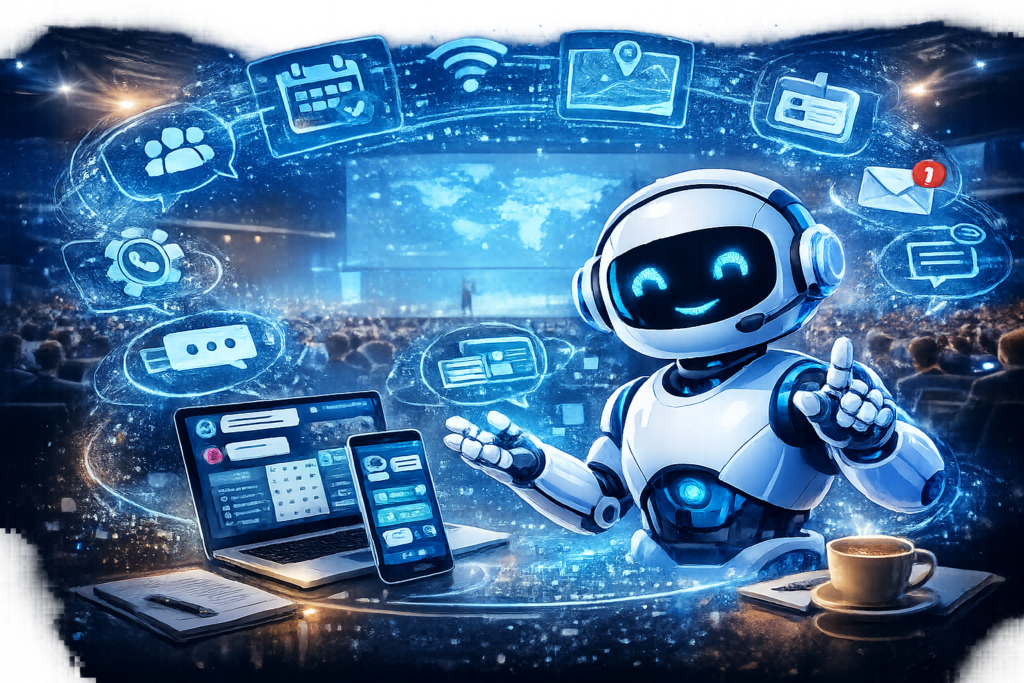
Not all event chatbots deliver the same level of value. The most successful solutions include advanced capabilities that improve convenience, personalization, and attendee satisfaction. Choosing the right features is essential for achieving meaningful event outcomes.
A strong chatbot should first include instant FAQ automation. Attendees consistently ask repetitive questions regarding schedules, speakers, locations, tickets, parking, venue maps, accommodations, and event policies. Automating these responses improves efficiency while reducing confusion.
Registration and ticketing support is equally important. Attendees should be able to confirm registrations, access ticket details, troubleshoot issues, and receive reminders without needing manual assistance.
Schedule management features add tremendous value as well. Event attendees often struggle to keep track of sessions, workshops, and speaker timings. A chatbot capable of providing personalized schedules and live updates ensures participants stay informed.
Networking support has become increasingly important in modern conferences. Smart chatbots can recommend relevant professional connections and facilitate introductions based on attendee profiles or business interests.
Multi-language support is particularly beneficial for international conferences where attendees come from diverse regions. Providing multilingual assistance improves accessibility and attendee inclusivity.
Analytics and reporting features are also crucial. Organizers should track attendee engagement, frequently asked questions, session popularity, and behavioral trends to improve future events.
Finally, chatbot integration with CRM systems, marketing automation platforms, and event management software creates smoother workflows and stronger data management capabilities.
How AI and Automation Are Transforming Event Experiences
Artificial intelligence has significantly changed how businesses organize, manage, and optimize conferences and events. Traditional event management methods often involve extensive manual coordination, delayed communication, and limited personalization. However, AI-powered chatbots now provide scalable solutions that improve efficiency while enhancing attendee experiences at every stage of the event lifecycle.
One major transformation involves attendee communication. Before artificial intelligence, organizers relied heavily on emails and manual customer support to answer participant questions. This often resulted in slow responses and inconsistent experiences. An AI-powered chatbot centralizes communication by providing instant, consistent, and intelligent assistance around the clock. Attendees no longer need to search through long email threads or event websites to find critical information.
Predictive personalization is another revolutionary advantage. AI systems can analyze attendee registration details, previous event behavior, preferences, and engagement patterns to recommend relevant sessions, networking opportunities, exhibitors, or workshops. This creates a more meaningful and productive attendee experience.
Automation also improves operational efficiency behind the scenes. Event organizers can automate reminders, registration confirmations, speaker announcements, venue directions, and post-event follow-ups. This reduces manual administrative work and allows teams to focus on strategic event improvements.
Virtual and hybrid conferences benefit even more from chatbot automation. Since remote attendees cannot easily approach staff for help, chatbots become digital assistants capable of offering guidance instantly. They improve attendee confidence while reducing drop-off rates in virtual participation.
Furthermore, AI chatbots continuously learn from attendee interactions. Over time, they improve their ability to answer questions, recognize user intent, and provide better support. This ongoing optimization helps businesses improve future event outcomes while maintaining a higher standard of attendee engagement.
Events & Conferences Chatbot Use Cases Across Different Industries
The flexibility of an Events & Conferences Chatbot makes it valuable across many industries. While conferences vary in purpose and structure, chatbot technology consistently improves communication, engagement, and attendee satisfaction.
Corporate conferences frequently use chatbots for employee communication, leadership summits, annual meetings, and training programs. Employees can instantly access schedules, room locations, session updates, and networking opportunities through conversational interfaces. This creates smoother organizational experiences while reducing internal communication bottlenecks.
Trade shows and exhibitions benefit significantly because exhibitors often receive repetitive questions from visitors. Chatbots can help attendees locate booths, recommend exhibitors based on interests, provide product details, and schedule meetings with vendors. This improves exhibitor ROI while increasing visitor satisfaction.
Educational institutions hosting academic conferences, seminars, and student events use chatbots to provide registration support, session information, speaker updates, and campus navigation assistance. Students and attendees benefit from instant access to event resources without needing administrative intervention.
Healthcare and medical conferences particularly benefit from intelligent scheduling support. Medical professionals often attend multiple technical sessions simultaneously, making personalized scheduling essential. Chatbots simplify planning and provide updates about keynote presentations, research discussions, and accreditation sessions.
Technology and startup conferences increasingly rely on chatbots to facilitate networking among founders, investors, developers, and entrepreneurs. AI matchmaking capabilities help participants connect with relevant people, increasing collaboration opportunities and business outcomes.
Entertainment and media events also leverage chatbot technology for ticket management, schedule reminders, exclusive content sharing, and audience engagement activities. As industries continue digitizing event experiences, chatbot adoption is becoming increasingly widespread.
How an Event Chatbot Improves Registration and Ticketing Processes
Event registration is one of the most critical phases of conference management. A complicated or confusing registration experience can discourage potential attendees and reduce event participation. Event chatbots significantly improve this process by making registrations more intuitive, conversational, and efficient.
Traditional registration systems often overwhelm attendees with long forms, unclear instructions, and technical difficulties. Chatbots simplify registration through guided conversations that help users select ticket types, confirm event details, and complete sign-ups smoothly. Instead of navigating multiple pages, attendees receive step-by-step assistance.
Chatbots also reduce abandoned registrations. Many users leave registration pages because of unanswered questions regarding pricing, schedules, venue access, or ticket categories. A chatbot instantly addresses concerns, increasing conversion rates and reducing lost registrations.
Payment support is another valuable advantage. Attendees may face payment errors, confusion about invoices, or uncertainty regarding ticket confirmation. Chatbots can assist users in resolving common payment-related issues quickly, improving trust and reducing frustration.
Ticket management becomes easier as well. Participants can retrieve confirmation emails, download digital passes, check QR codes, or update registration details through chatbot conversations. This reduces pressure on support teams during busy event periods.
For organizers, registration automation improves data accuracy and attendee tracking. Since chatbot interactions are logged, businesses gain deeper visibility into attendee interests, registration bottlenecks, and frequently asked concerns. These insights support better event planning and stronger marketing strategies.
Ultimately, smoother registration experiences increase attendee confidence and improve first impressions, which can significantly influence overall event satisfaction.
Personalization: Why Attendees Expect Smarter Event Experiences

Modern event attendees no longer want one-size-fits-all experiences. They expect personalization that aligns with their goals, interests, industries, and schedules. Event chatbots play an essential role in delivering these customized experiences at scale.
A personalized event experience begins before the event itself. During registration, chatbots can collect attendee preferences and goals. Whether someone attends for networking, education, investment opportunities, or product discovery, the chatbot can use this information to recommend relevant sessions.
For example, an attendee interested in digital marketing may receive recommendations for SEO workshops, advertising panels, or growth strategy discussions. Meanwhile, another attendee focused on leadership may receive executive-focused session recommendations. This targeted guidance improves attendee satisfaction and event value.
Networking personalization is another powerful benefit. Conferences can feel overwhelming, especially for first-time attendees who may struggle to identify meaningful connections. AI chatbots analyze attendee profiles and recommend valuable networking opportunities based on professional interests or shared goals.
Real-time personalization during events further improves experiences. If attendees miss a session or change interests, chatbots can instantly adjust recommendations and provide alternative suggestions. This dynamic assistance helps attendees maximize their time.
Personalization also strengthens post-event engagement. Chatbots can share relevant recordings, resources, or follow-up materials tailored to attendee participation history. This extends value beyond the event itself and improves retention for future conferences.
In an increasingly competitive events market, personalization is no longer optional. Businesses using intelligent chatbots gain an advantage by delivering experiences attendees genuinely value.
Common Mistakes Businesses Make When Implementing Event Chatbots
Although event chatbots offer substantial advantages, businesses often make avoidable mistakes that reduce effectiveness and negatively impact attendee experiences. Understanding these challenges helps organizations implement chatbot solutions more successfully.
One of the most common mistakes is poor chatbot planning. Some businesses deploy chatbots without clearly defining goals. A chatbot intended for registration assistance should function differently from one designed for networking or attendee support. Without clear objectives, chatbot performance becomes inconsistent.
Another frequent mistake involves limited training data. Chatbots require comprehensive information about event schedules, speakers, FAQs, venues, policies, and attendee concerns. Incomplete chatbot training results in poor responses that frustrate users instead of helping them.
Over-automation is another serious issue. While automation improves efficiency, removing all human assistance can create problems for attendees facing unique situations. The best event chatbot strategies include seamless escalation to human support when necessary.
Ignoring mobile optimization also reduces effectiveness. Since many attendees rely on smartphones during events, chatbots must function smoothly across mobile devices and event applications.
Businesses sometimes neglect chatbot testing before launch. Failing to test real attendee scenarios can result in broken workflows, inaccurate answers, or technical errors during live events. Thorough testing helps prevent operational disruptions.
Finally, some organizations overlook post-event analysis. Chatbot analytics reveal valuable information regarding attendee concerns, engagement patterns, and improvement opportunities. Ignoring this data limits future optimization potential.
Avoiding these mistakes helps businesses maximize chatbot performance while improving attendee trust and event outcomes.
Best Practices for Building a High-Performing Events & Conferences Chatbot
Creating a successful chatbot requires more than automation alone. Businesses must design chatbot experiences strategically to ensure usability, engagement, and reliability.
First, define clear objectives before implementation. Determine whether the chatbot will primarily support registration, attendee engagement, networking, customer service, or post-event feedback. Defined goals improve functionality and user satisfaction.
Second, prioritize user experience. Chatbot conversations should feel natural, intuitive, and easy to understand. Avoid robotic interactions or overly technical language that may confuse attendees.
Third, maintain updated event information. Chatbots must reflect accurate schedules, venue details, speaker updates, and announcements in real time. Outdated information damages trust and attendee confidence.
Fourth, implement human escalation options. Complex attendee questions sometimes require personalized assistance. Providing easy access to live support improves satisfaction and prevents frustration.
Fifth, leverage analytics for continuous improvement. Monitor frequently asked questions, engagement trends, and drop-off points to refine chatbot experiences.
Businesses should also follow trusted AI guidance and user experience recommendations outlined in Google Search Central for improving helpful content and digital experiences: Google Search Central
Adopting these best practices helps organizations create chatbot experiences that genuinely improve conference outcomes.
FAQs
1. What is an Events & Conferences Chatbot?
An Events & Conferences Chatbot is an AI-powered virtual assistant designed to automate attendee communication, registration support, scheduling, networking, and event-related information sharing.
2. Can event chatbots support virtual conferences?
Yes. Event chatbots are especially valuable for virtual and hybrid conferences because they provide real-time assistance, session recommendations, troubleshooting support, and attendee engagement features.
3. Do chatbots replace human event staff?
No. Chatbots automate repetitive tasks while allowing staff to focus on more complex attendee needs. The most successful implementations combine automation with human support.
4. Can a chatbot improve attendee engagement?
Absolutely. Chatbots encourage engagement through personalized recommendations, live reminders, networking suggestions, polls, and interactive event experiences.
5. Are event chatbots suitable for small businesses?
Yes. Even smaller conferences benefit from automation because chatbots reduce workload, improve attendee experiences, and streamline communication without requiring large support teams.
6. How do chatbots improve event registration?
Chatbots simplify registration by guiding attendees step-by-step, answering questions instantly, reducing abandoned sign-ups, and helping resolve ticketing issues.
7. Are event chatbots secure?
Modern chatbot systems often include secure integrations and data protection features. Businesses should always prioritize platforms following privacy and security standards.
8. Can chatbots collect attendee feedback?
Yes. Chatbots can automatically request surveys, gather attendee opinions, and collect post-event insights for future improvements.
Best Practices Summary
To maximize results with an Events & Conferences Chatbot, businesses should:
- Define clear chatbot goals before implementation
- Prioritize attendee convenience and user experience
- Maintain updated event information
- Personalize attendee recommendations
- Use chatbot analytics for continuous optimization
- Include human support escalation when necessary
- Optimize chatbot experiences for mobile devices
- Test chatbot workflows thoroughly before launch
Following these strategies helps businesses improve attendee engagement, operational efficiency, and event satisfaction while reducing administrative workload.
Conclusion
As conferences, exhibitions, trade shows, and hybrid events continue evolving, attendee expectations are becoming increasingly sophisticated. Businesses that fail to provide fast communication, personalization, and seamless experiences risk falling behind competitors. An Events & Conferences Chatbot offers a scalable solution for improving attendee engagement, simplifying registration, enhancing networking, and delivering better event outcomes.
At ChattBotz, organizations can explore intelligent chatbot solutions designed to transform event experiences while reducing operational challenges. By leveraging AI-powered automation strategically, businesses can create more engaging, efficient, and memorable conferences that attendees genuinely value.
Want to Implement This Easily?
Prompt Text:
You are an expert consultant. Based on the blog post titled “Events & Conferences Chatbot”, provide a step-by-step, practical implementation guide. Include tools, best practices, common mistakes to avoid, and advanced tips. Assume the reader wants to implement everything discussed in this article effectively.
Call to Action:
Want our help implementing this? Just reach out to us via our website contact form:
ChattBotz Contact Us