
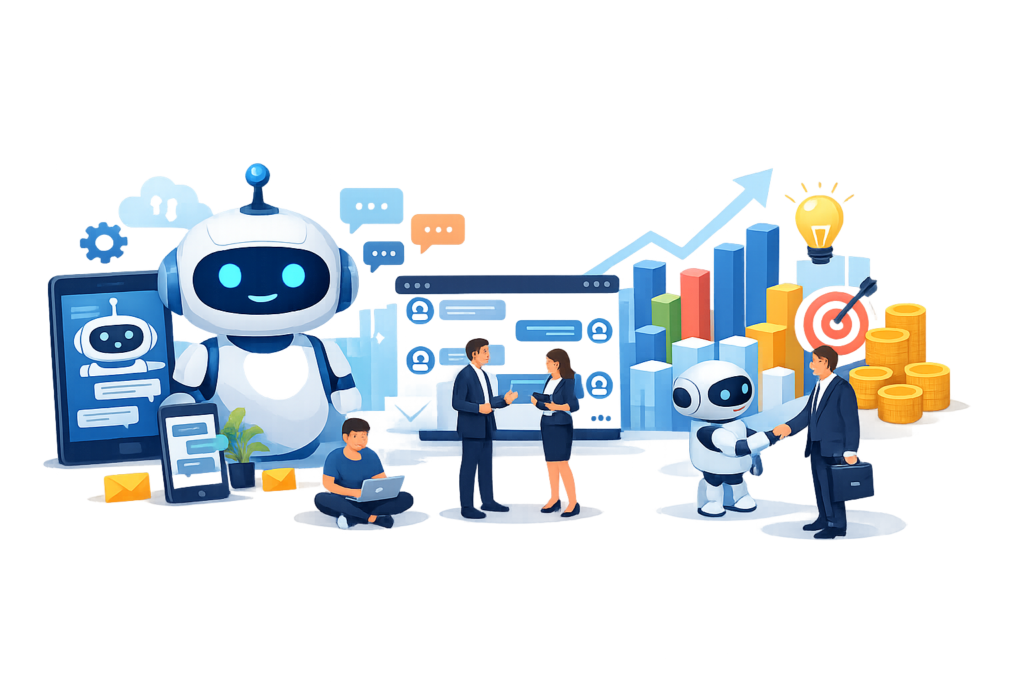
Discover how a Design Chatbot improves customer engagement, automates creative workflows, enhances user experience, and helps businesses scale design-related interactions using AI-powered conversational technology.
Introduction
Modern businesses are rapidly transforming the way they interact with users online. Customers now expect instant communication, personalized experiences, and seamless digital interactions across websites, mobile applications, and social media channels. A Design Chatbot helps organizations meet these expectations by combining artificial intelligence, conversational UX, automation, and creative workflows into one intelligent solution.
As AI adoption continues to grow, businesses are using chatbots not only for customer support but also for design assistance, lead generation, onboarding, creative recommendations, branding guidance, and interactive experiences. A well-designed chatbot can significantly improve conversion rates, reduce operational workload, and create a more engaging user journey. Companies that invest in conversational AI are positioning themselves for long-term digital success.
At ChattBotz, businesses can explore advanced chatbot solutions tailored to modern customer expectations. Whether a company wants to automate customer communication, improve creative collaboration, or streamline online interactions, chatbot-driven systems are becoming essential digital assets in today’s competitive marketplace.
What Is a Design Chatbot?
A Design Chatbot is an AI-powered conversational system specifically created to support design-related interactions, user experiences, and creative processes. Unlike traditional chatbots that mainly answer simple customer support questions, design chatbots are built to provide visually engaging, interactive, and personalized experiences. They can assist users with branding suggestions, UI recommendations, product customization, workflow guidance, and even automated design generation.
These chatbots use technologies such as Natural Language Processing (NLP), machine learning, conversational AI, and predictive analytics to understand user intent and respond intelligently. Many advanced systems integrate directly with design platforms, CRMs, customer support tools, and marketing automation software. This allows businesses to create unified customer experiences while reducing manual work.
According to <u>Google’s AI principles</u>, responsible AI systems should prioritize usability, transparency, and user benefit. Businesses implementing chatbot systems should follow guidance from Google AI Principles to ensure ethical and user-friendly deployment. A properly developed design chatbot enhances communication while maintaining trust and accessibility standards.
Why Businesses Are Investing in Design Chatbots
Businesses are investing heavily in chatbot technology because customer expectations have fundamentally changed. Users no longer want to wait hours for responses or navigate complicated interfaces. They expect intelligent, immediate, and personalized communication that helps them achieve goals quickly and efficiently. A design chatbot fulfills these expectations while also supporting business growth.
One major advantage is operational efficiency. Companies can automate repetitive conversations, qualify leads, answer design-related questions, and guide customers through workflows without requiring large support teams. This reduces costs while improving scalability. A chatbot can handle thousands of conversations simultaneously, providing consistent experiences around the clock.
Another important factor is customer engagement. Interactive chatbot systems create personalized journeys that improve user satisfaction and retention. Research from Google UX Design Guidelines emphasizes the importance of conversational design in improving digital interactions. Businesses using conversational AI often experience higher conversion rates because users receive immediate assistance tailored to their needs.
Core Features of an Effective Design Chatbot
An effective design chatbot combines conversational intelligence with usability-focused features that improve customer interactions. The most successful systems are not simply automated responders; they are dynamic digital assistants capable of understanding context, adapting responses, and guiding users toward meaningful outcomes.
One essential feature is Natural Language Understanding (NLU). This allows the chatbot to interpret user intent accurately instead of relying solely on keyword matching. Users can communicate naturally, and the system can still provide relevant responses. Another critical feature is visual interaction capability, including image sharing, button-based navigation, product previews, and interactive workflows.
Integration capabilities are equally important. A design chatbot should connect with CRM systems, email marketing tools, analytics platforms, customer support software, and content management systems. Following recommendations from Google Search Central, businesses should ensure chatbot-generated experiences remain helpful, user-focused, and technically optimized for performance and accessibility.
The Role of AI in Design Chatbots
Artificial intelligence is the foundation of modern design chatbot systems. AI enables chatbots to move beyond scripted interactions and provide intelligent, context-aware conversations that feel more natural and useful. Machine learning models analyze user behavior, conversation patterns, and engagement data to improve chatbot responses over time.
AI-powered design chatbots can assist with creative recommendations, branding decisions, layout suggestions, product configurations, and user personalization. For example, an eCommerce business may use a chatbot to recommend product designs based on customer preferences, while a SaaS company may use one to guide users through UI customization processes.
Generative AI is also transforming chatbot capabilities. Advanced systems can now generate content ideas, visual concepts, and design recommendations dynamically. Businesses implementing AI solutions should prioritize transparency and trustworthiness by following Google Responsible AI Practices. Ethical AI implementation helps businesses maintain customer confidence while maximizing automation benefits.
How Design Chatbots Improve User Experience
User experience plays a central role in digital success, and design chatbots significantly improve how users interact with websites and applications. Instead of forcing users to search through menus or documentation, chatbots provide immediate, conversational assistance tailored to user intent.
A well-designed chatbot reduces friction throughout the customer journey. Visitors can quickly find answers, receive recommendations, and complete tasks without unnecessary complexity. This creates smoother navigation experiences and increases overall engagement. Interactive design elements such as buttons, quick replies, multimedia integration, and guided workflows further enhance usability.
Accessibility is another major advantage. Chatbots can support multilingual communication, voice interactions, and adaptive interfaces that accommodate different user needs. Businesses should align chatbot experiences with accessibility best practices outlined by Google Accessibility Guidelines to ensure inclusive digital experiences for all users.
Design Chatbots for Lead Generation
Lead generation is one of the most valuable applications of chatbot technology. Traditional lead capture forms often create friction because users must manually complete multiple fields before receiving assistance. A design chatbot transforms this process into a conversational experience that feels more engaging and personalized.
Chatbots can qualify leads by asking targeted questions based on user interests, business goals, budgets, or project requirements. Instead of overwhelming users with lengthy forms, the chatbot collects information naturally through conversation. This often increases conversion rates while improving data accuracy.
Additionally, chatbots can integrate with CRM platforms and marketing automation tools to streamline lead management processes. Businesses can automatically categorize leads, trigger email campaigns, schedule consultations, and assign prospects to sales representatives. Following guidance from Google Analytics Best Practices helps organizations track chatbot performance effectively and optimize lead generation strategies.
The Importance of Conversational UI Design
Conversational UI design is a critical component of chatbot effectiveness. A chatbot must feel intuitive, natural, and easy to interact with. Poor conversational design can frustrate users and reduce engagement, even if the underlying AI technology is advanced.
Effective conversational design focuses on clarity, flow, personalization, and usability. Messages should be concise, helpful, and contextually relevant. Designers should avoid robotic or overly scripted language that makes interactions feel unnatural. Instead, the chatbot should guide users progressively while maintaining conversational consistency.
Visual hierarchy also matters. Buttons, menus, interactive cards, and quick actions improve navigation efficiency and reduce cognitive overload. Businesses developing chatbot interfaces should consider recommendations from Google Material Design to ensure modern, user-friendly interface standards are maintained across devices and platforms.
Industries Benefiting from Design Chatbots
Many industries are experiencing significant advantages from implementing design chatbot systems. In eCommerce, chatbots help customers discover products, customize orders, and receive instant support. In healthcare, conversational AI assists with appointment scheduling, patient guidance, and informational support.
The education industry uses chatbots to streamline student communication, onboarding, and learning assistance. Real estate businesses use conversational systems to qualify leads, showcase properties, and automate inquiry handling. Creative agencies leverage design chatbots to collect project requirements and guide clients through branding processes.
Hospitality, finance, SaaS, and customer support industries are also rapidly adopting conversational AI. The versatility of chatbot technology allows businesses across sectors to improve engagement, automate repetitive tasks, and deliver scalable customer experiences while maintaining operational efficiency.
Design Chatbots and SEO Performance
Although chatbots are primarily associated with user engagement, they also contribute indirectly to SEO performance. Improved user experience metrics such as lower bounce rates, increased session duration, and higher engagement levels can positively influence search visibility.
A chatbot helps users find information quickly, which increases content accessibility and reduces frustration. When visitors remain engaged longer and interact more frequently, search engines may interpret these signals as indicators of valuable content and positive user experiences.
Businesses should ensure chatbot systems do not negatively affect website speed or technical performance. Following optimization standards from Google PageSpeed Insights can help maintain fast-loading pages and strong Core Web Vitals performance. Technical optimization remains essential for both SEO and user satisfaction.
Common Mistakes Businesses Make with Design Chatbots
Many businesses implement chatbots without proper planning, resulting in poor user experiences and disappointing outcomes. One common mistake is over-automation. Some organizations rely too heavily on automation without providing access to human support when necessary. Users become frustrated when chatbots cannot resolve complex issues.
Another major issue is poor conversational flow. Chatbots with confusing navigation, repetitive responses, or unnatural language create negative impressions. Businesses often underestimate the importance of UX writing, conversation mapping, and user testing during chatbot development.
Lack of personalization is another critical mistake. Generic chatbot experiences fail to engage users effectively. Modern consumers expect personalized interactions tailored to their needs and preferences. Organizations should continuously analyze chatbot performance data and refine conversations based on user behavior and feedback to improve effectiveness over time.
Best Practices for Building a Successful Design Chatbot
Creating a successful design chatbot requires careful planning, user-centered design, and continuous optimization. Businesses should begin by clearly defining objectives such as lead generation, customer support, onboarding, or workflow automation. Clear goals help shape conversation architecture and functionality.
User research is equally important. Understanding audience behavior, pain points, and expectations allows businesses to create more relevant and engaging chatbot experiences. Conversation flows should be mapped carefully to ensure logical progression and minimal friction during interactions.
Performance monitoring and optimization should continue after deployment. Businesses should analyze metrics such as conversation completion rates, user satisfaction, engagement duration, and conversion performance. Following guidance from Google Search Essentials helps ensure chatbot-supported content ecosystems remain technically sound and user-focused.
Security and Privacy Considerations for Design Chatbots
Security and privacy are essential considerations when implementing chatbot systems. Since chatbots often process customer information, businesses must prioritize secure data handling, encryption, and compliance with privacy regulations.
One major risk involves storing sensitive user data without proper protection. Businesses should implement secure authentication protocols, encrypted communication channels, and strict access controls to prevent unauthorized access. Transparency regarding data usage is equally important for maintaining customer trust.
Organizations should also ensure chatbot integrations with third-party platforms remain secure. Vulnerabilities in APIs or plugins can expose systems to cyber threats. Best practices outlined by Google Security Best Practices provide valuable guidance for protecting web-based applications and conversational platforms from potential security risks.
The Future of Design Chatbots
The future of design chatbots is closely connected to advancements in artificial intelligence, machine learning, and immersive digital experiences. As conversational AI becomes more sophisticated, chatbots will increasingly support predictive personalization, emotional intelligence, and multimodal interactions.
Voice-enabled chatbot experiences are expected to grow significantly as businesses optimize for voice search and smart devices. AI systems may also become capable of generating real-time visual designs, branding concepts, and personalized user interfaces during conversations. These advancements will transform how businesses approach digital engagement and customer interaction.
Integration with augmented reality (AR), virtual reality (VR), and metaverse technologies may further expand chatbot capabilities. Future conversational systems could guide users through immersive digital environments while providing personalized assistance and interactive experiences. Businesses investing early in AI-driven communication technologies will likely gain significant competitive advantages.
Measuring the Success of a Design Chatbot
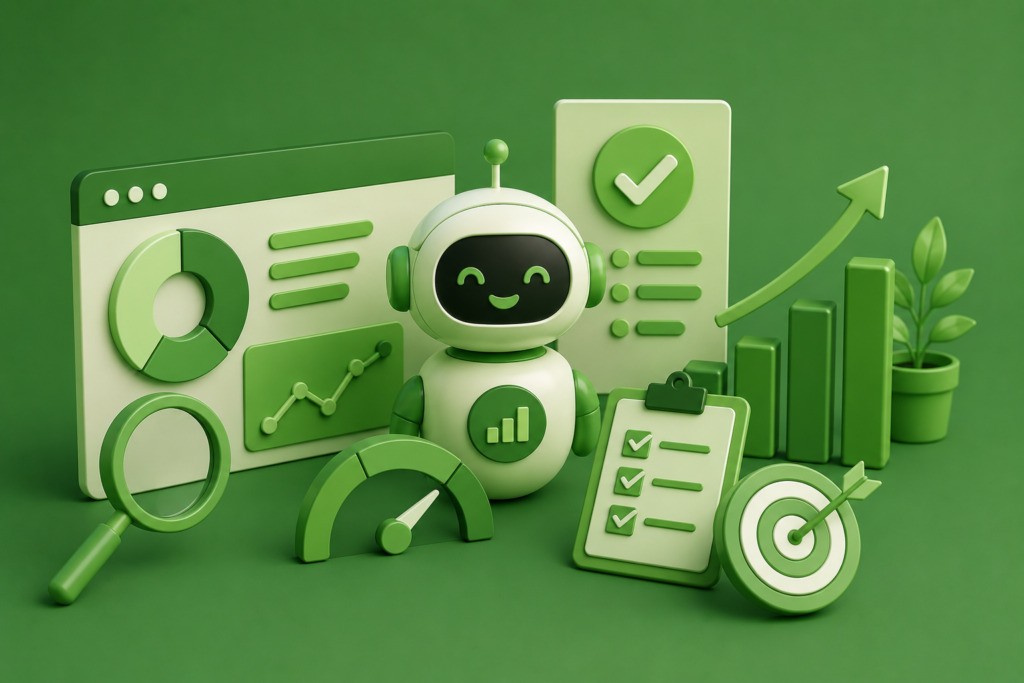
Measuring chatbot performance is essential for long-term success. Businesses should track key performance indicators (KPIs) that align with strategic objectives. These metrics may include engagement rates, lead conversions, customer satisfaction scores, support resolution times, and retention performance.
Analytics platforms provide valuable insights into user behavior and conversation effectiveness. Businesses can identify drop-off points, common user questions, and workflow bottlenecks to improve chatbot interactions continuously. A/B testing different conversational approaches also helps optimize user engagement and conversion performance.
Customer feedback remains one of the most valuable optimization tools. Organizations should encourage users to rate chatbot experiences and provide suggestions for improvement. Combining analytics data with qualitative feedback enables businesses to refine conversational strategies and maximize chatbot value over time.
FAQs
What is a design chatbot used for?
A design chatbot is used to automate and enhance design-related interactions, customer communication, user onboarding, creative assistance, and personalized digital experiences. Businesses use these systems to improve engagement and streamline workflows.
Are design chatbots only for large businesses?
No. Small businesses, startups, agencies, and enterprise organizations can all benefit from chatbot technology. Modern chatbot platforms provide scalable solutions suitable for different business sizes and budgets.
Can a design chatbot improve conversions?
Yes. Design chatbots often improve conversion rates by reducing friction, providing instant assistance, qualifying leads, and creating personalized customer journeys that encourage user engagement.
Is coding knowledge required to build a chatbot?
Not always. Many chatbot platforms offer no-code or low-code builders that allow businesses to create conversational workflows without advanced programming expertise.
Are AI chatbots secure?
AI chatbots can be secure when businesses implement proper encryption, authentication, secure APIs, and privacy compliance measures. Security should always be prioritized during development and deployment.
How long does it take to implement a chatbot?
Implementation timelines vary depending on complexity, integrations, and customization requirements. Simple chatbots may take days, while advanced enterprise systems can require several weeks or months.
Can chatbots integrate with websites and CRM systems?
Yes. Most modern chatbot platforms support integrations with websites, CRM software, analytics platforms, email marketing systems, and customer support tools.
Do design chatbots replace human employees?
No. Chatbots are designed to support and enhance human teams by automating repetitive tasks and improving efficiency. Human oversight remains essential for complex interactions and relationship management.
Best Practices Summary
Successful chatbot implementation requires a balance between technology, usability, and customer-centric design. Businesses should focus on creating helpful, engaging, and intuitive conversational experiences rather than simply automating responses.
The most effective chatbot strategies prioritize personalization, accessibility, performance optimization, and continuous improvement. Regular testing, analytics monitoring, and user feedback collection help organizations refine chatbot experiences and maintain long-term effectiveness.
Companies should also ensure compliance with security standards, accessibility guidelines, and ethical AI practices. By focusing on trust, transparency, and usability, businesses can create chatbot systems that deliver meaningful value to both users and organizations.
Conclusion
Design chatbot technology is transforming how businesses communicate, engage, and build digital experiences. From lead generation and customer support to creative assistance and workflow automation, conversational AI is becoming a critical component of modern business strategies.
Organizations that invest in intelligent chatbot systems gain advantages in scalability, customer engagement, operational efficiency, and user satisfaction. As AI capabilities continue to evolve, chatbot-driven experiences will become even more personalized, interactive, and immersive in the years ahead.
Businesses exploring AI-powered conversational solutions can learn more through ChattBotz and discover how advanced chatbot systems can support long-term digital growth and customer engagement strategies.
Want to Implement This Easily?
Prompt Text:
You are an expert consultant. Based on the blog post titled “Design Chatbot”, provide a step-by-step, practical implementation guide. Include tools, best practices, common mistakes to avoid, and advanced tips. Assume the reader wants to implement everything discussed in this article effectively.
Call to Action:
Want our help implementing this? Just reach out to us via our website contact form: Contact Us