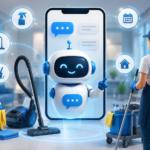
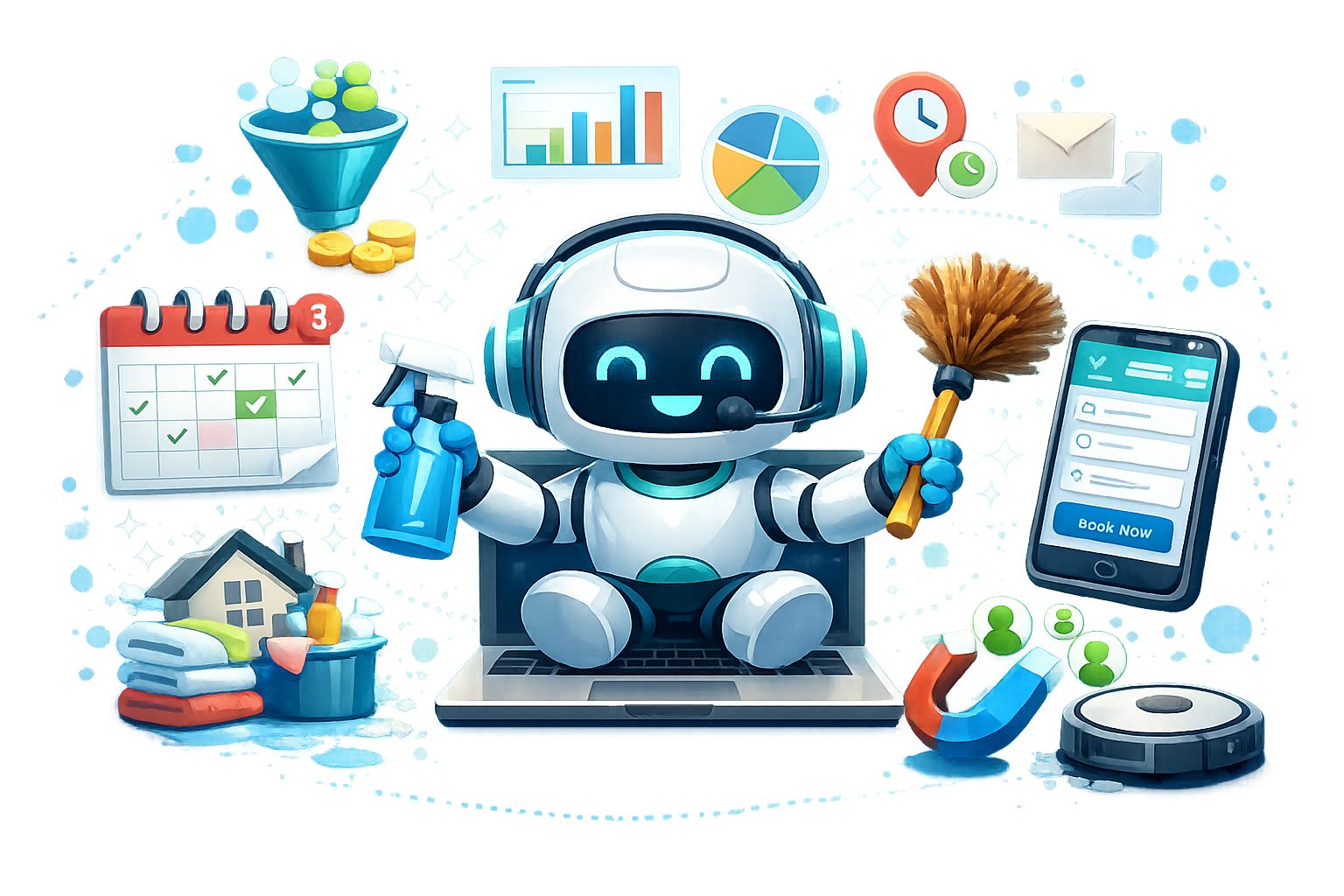

Discover how a cleaning services chatbot can automate bookings, boost customer engagement, and increase revenue. Learn strategies, tools, and best practices for 2026.
Introduction
The cleaning industry is evolving rapidly, driven by automation, customer expectations, and digital transformation. Businesses that rely solely on manual booking systems, phone calls, and delayed responses are falling behind. Today’s customers expect instant replies, seamless booking experiences, and personalized interactions—this is where a cleaning services chatbot becomes a game-changer.
A chatbot designed specifically for cleaning businesses can handle inquiries, schedule appointments, provide pricing estimates, and even follow up with customers—all without human intervention. This not only improves efficiency but also ensures that no lead is lost due to delayed responses. According to modern UX and automation standards, speed and convenience are key drivers of customer satisfaction, and chatbots deliver both effectively.
On ChattBotz, businesses are leveraging AI-driven chatbot solutions to streamline operations and increase conversions. This guide will walk you through everything you need to know about cleaning service chatbots—from benefits and features to implementation and optimization—ensuring your business stays ahead in a competitive market.
What Is a Cleaning Services Chatbot and How Does It Work?
A cleaning services chatbot is an AI-powered virtual assistant designed to interact with customers via websites, messaging apps, or social platforms. It uses technologies like natural language processing (NLP) and machine learning to understand user queries and provide accurate responses in real time. Unlike traditional customer service tools, chatbots operate 24/7, ensuring consistent engagement.
At its core, a chatbot works by analyzing user input, identifying intent, and delivering pre-trained or dynamically generated responses. For example, if a customer asks about pricing for a deep cleaning service, the chatbot can instantly provide a quote based on predefined rules or integrated pricing systems. Advanced bots can even ask follow-up questions to refine the estimate.
Modern chatbot systems are built using frameworks aligned with best practices outlined in Google Search Essentials, ensuring they enhance user experience without negatively impacting SEO. When implemented correctly, they contribute to better engagement metrics, lower bounce rates, and higher conversion rates.
Why Cleaning Businesses Need Chatbots in 2026
The cleaning industry is becoming increasingly competitive, and customer expectations are higher than ever. Businesses that fail to adapt to digital transformation risk losing clients to competitors who offer faster, more convenient services. A chatbot is no longer a luxury—it’s a necessity.
One of the biggest advantages is instant response time. Studies show that customers are more likely to convert when their queries are answered immediately. Chatbots eliminate wait times, ensuring every inquiry is addressed promptly. This aligns with user experience principles recommended by Google Page Experience Guidelines, which emphasize responsiveness and usability.
Additionally, chatbots help reduce operational costs by automating repetitive tasks such as answering FAQs, scheduling appointments, and sending reminders. This allows staff to focus on high-value activities like service delivery and customer retention. As a result, businesses can scale efficiently without significantly increasing overhead.
Key Features of a High-Performing Cleaning Services Chatbot
A successful chatbot is not just about automation—it’s about delivering value. The best cleaning service chatbots come equipped with features that enhance both user experience and operational efficiency. These features are essential for maximizing ROI.
One critical feature is automated booking. Customers should be able to select services, choose dates, and confirm appointments without human assistance. Integration with calendars ensures real-time availability, reducing scheduling conflicts. Another important feature is dynamic pricing, which allows the chatbot to provide accurate quotes based on service type, property size, and location.
Security and data protection are equally important. Chatbots must comply with data privacy standards to ensure customer information is safe. Following guidelines such as those outlined in Google Security Best Practices helps build trust and credibility. A secure chatbot not only protects users but also enhances your brand reputation.
How Chatbots Improve Customer Experience in Cleaning Services
Customer experience is the backbone of any successful cleaning business. A chatbot enhances this experience by providing instant, accurate, and personalized interactions. Unlike human agents, chatbots are always available, ensuring customers can get assistance anytime.
Personalization is a major advantage. Chatbots can remember previous interactions, preferences, and booking history, allowing them to offer tailored recommendations. For instance, if a customer regularly books weekly cleaning, the chatbot can suggest recurring appointments, making the process more convenient.
Moreover, chatbots reduce friction in the customer journey. Instead of navigating multiple pages or making phone calls, users can complete their entire booking process within a single chat interface. This streamlined experience aligns with usability standards recommended by Google UX Design Principles, improving satisfaction and retention rates.
SEO Benefits of Using a Cleaning Services Chatbot
While chatbots are primarily known for improving customer engagement, they also offer significant SEO benefits. Search engines prioritize websites that provide excellent user experiences, and chatbots contribute to this in several ways.
First, chatbots increase dwell time by engaging users in meaningful interactions. When visitors spend more time on your website, it signals to search engines that your content is valuable. This can positively impact rankings, especially when combined with high-quality content.
Second, chatbots help reduce bounce rates. Instead of leaving the site due to unanswered questions, users can interact with the chatbot to find the information they need. This aligns with recommendations from Google Helpful Content System, which emphasizes user-focused content and engagement.
Finally, chatbots can assist in content discovery by guiding users to relevant pages, services, or blog posts. This internal linking structure improves site navigation and enhances overall SEO performance.
Automation of Booking and Scheduling with Chatbots
Booking and scheduling are among the most time-consuming tasks for cleaning businesses. A chatbot can fully automate this process, making it faster, more efficient, and error-free. Customers can book services in just a few clicks, without the need for phone calls or emails.
The chatbot interacts with users to gather necessary details such as service type, location, preferred date, and time. It then checks availability and confirms the booking instantly. This real-time functionality eliminates double bookings and scheduling conflicts.
Integration with CRM and calendar systems further enhances efficiency. Businesses can manage all appointments from a centralized dashboard, ensuring smooth operations. Following technical best practices from Google Technical SEO Guidelines ensures that these integrations do not affect website performance or indexing.
Lead Generation and Conversion Optimization Using Chatbots

A cleaning services chatbot is a powerful tool for lead generation. It captures visitor information, qualifies leads, and guides them through the conversion funnel. Unlike traditional forms, chatbots offer an interactive and engaging way to collect data.
For example, a chatbot can ask targeted questions to understand customer needs and recommend suitable services. This personalized approach increases the likelihood of conversion. Additionally, chatbots can offer incentives such as discounts or free consultations to encourage bookings.
Conversion optimization is further enhanced through follow-ups. Chatbots can send reminders, confirmations, and even feedback requests, ensuring continuous engagement. These strategies align with conversion rate optimization principles supported by Google Analytics Best Practices, helping businesses track and improve performance.
Integration with Websites, WhatsApp, and Social Media Platforms
To maximize effectiveness, a cleaning services chatbot should be integrated across multiple platforms. Customers interact with businesses through various channels, and a consistent experience is essential.
Website integration is the foundation. A chatbot embedded on your site can assist visitors in real time, improving engagement and conversions. Additionally, integration with messaging platforms like WhatsApp allows businesses to reach customers where they are most active.
Social media platforms such as Facebook and Instagram also offer chatbot integration, enabling businesses to respond to inquiries instantly. Ensuring seamless integration across channels aligns with digital experience standards from Google Multi-Channel Strategy Guide, enhancing visibility and user satisfaction.
Advanced AI Capabilities in Modern Cleaning Chatbots
As artificial intelligence continues to evolve, cleaning services chatbots are becoming more intelligent, adaptive, and capable of handling complex interactions. Modern chatbots go beyond simple rule-based responses and leverage machine learning to continuously improve their performance based on user interactions.
One of the most impactful advancements is natural language understanding (NLU). This allows chatbots to interpret customer intent even when queries are phrased differently. For example, whether a user types “I need house cleaning tomorrow” or “Can you clean my home?”, the chatbot understands both requests and responds appropriately. This flexibility significantly enhances user satisfaction.
Another powerful capability is predictive analytics. Chatbots can analyze past behavior to anticipate customer needs. For instance, if a customer regularly books monthly deep cleaning, the chatbot can proactively suggest the next appointment. These intelligent features align with evolving AI standards and usability principles outlined in Google AI Principles, ensuring ethical and user-focused automation.
Cost Savings and ROI of Implementing a Chatbot
Investing in a cleaning services chatbot is not just about convenience—it’s a strategic decision that delivers measurable returns. One of the primary benefits is cost reduction. By automating repetitive tasks such as answering inquiries and scheduling appointments, businesses can significantly reduce the need for additional customer support staff.
Operational efficiency is another major advantage. Chatbots can handle multiple conversations simultaneously, ensuring no customer is left waiting. This leads to higher conversion rates and increased revenue. Businesses can also operate 24/7 without incurring additional labor costs, maximizing productivity.
From a financial perspective, the return on investment (ROI) is substantial. Chatbots help capture more leads, improve customer retention, and streamline operations. When combined with performance tracking tools recommended in Google Business Optimization Guide, businesses can continuously refine their strategies and maximize profitability.
Personalization and Customer Retention Strategies
Customer retention is critical for long-term success in the cleaning industry, and chatbots play a key role in achieving it. By delivering personalized experiences, chatbots help build stronger relationships with customers and encourage repeat business.
Personalization begins with data. Chatbots collect and analyze user information such as preferences, booking history, and feedback. This data enables them to offer tailored recommendations and reminders. For example, a chatbot can suggest seasonal cleaning services or notify customers when it’s time for their next appointment.
Engagement is another important factor. Chatbots can send follow-up messages, satisfaction surveys, and promotional offers, keeping customers engaged even after the service is completed. These strategies align with customer engagement best practices highlighted in Google Customer Experience Insights, helping businesses build loyalty and trust.
Security, Privacy, and Compliance Considerations
In today’s digital landscape, security and privacy are more important than ever. Cleaning services chatbots handle sensitive customer data, including contact details and payment information, making it essential to implement robust security measures.
Data encryption is a fundamental requirement. All communication between users and the chatbot should be encrypted to prevent unauthorized access. Additionally, businesses must comply with data protection regulations to ensure customer information is handled responsibly.
Transparency is also crucial. Customers should be informed about how their data is collected and used. Following guidelines such as those outlined in Google Privacy and Data Protection helps build trust and credibility. A secure and transparent chatbot not only protects users but also enhances brand reputation.
Common Mistakes to Avoid When Using Chatbots
While chatbots offer numerous benefits, improper implementation can lead to poor user experiences and lost opportunities. One common mistake is over-automation. Businesses sometimes rely too heavily on chatbots without providing an option to connect with a human agent. This can frustrate customers, especially in complex situations.
Another mistake is poor chatbot design. A chatbot with unclear responses, limited functionality, or slow performance can drive users away. It’s essential to design a chatbot that is intuitive, responsive, and capable of handling a wide range of queries.
Neglecting updates and optimization is another critical error. Chatbots require regular updates to remain effective. Businesses should continuously analyze performance data and refine their chatbot strategies. Following optimization practices from Google Performance Optimization Guidelines ensures consistent improvement and better results.
Best Practices for Maximizing Chatbot Performance
To get the most out of a cleaning services chatbot, businesses must follow best practices that ensure optimal performance and user satisfaction. One of the most important practices is setting clear goals. Whether it’s increasing bookings, improving customer support, or generating leads, having defined objectives helps guide chatbot development.
Another key practice is continuous testing and optimization. Businesses should regularly analyze chatbot interactions to identify areas for improvement. This includes refining responses, adding new features, and addressing user feedback.
Integration with analytics tools is also essential. By tracking key metrics such as conversion rates, engagement levels, and customer satisfaction, businesses can make data-driven decisions. These practices align with recommendations from Google Data-Driven Marketing Guide, ensuring long-term success and scalability.
Future Trends in Cleaning Services Chatbots

The future of cleaning services chatbots is incredibly promising, with advancements in AI and automation driving continuous innovation. One of the most exciting trends is the integration of voice assistants. Customers will soon be able to book cleaning services באמצעות voice commands, making the process even more convenient.
Another emerging trend is the use of augmented reality (AR) and visual AI. Customers may be able to show their space through a camera, allowing chatbots to provide more accurate estimates and recommendations. This level of interactivity will revolutionize the cleaning industry.
Additionally, chatbots will become more proactive, offering suggestions and reminders based on predictive analytics. These advancements align with forward-looking insights from Google Future of AI and Automation, ensuring businesses stay ahead of the curve and continue to deliver exceptional customer experiences.
FAQs
1. What is a cleaning services chatbot?
A cleaning services chatbot is an AI-powered tool that automates customer interactions, bookings, and support for cleaning businesses.
2. Can a chatbot handle bookings automatically?
Yes, modern chatbots can manage the entire booking process, including scheduling, confirmations, and reminders.
3. Is a chatbot suitable for small cleaning businesses?
Absolutely. Chatbots help small businesses compete by improving efficiency and customer engagement.
4. How does a chatbot improve SEO?
It increases user engagement, reduces bounce rates, and improves dwell time, all of which contribute to better rankings.
5. Are chatbots secure?
Yes, when implemented with proper security measures such as encryption and compliance with privacy standards.
6. Can chatbots integrate with WhatsApp?
Yes, most modern chatbots support integration with WhatsApp and other messaging platforms.
7. How much does a cleaning chatbot cost?
Costs vary depending on features and complexity, but the ROI often outweighs the initial investment.
8. Do chatbots replace human staff?
No, they complement human staff by handling repetitive tasks and allowing employees to focus on higher-value activities.
Best Practices Summary
A cleaning services chatbot is a powerful tool that can transform how businesses operate, engage customers, and generate revenue. To maximize its potential, businesses must focus on delivering value, ensuring security, and continuously optimizing performance.
By implementing advanced features such as automation, personalization, and multi-channel integration, businesses can create seamless customer experiences. It’s also essential to avoid common mistakes and follow proven best practices to ensure long-term success.
On ChattBotz, businesses are already leveraging cutting-edge chatbot solutions to stay ahead of the competition. By adopting these strategies, you can position your cleaning business for sustainable growth in the digital age.
Conclusion
The adoption of a cleaning services chatbot is no longer optional—it’s a strategic necessity for businesses looking to thrive in a competitive market. From automating bookings and improving customer support to enhancing SEO and driving revenue, chatbots offer unparalleled benefits.
By following the strategies and best practices outlined in this guide, businesses can unlock the full potential of chatbot technology. The key is to focus on user experience, data security, and continuous improvement.
If you’re ready to take your cleaning business to the next level, ChattBotz provides the tools and expertise you need to succeed in today’s digital landscape.
Want to Implement This Easily?
Prompt:
You are an expert consultant. Based on the blog post titled “(Cleaning Services Chatbot)”, provide a step-by-step, practical implementation guide. Include tools, best practices, common mistakes to avoid, and advanced tips. Assume the reader wants to implement everything discussed in this article effectively.
Call to Action:
Want our help implementing this? Just reach out to us via our website contact form:
https://appledew.co.uk/cb/contact-us/