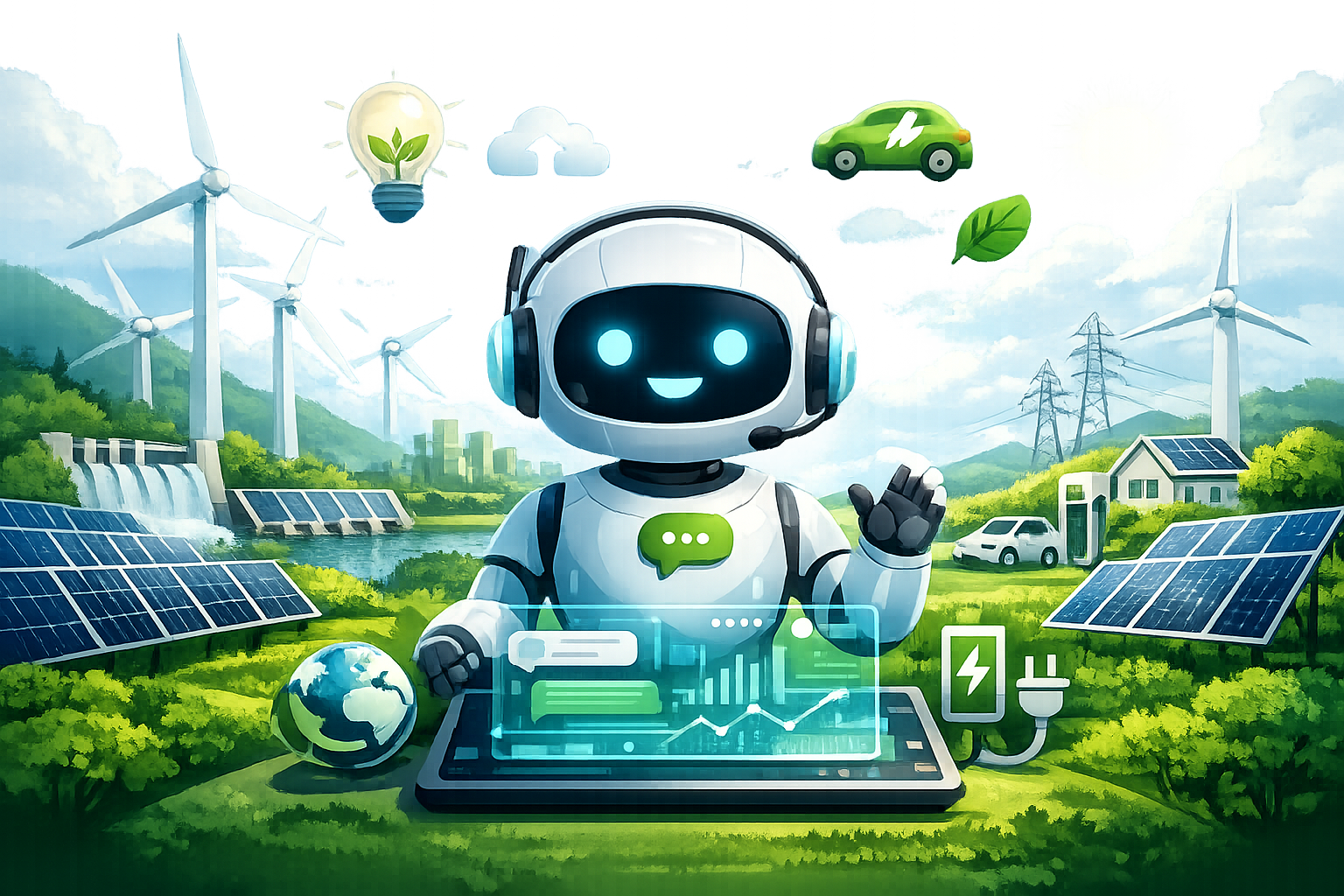

Discover how a Renewable Energy Chatbot transforms customer engagement, improves energy efficiency, and drives sustainable business growth with AI-powered automation.
Introduction
The global shift toward sustainability has accelerated the adoption of renewable energy solutions across industries. As businesses and consumers become more conscious of environmental impact, the need for efficient communication and support systems has never been greater. This is where a Renewable Energy Chatbot emerges as a game-changing solution, enabling companies to deliver real-time assistance, automate processes, and enhance customer experiences in a highly competitive market.
A renewable energy chatbot is not just a digital assistant—it is an intelligent system powered by artificial intelligence (AI) and natural language processing (NLP) that helps organizations interact with users efficiently. From answering queries about solar panel installation to guiding customers through energy-saving practices, these chatbots play a vital role in bridging the knowledge gap and improving accessibility to renewable energy solutions.
At Chattbotz, businesses can leverage cutting-edge chatbot solutions tailored specifically for the renewable energy sector. These chatbots are designed to provide accurate information, streamline operations, and create meaningful customer interactions that support sustainability goals.
What Is a Renewable Energy Chatbot?
A Renewable Energy Chatbot is an AI-driven conversational tool designed to assist users with information, services, and support related to renewable energy solutions such as solar, wind, hydro, and geothermal energy. It uses advanced algorithms and machine learning to understand user queries and provide accurate, real-time responses.
Unlike traditional customer support systems, these chatbots operate 24/7, ensuring that customers always have access to critical information. Whether someone wants to calculate solar panel savings or understand government incentives for renewable energy adoption, a chatbot can deliver instant answers without delays. This improves customer satisfaction and reduces operational workload for businesses.
Furthermore, renewable energy chatbots are capable of continuous learning. As they interact with users, they gather insights and improve their responses over time. This adaptability makes them highly effective in an industry where technologies, policies, and customer expectations are constantly evolving.
Why Renewable Energy Businesses Need Chatbots
The renewable energy sector is rapidly expanding, and with growth comes increased customer inquiries, technical complexities, and demand for personalized solutions. Businesses need efficient tools to manage these challenges while maintaining high-quality customer service.
A chatbot helps businesses scale their customer support without increasing operational costs. It can handle multiple conversations simultaneously, ensuring no customer is left waiting. This is especially important during peak demand periods, such as promotional campaigns or seasonal energy shifts.
In addition, chatbots play a crucial role in educating customers. Renewable energy concepts can be complex, and customers often require guidance before making decisions. By providing clear, concise, and accurate information, chatbots empower users to make informed choices, ultimately driving higher conversion rates and customer trust.
Key Features of a Renewable Energy Chatbot
A well-designed renewable energy chatbot comes equipped with features that enhance both functionality and user experience. These features are tailored to meet the unique needs of the renewable energy industry.
One of the most important features is natural language understanding (NLU), which allows the chatbot to interpret user queries accurately. This ensures meaningful conversations rather than generic responses. Another essential feature is integration with CRM systems, enabling businesses to track customer interactions and personalize responses.
Additionally, advanced chatbots offer predictive analytics and data insights. These capabilities help businesses understand customer behavior, identify trends, and optimize their services accordingly. Features like multilingual support, voice interaction, and automated lead generation further enhance the chatbot’s effectiveness.
How AI Powers Renewable Energy Chatbots
Artificial intelligence is the backbone of renewable energy chatbots, enabling them to deliver intelligent and context-aware responses. AI technologies such as machine learning and deep learning allow chatbots to process large amounts of data and improve over time.
Natural language processing (NLP) enables chatbots to understand human language, including slang, abbreviations, and context. This makes interactions more natural and user-friendly. AI also enables sentiment analysis, allowing chatbots to detect user emotions and adjust responses accordingly.
Moreover, AI-driven chatbots can integrate with external data sources, such as weather APIs and energy consumption databases. This allows them to provide highly relevant and personalized recommendations, such as optimal solar panel usage based on local weather conditions.
Benefits of Renewable Energy Chatbots for Businesses

Implementing a renewable energy chatbot offers numerous benefits for businesses looking to stay competitive and efficient in the digital age. One of the primary advantages is cost reduction. By automating routine queries, businesses can significantly reduce the need for large customer support teams.
Another key benefit is improved customer engagement. Chatbots provide instant responses, ensuring that users remain engaged and satisfied. This leads to higher retention rates and increased customer loyalty.
Additionally, chatbots enhance lead generation and conversion. By guiding users through the decision-making process and providing personalized recommendations, they help businesses convert potential customers into actual clients more effectively.
Enhancing Customer Experience with Chatbots
Customer experience is a critical factor in the success of any business, and renewable energy companies are no exception. Chatbots play a vital role in delivering seamless and personalized experiences.
They provide instant support, eliminating long wait times and ensuring that customers receive timely assistance. This is particularly important in the renewable energy sector, where customers often require immediate answers to technical questions.
Furthermore, chatbots can offer personalized recommendations based on user preferences and behavior. This level of customization enhances user satisfaction and builds trust, making customers more likely to choose a company’s services.
Role of Chatbots in Promoting Sustainability
Renewable energy chatbots are not just business tools—they also contribute to global sustainability efforts. By educating users about renewable energy solutions and encouraging eco-friendly practices, they help reduce carbon footprints.
Chatbots can provide tips on energy conservation, recommend sustainable products, and guide users toward greener choices. This not only benefits the environment but also positions businesses as socially responsible entities.
Moreover, chatbots can support awareness campaigns and initiatives, reaching a wider audience and promoting sustainable practices on a larger scale. Their ability to engage users in meaningful conversations makes them powerful tools for driving positive environmental change.
Integration with Renewable Energy Systems
One of the most powerful aspects of renewable energy chatbots is their ability to integrate with various systems and technologies. This includes solar monitoring platforms, smart grids, and IoT devices.
Through these integrations, chatbots can provide real-time data and insights to users. For example, a chatbot can inform a user about their current energy consumption, suggest ways to optimize usage, or alert them to maintenance requirements.
Such integrations enhance the overall efficiency and effectiveness of renewable energy systems. They enable businesses to offer advanced services and provide users with a more comprehensive and interactive experience.
Security and Data Privacy Considerations
As with any digital solution, security and data privacy are critical concerns for renewable energy chatbots. Businesses must ensure that user data is protected and handled responsibly.
According to Google Search Guidelines, creating helpful and trustworthy content is essential for maintaining user trust. This principle also applies to chatbot interactions, where transparency and data protection are key.
Implementing secure protocols, encryption, and compliance with data protection regulations ensures that user information remains safe. Businesses should also provide clear privacy policies and obtain user consent for data collection.
Use Cases of Renewable Energy Chatbots
Renewable energy chatbots are transforming how businesses interact with customers across multiple touchpoints. Their versatility allows them to be deployed in a wide range of use cases, making them essential tools for modern energy companies. One of the most common applications is customer support automation, where chatbots handle frequently asked questions related to solar panel installation, pricing, maintenance, and government incentives.
Another powerful use case is lead generation and qualification. Chatbots can engage website visitors in real-time, ask relevant questions, and collect valuable information. This allows businesses to identify high-quality leads and nurture them through personalized conversations. For example, a chatbot can ask users about their energy consumption and recommend suitable renewable energy solutions based on their responses.
Additionally, chatbots are widely used for appointment scheduling and service management. Customers can book consultations, request site visits, or schedule maintenance services without any human intervention. This improves operational efficiency while providing a seamless user experience that aligns with modern digital expectations.
Challenges in Implementing Renewable Energy Chatbots
While renewable energy chatbots offer numerous benefits, their implementation comes with certain challenges that businesses must address carefully. One of the primary challenges is ensuring accurate and up-to-date information. The renewable energy industry evolves rapidly, with new technologies, policies, and incentives being introduced frequently. Chatbots must be continuously updated to provide reliable information.
Another challenge is handling complex user queries. Renewable energy topics often involve technical details that may be difficult for chatbots to interpret correctly. Without proper training and data, chatbots may deliver inaccurate or incomplete responses, leading to user frustration.
Integration with existing systems can also be a hurdle. Businesses need to ensure that their chatbot can seamlessly connect with CRM platforms, energy monitoring tools, and other software systems. Overcoming these challenges requires careful planning, robust technology, and ongoing optimization to ensure the chatbot performs effectively.
Future Trends in Renewable Energy Chatbots
The future of renewable energy chatbots is incredibly promising, driven by advancements in artificial intelligence and digital transformation. One major trend is the use of voice-enabled chatbots, which allow users to interact through voice commands, making the experience more intuitive and accessible.
Another emerging trend is the integration of predictive analytics. Chatbots will be able to analyze user data and predict energy needs, offering proactive recommendations. For instance, a chatbot could suggest optimal times to use solar energy based on weather forecasts and historical consumption patterns.
Furthermore, the adoption of hyper-personalization is set to increase. Chatbots will deliver highly customized experiences based on individual user preferences, behavior, and location. This will enhance customer satisfaction and drive greater adoption of renewable energy solutions globally.
How to Choose the Right Renewable Energy Chatbot
Selecting the right chatbot solution is crucial for maximizing its benefits. Businesses should start by identifying their specific needs and objectives. Whether the goal is customer support, lead generation, or education, the chatbot should be tailored to meet those requirements.
Another important factor is ease of integration. The chatbot should seamlessly connect with existing systems such as CRM platforms, websites, and mobile applications. This ensures a smooth flow of data and enhances overall efficiency.
Businesses should also consider scalability and customization options. A good chatbot solution should be able to grow with the business and adapt to changing needs. Investing in a flexible and robust platform ensures long-term success and a higher return on investment.
Measuring the Success of a Renewable Energy Chatbot
To ensure the effectiveness of a renewable energy chatbot, businesses must track and analyze key performance metrics. One of the most important metrics is user engagement, which measures how actively users interact with the chatbot.
Another critical metric is conversion rate. This indicates how many users take desired actions, such as booking a consultation or purchasing a renewable energy solution. High conversion rates reflect the chatbot’s ability to guide users effectively through the decision-making process.
Additionally, businesses should monitor customer satisfaction through feedback and ratings. Continuous analysis and optimization based on these insights help improve chatbot performance and ensure it delivers maximum value.
Common Mistakes to Avoid
Many businesses make avoidable mistakes when implementing renewable energy chatbots, which can hinder their effectiveness. One common mistake is overloading the chatbot with information. While it is important to provide detailed responses, excessive information can overwhelm users and reduce engagement.
Another mistake is neglecting regular updates. As mentioned earlier, the renewable energy industry evolves rapidly, and outdated information can damage credibility. Businesses must ensure that their chatbot content is always accurate and up-to-date.
Failing to provide a human fallback option is another critical error. While chatbots are powerful tools, they cannot handle every query. Offering users the option to connect with a human representative ensures a better overall experience and prevents frustration.
Best Practices for Renewable Energy Chatbots

Implementing best practices is essential for maximizing the effectiveness of renewable energy chatbots. One key practice is designing user-friendly conversations. Chatbots should use simple language, clear instructions, and logical flows to ensure a seamless user experience.
Another best practice is continuous training and optimization. Chatbots should be regularly updated with new data and insights to improve their performance. Leveraging analytics helps identify areas for improvement and ensures the chatbot remains relevant.
According to https://cloud.google.com/architecture/ai, leveraging AI responsibly and efficiently enhances system performance and user trust. Following such guidelines ensures that chatbots are both effective and reliable.
FAQs
1. What is a renewable energy chatbot?
A renewable energy chatbot is an AI-powered tool that helps users with information, support, and services related to renewable energy solutions.
2. How do chatbots help renewable energy companies?
They automate customer support, generate leads, and provide personalized recommendations, improving efficiency and customer satisfaction.
3. Are renewable energy chatbots expensive to implement?
The cost varies depending on features and complexity, but they often reduce long-term operational costs significantly.
4. Can chatbots handle complex technical queries?
Advanced chatbots can handle many technical queries, but human support may still be required for highly complex issues.
5. How secure are renewable energy chatbots?
With proper implementation, including encryption and compliance with data protection standards, chatbots can be highly secure.
6. Can chatbots integrate with renewable energy systems?
Yes, they can integrate with IoT devices, solar monitoring systems, and other platforms to provide real-time insights.
7. Do chatbots improve customer engagement?
Yes, they provide instant responses and personalized interactions, significantly enhancing user engagement.
8. What industries can benefit from renewable energy chatbots?
Solar companies, energy providers, environmental organizations, and smart home businesses can all benefit.
Conclusion
The rise of the Renewable Energy Chatbot marks a significant step forward in the digital transformation of the energy sector. These intelligent tools not only streamline operations but also empower businesses to deliver exceptional customer experiences while promoting sustainability.
By adopting chatbot technology, companies can stay ahead of the competition, reduce costs, and drive meaningful engagement with their audience. As the demand for renewable energy continues to grow, the role of chatbots will become even more critical in shaping the future of the industry.
At Chattbotz, businesses can unlock the full potential of renewable energy chatbots with advanced, customized solutions designed to meet their unique needs. Investing in this technology today ensures a smarter, more sustainable tomorrow.
Want to Implement This Easily?
Prompt:
You are an expert consultant. Based on the blog post titled “(Renewable Energy Chatbot)”, provide a step-by-step, practical implementation guide. Include tools, best practices, common mistakes to avoid, and advanced tips. Assume the reader wants to implement everything discussed in this article effectively.
Call to Action:
Want our help implementing this? Just reach out to us via our website contact form: https://appledew.co.uk/cb/contact-us/