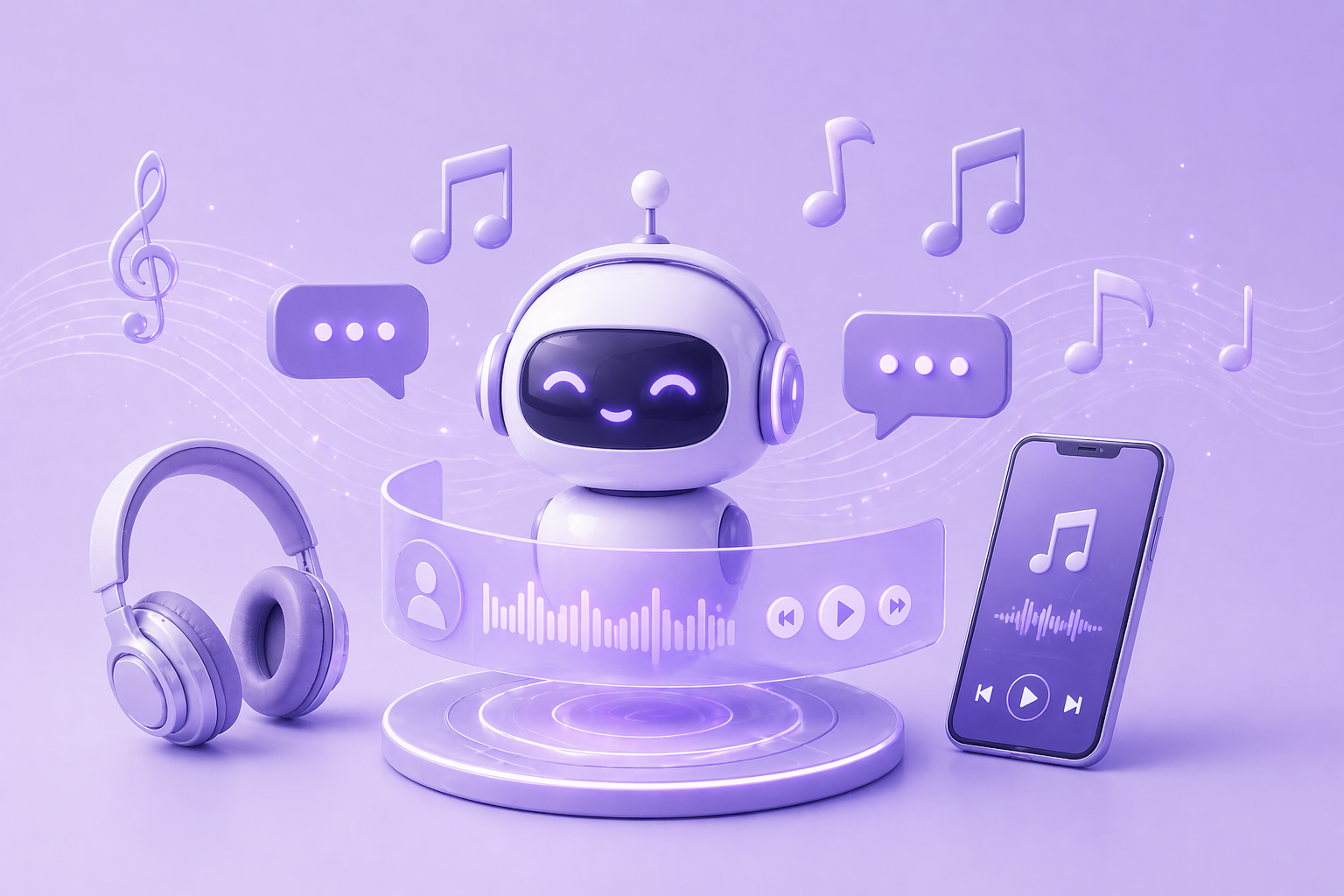

Music Chatbot solutions are transforming digital engagement by enabling personalized, AI-driven music discovery, streaming, and interaction. Learn how to build, optimize, and scale a powerful music chatbot for your business.
Introduction: The Rise of Music Chatbots in Digital Experiences
In today’s fast-evolving digital ecosystem, music chatbot technology is reshaping how users interact with audio content. From streaming platforms to brand engagement tools, chatbots are now capable of delivering hyper-personalized music experiences that were once unimaginable. Platforms like Chattbotz are pioneering this shift by offering intelligent chatbot solutions tailored for entertainment, engagement, and automation.
Music chatbots combine Artificial Intelligence (AI), Natural Language Processing (NLP), and machine learning algorithms to understand user preferences, moods, and listening behavior. This allows them to recommend songs, create playlists, and even engage in meaningful conversations about music genres, artists, and trends. Unlike traditional recommendation engines, chatbots provide a conversational layer, making the experience more interactive and human-like.
As user expectations continue to grow, businesses in the music and entertainment industry must adapt to stay competitive. A well-implemented music chatbot not only improves user retention but also enhances brand loyalty and monetization opportunities. In this comprehensive guide, we’ll explore everything you need to know about music chatbots—from functionality and SEO optimization to implementation strategies and best practices.
What is a Music Chatbot and Why It Matters
A music chatbot is an AI-powered conversational tool designed to interact with users about music-related topics. It can recommend songs, curate playlists, provide artist information, and even integrate with streaming services like Spotify or Apple Music. Unlike static recommendation systems, music chatbots simulate real conversations, making the user experience more engaging and intuitive.
From a technical standpoint, these chatbots rely heavily on Natural Language Processing (NLP) and machine learning models to interpret user queries. For instance, if a user types “play something relaxing,” the chatbot analyzes intent and delivers a curated playlist based on mood and past behavior. This level of personalization is what makes music chatbots incredibly powerful.
The importance of music chatbots lies in their ability to bridge the gap between technology and human emotion. Music is deeply personal, and a chatbot that understands user preferences can create a meaningful connection. For businesses, this translates into higher engagement rates, longer session durations, and improved customer satisfaction.
Key Features of an Advanced Music Chatbot
An advanced music chatbot is more than just a recommendation engine—it is a multi-functional digital assistant. One of its core features is real-time music recommendation, which uses behavioral data and AI algorithms to suggest songs instantly. This ensures users are always engaged with relevant content.
Another crucial feature is playlist automation. Users can request playlists based on mood, activity, or genre, and the chatbot dynamically generates them. Integration with APIs from platforms like Spotify Web API ensures seamless playback and data synchronization.
Additionally, modern music chatbots include voice interaction capabilities, multilingual support, and cross-platform compatibility. These features make them accessible across mobile apps, websites, and messaging platforms like WhatsApp or Messenger. The result is a unified, omnichannel music experience that caters to diverse user needs.
How Music Chatbots Use AI and Machine Learning
At the heart of every music chatbot lies Artificial Intelligence and machine learning. These technologies enable the chatbot to continuously learn from user interactions and improve its recommendations over time. By analyzing listening habits, search queries, and engagement patterns, the chatbot becomes smarter with each interaction.
Machine learning models such as collaborative filtering and content-based filtering play a significant role. Collaborative filtering identifies patterns among users with similar tastes, while content-based filtering focuses on song attributes like genre, tempo, and mood. Together, they create a highly personalized experience.
For developers and businesses, following Google machine learning best practices ensures scalability and performance. Proper model training, data validation, and continuous optimization are essential for maintaining accuracy and relevance in recommendations.
Benefits of Implementing a Music Chatbot for Businesses
Implementing a music chatbot offers numerous advantages for businesses in the entertainment and digital marketing sectors. One of the most significant benefits is enhanced user engagement. Interactive conversations keep users on the platform longer, increasing retention rates and overall satisfaction.
Another key benefit is data-driven insights. Music chatbots collect valuable user data, such as listening preferences and behavioral patterns. This data can be used to refine marketing strategies, personalize campaigns, and improve product offerings.
Additionally, music chatbots contribute to cost efficiency by automating customer interactions. Instead of relying on manual support systems, businesses can use chatbots to handle queries, recommend content, and guide users through the platform. This reduces operational costs while maintaining high-quality service.
Music Chatbots in Streaming Platforms
Streaming platforms have been quick to adopt music chatbot technology to enhance user experiences. These chatbots act as virtual music assistants, helping users discover new tracks, create playlists, and explore genres effortlessly.
For example, integration with APIs allows chatbots to fetch real-time data from streaming services. This ensures that recommendations are always up-to-date and aligned with current trends. Platforms leveraging Google SEO Starter Guide principles can also optimize chatbot content for discoverability.
Moreover, music chatbots enable interactive storytelling. Users can engage in conversations about artists, albums, and music history, making the experience more immersive. This not only enhances user satisfaction but also strengthens brand identity.
Personalization and User Experience Optimization
Personalization is the cornerstone of a successful music chatbot. By analyzing user behavior, preferences, and feedback, chatbots can deliver highly tailored experiences that resonate with individual users.
One effective strategy is context-aware recommendations. For instance, a chatbot can suggest upbeat music during workouts or calming tracks during late-night sessions. This level of personalization creates a deeper emotional connection with users.
To ensure optimal performance, businesses should follow web performance best practices. Fast response times, efficient data processing, and seamless integration are critical for maintaining a smooth user experience. A laggy chatbot can quickly frustrate users and lead to disengagement.
SEO Optimization for Music Chatbot Content

SEO plays a vital role in the success of music chatbot platforms. Optimizing chatbot-generated content ensures better visibility on search engines, driving organic traffic and user acquisition.
One key aspect is keyword optimization. Using primary keywords like music chatbot, along with LSI keywords such as AI music assistant, chatbot playlist generator, and interactive music bot, helps improve search rankings. However, it’s important to avoid keyword stuffing and maintain natural language.
Another critical factor is adherence to Google helpful content guidelines. Content should be informative, user-focused, and genuinely valuable. High-quality content not only ranks better but also builds trust with users.
Integration with Messaging Platforms and Apps
Music chatbots are most effective when integrated across multiple platforms. Popular messaging apps like WhatsApp, Facebook Messenger, and Telegram provide an ideal environment for chatbot deployment.
These integrations allow users to interact with the chatbot without leaving their preferred platforms. Whether it’s requesting a song, discovering new artists, or sharing playlists, the chatbot becomes a seamless part of the user’s digital routine.
From a technical perspective, developers should ensure secure and scalable integrations by following cloud security best practices. This includes data encryption, secure APIs, and compliance with privacy regulations.
Voice-Enabled Music Chatbots and Future Trends
Voice technology is rapidly transforming how users interact with digital platforms, and music chatbots are at the forefront of this evolution. With the integration of voice assistants, users can now simply speak their music preferences instead of typing them. This enhances accessibility and creates a more natural, hands-free experience—especially useful while driving, working out, or multitasking.
Voice-enabled chatbots rely on speech recognition systems and advanced NLP models to interpret spoken commands accurately. These systems continuously improve through machine learning, enabling better understanding of accents, slang, and contextual cues. Businesses adopting voice-enabled music bots can significantly improve user engagement by reducing friction in the interaction process.
Looking ahead, future trends include emotion-aware AI, where chatbots can detect tone and mood from voice input and recommend music accordingly. Integration with smart devices like speakers and wearables will further expand the reach of music chatbots. Following Google Responsible AI practices ensures ethical and user-centric development in these advanced systems.
Data Privacy and Security in Music Chatbots
As music chatbots collect user data to provide personalized experiences, data privacy and security become critical concerns. Users share sensitive information such as listening habits, preferences, and sometimes even personal details. Ensuring this data is handled responsibly is essential for building trust.
Implementing secure data storage, encryption protocols, and authentication mechanisms is non-negotiable. Developers should adhere to standards like HTTPS encryption and secure API integrations. Following Google security guidelines helps ensure that user data is protected against breaches and unauthorized access.
Transparency is equally important. Users should be informed about how their data is collected, stored, and used. Providing clear privacy policies and consent mechanisms not only ensures compliance with regulations but also enhances credibility. A secure chatbot fosters long-term user trust and loyalty.
Use Cases Across Industries Beyond Streaming
While music streaming platforms are the primary adopters, music chatbots are expanding into multiple industries. In retail, brands use music chatbots to create personalized shopping experiences by recommending playlists that match their products or store ambiance.
In hospitality, hotels and restaurants leverage music chatbots to curate playlists for guests, enhancing the overall atmosphere. Similarly, fitness apps integrate music bots to provide workout-specific playlists, improving user motivation and engagement.
Educational platforms are also exploring music chatbots for teaching music theory and history. These diverse use cases highlight the versatility of chatbot technology. By aligning with SEO best practices, businesses can ensure their chatbot solutions reach a wider audience across industries.
Challenges in Developing a Music Chatbot
Despite their advantages, developing a music chatbot comes with several challenges. One of the biggest hurdles is accurate intent recognition. Users often use vague or subjective language like “play something chill,” which requires advanced AI models to interpret correctly.
Another challenge is data integration. Music chatbots need to connect with multiple APIs, databases, and streaming platforms. Ensuring seamless integration while maintaining performance can be technically demanding. Developers must also handle real-time data processing to provide instant recommendations.
Scalability is another concern. As user bases grow, chatbots must handle increased traffic without compromising speed or accuracy. Following scalability best practices ensures that systems can grow efficiently without performance bottlenecks.
How to Build a Music Chatbot Step-by-Step
Building a music chatbot requires a structured approach. The first step is defining the chatbot’s purpose and target audience. Whether it’s for music discovery, customer engagement, or entertainment, clarity in objectives is crucial.
Next, developers need to choose the right technology stack. This includes NLP frameworks, AI models, and integration APIs. Platforms like Google Cloud provide scalable infrastructure for chatbot development. Designing conversational flows and training models with relevant data are essential steps in this phase.
Finally, testing and optimization play a critical role. Continuous monitoring, user feedback analysis, and performance improvements ensure that the chatbot remains effective and relevant. A well-built music chatbot evolves over time, adapting to user needs and technological advancements.
Measuring Performance and Success Metrics
To ensure the success of a music chatbot, businesses must track key performance metrics. One of the most important metrics is user engagement rate, which measures how actively users interact with the chatbot.
Another crucial metric is retention rate, indicating how many users return to use the chatbot over time. High retention rates suggest that the chatbot is delivering value and meeting user expectations. Conversion rates, such as playlist creation or subscription upgrades, also provide valuable insights.
Using analytics tools aligned with Google Analytics best practices helps businesses make data-driven decisions. Regular performance analysis enables continuous improvement and ensures long-term success.
Future of Music Chatbots and AI Innovation

The future of music chatbots is incredibly promising, driven by advancements in AI and user expectations. Emerging technologies like generative AI and deep learning will enable chatbots to create personalized music compositions and dynamic playlists.
Integration with augmented reality (AR) and virtual reality (VR) will further enhance user experiences, allowing immersive music exploration. Chatbots may also evolve into full-fledged digital companions, capable of understanding emotions and providing meaningful interactions.
To stay ahead, businesses must adopt innovative strategies and adhere to Google content quality guidelines. The combination of cutting-edge technology and user-centric design will define the next generation of music chatbots.
Common Mistakes to Avoid When Building a Music Chatbot
One of the most common mistakes is overloading the chatbot with features without focusing on user experience. A complex chatbot can confuse users and reduce engagement. Instead, prioritize simplicity and intuitive design.
Another mistake is ignoring data privacy and security. Failing to implement proper safeguards can lead to data breaches and loss of trust. Businesses must prioritize security from the beginning of development.
Lastly, many developers overlook continuous optimization. A chatbot is not a one-time project—it requires regular updates, performance monitoring, and user feedback integration to remain effective and competitive.
Best Practices for Music Chatbot Success
To achieve success, focus on user-centric design. Understand your audience and tailor the chatbot experience to their preferences and needs. Personalization is key to engagement and retention.
Ensure high-quality data and AI models. Accurate recommendations depend on reliable data and well-trained algorithms. Regular updates and improvements are essential for maintaining performance.
Finally, prioritize scalability and security. Build a robust infrastructure that can handle growth while protecting user data. Following industry standards and best practices ensures long-term success and credibility.
FAQs
1. What is a music chatbot?
A music chatbot is an AI-powered tool that interacts with users to recommend songs, create playlists, and provide music-related information through conversational interfaces.
2. How do music chatbots work?
They use AI, NLP, and machine learning to analyze user input, understand preferences, and deliver personalized music recommendations.
3. Are music chatbots integrated with streaming platforms?
Yes, most advanced music chatbots integrate with platforms like Spotify and Apple Music through APIs for real-time data access.
4. Can music chatbots understand voice commands?
Yes, modern chatbots support voice interaction using speech recognition technology, making them more accessible and user-friendly.
5. Is user data in music chatbots?
When built with proper security measures and compliance with guidelines, music chatbots can securely handle user data.
6. What industries can use music chatbots?
Beyond streaming, industries like retail, hospitality, fitness, and education can leverage music chatbots for enhanced user experiences.
7. How can I improve my music chatbot’s performance?
Focus on data quality, user feedback, AI optimization, and regular updates to ensure continuous improvement.
8. Are music chatbots expensive to build?
Costs vary depending on complexity, features, and integrations, but scalable cloud solutions can help manage expenses effectively.
Conclusion: Transforming Music Engagement with AI
Music chatbots are revolutionizing how users discover and interact with music. By combining AI, personalization, and conversational interfaces, they create immersive and engaging experiences. Platforms like Chattbotz demonstrate how businesses can leverage this technology to stay ahead in a competitive digital landscape.
As technology continues to evolve, the potential of music chatbots will only grow. Businesses that invest in innovation, user experience, and best practices will be well-positioned to capitalize on this trend and deliver exceptional value to their audiences.
Want to Implement This Easily?
Prompt Text:
You are an expert consultant. Based on the blog post titled “(Music Chatbot )”, provide a step-by-step, practical implementation guide. Include tools, best practices, common mistakes to avoid, and advanced tips. Assume the reader wants to implement everything discussed in this article effectively.
Call to Action:
Want our help implementing this? Just reach out to us via our website contact form: https://appledew.co.uk/cb/contact-us/