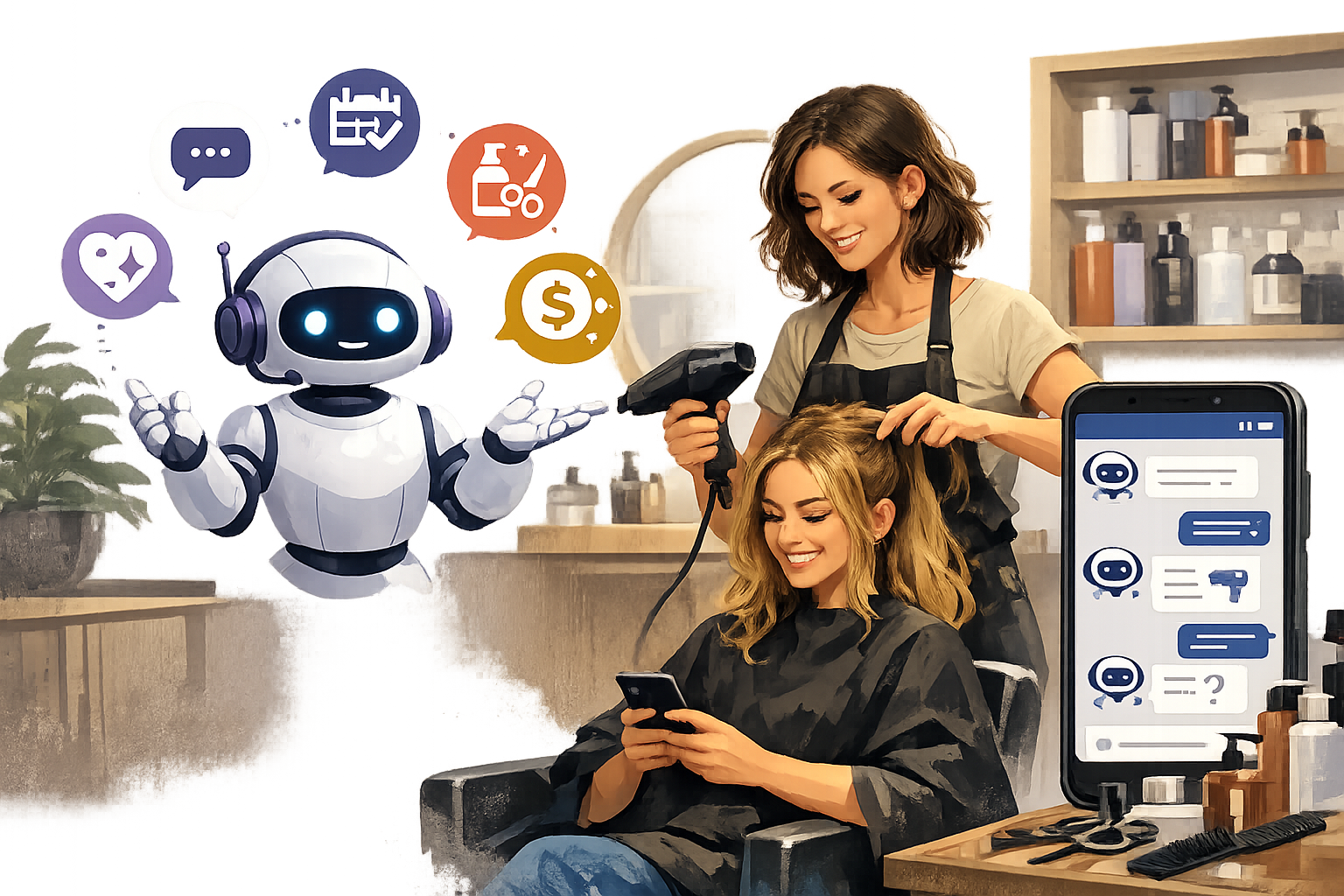

Discover how a Hairdressing & Personal Care Chatbot improves salon bookings, customer engagement, appointment automation, beauty consultations, upselling, and client retention while delivering personalized experiences for modern beauty businesses.
Introduction
The beauty and wellness industry has changed dramatically in recent years. Customers now expect instant communication, personalized recommendations, online appointment scheduling, and fast responses across websites and social media platforms. Salons, spas, barbershops, skincare clinics, and beauty consultants that fail to meet these expectations often struggle to retain customers and compete in a digital-first market.
A Hairdressing & Personal Care Chatbot helps businesses automate customer communication while improving service quality and operational efficiency. From appointment scheduling to beauty consultations, these AI-powered systems streamline repetitive tasks and create seamless customer experiences. Businesses can use chatbot technology to answer questions instantly, recommend services, send reminders, and support clients 24/7 without increasing staffing costs.
At ChattBotz, businesses are increasingly exploring chatbot automation to improve customer engagement and deliver personalized beauty experiences. The growing demand for digital convenience makes conversational AI one of the most valuable tools in the modern beauty industry.
What Is a Hairdressing & Personal Care Chatbot?
A Hairdressing & Personal Care Chatbot is an AI-powered virtual assistant designed specifically for salons, beauty clinics, spas, grooming businesses, skincare professionals, and wellness brands. These chatbots interact with customers through websites, mobile apps, messaging platforms, and social media channels to automate communication and provide instant support.
Unlike generic customer service bots, beauty-focused chatbots understand the unique workflows of personal care businesses. They can handle appointment bookings, hairstyle recommendations, product suggestions, consultation forms, pricing inquiries, stylist availability, loyalty programs, and customer follow-ups. This specialization helps beauty businesses provide faster and more accurate responses to customer needs.
Modern chatbot systems use technologies such as <u>Natural Language Processing (NLP)</u>, machine learning, and conversational AI to understand user intent and generate intelligent responses. According to Google Search Central, businesses should focus on creating helpful, people-first experiences. A well-designed beauty chatbot supports this principle by offering useful, accessible, and customer-focused interactions.
Why Beauty Businesses Need AI-Powered Chatbots
The beauty industry is highly competitive, and customer experience often determines long-term success. Clients expect immediate responses when booking appointments or asking about services. Delayed communication can lead to lost bookings and reduced customer satisfaction. AI-powered chatbots solve this challenge by providing instant assistance at any time of day.
Many salons lose potential customers simply because staff members cannot answer inquiries during busy working hours. A chatbot can respond to multiple customers simultaneously while managing repetitive tasks automatically. This allows stylists and beauty professionals to focus more on delivering exceptional services instead of constantly handling phone calls and messages.
Another major advantage is personalization. Beauty clients often want tailored recommendations based on hair type, skin concerns, or grooming preferences. AI chatbots can collect user preferences and suggest personalized treatments, products, or appointment packages. This creates a more engaging customer experience while increasing upselling opportunities and customer retention.
How Chatbots Transform Salon Appointment Scheduling
Appointment management is one of the most time-consuming tasks for salons and personal care businesses. Manual scheduling often leads to double bookings, missed appointments, communication delays, and administrative overload. A chatbot simplifies this process through automation and intelligent scheduling workflows.
A salon chatbot can instantly display available time slots, confirm appointments, collect customer information, and send automated reminders. Clients no longer need to wait for business hours to schedule services. This 24/7 accessibility significantly improves booking convenience and increases conversion rates for beauty businesses.
Automated reminders also reduce no-show appointments, which can severely impact salon profitability. Chatbots can send SMS messages, email reminders, or messaging app notifications before appointments. Many systems even allow customers to reschedule or cancel bookings directly through the chatbot interface, reducing administrative workload while maintaining operational efficiency.
Enhancing Customer Experience Through Personalized Beauty Recommendations
Personalization has become one of the most important factors in customer satisfaction. Beauty consumers expect businesses to understand their preferences, recommend suitable treatments, and offer customized experiences. AI chatbots make this possible through intelligent customer interaction and data analysis.
A chatbot can ask users about their hair texture, skin type, beauty goals, or grooming concerns before recommending services or products. For example, a client searching for hair treatments can receive suggestions tailored to damaged hair, color-treated hair, or scalp issues. This personalized approach builds trust and encourages customers to explore additional services.
Personalized recommendations also support upselling strategies. A chatbot may suggest complementary treatments, maintenance products, or premium service packages based on customer preferences. This increases average order value while improving customer satisfaction because recommendations feel relevant rather than overly promotional.
The Role of AI in Haircare and Personal Care Consultations

Traditional consultations often require significant staff time and may only occur during appointments. AI-powered chatbots extend consultation capabilities beyond the salon environment by providing instant preliminary guidance online.
For example, a haircare chatbot can ask users about their hair concerns, styling habits, and maintenance routines before recommending potential services or products. Similarly, skincare clinics can use chatbots to guide users through symptom-based consultations and suggest suitable treatment categories.
While chatbots should never replace licensed medical or dermatological professionals, they are highly effective for educational support and initial screening. Businesses can also integrate consultation forms into chatbot workflows to help stylists prepare before appointments. This improves efficiency and allows beauty professionals to deliver more targeted services during in-person visits.
Increasing Customer Retention With Automated Follow-Ups
Customer retention is often more profitable than constantly acquiring new clients. However, many salons fail to maintain consistent communication after appointments. Chatbots solve this issue through automated follow-up systems that keep customers engaged long after their visit.
A chatbot can send personalized follow-up messages after appointments to ask about customer satisfaction, recommend aftercare products, or encourage online reviews. Businesses can also automate loyalty rewards, birthday offers, seasonal promotions, and rebooking reminders through conversational AI systems.
Consistent communication helps businesses build stronger relationships with customers. Clients feel valued when businesses provide ongoing support and personalized engagement. This increases repeat bookings, customer loyalty, and long-term revenue growth while strengthening brand reputation within the beauty industry.
Social Media Integration for Beauty Chatbots
Social media platforms play a major role in beauty marketing and customer engagement. Many customers discover salons and personal care brands through platforms like Instagram, Facebook, and TikTok. Integrating chatbots into these platforms creates a seamless communication experience for potential clients.
Social media chatbots can instantly answer direct messages, provide pricing information, showcase services, and guide users toward booking appointments. This reduces response times and prevents businesses from missing valuable leads due to delayed communication.
Beauty businesses can also use chatbot automation for marketing campaigns, product launches, and promotional offers. For example, a chatbot can send personalized discount codes or recommend trending services based on user interactions. This combination of conversational AI and social media marketing creates highly interactive customer experiences that improve engagement and conversion rates.
How Chatbots Improve Operational Efficiency in Salons
Salon operations involve numerous repetitive tasks that consume valuable staff time. Appointment scheduling, customer inquiries, reminders, cancellations, and payment confirmations can overwhelm employees during peak hours. Chatbots automate these tasks and improve operational efficiency significantly.
Automation reduces administrative workload while minimizing human error. Businesses can standardize customer communication and ensure consistent service quality across all interactions. Staff members can then focus more on delivering personalized beauty services rather than managing repetitive administrative processes.
Operational efficiency also supports business scalability. As salons grow, customer communication demands increase rapidly. AI chatbots allow businesses to handle larger customer volumes without dramatically increasing staffing costs. This makes chatbot technology especially valuable for expanding salon chains and multi-location beauty brands.
The Importance of Omnichannel Customer Support
Modern consumers communicate through multiple channels, including websites, messaging apps, social media platforms, email, and mobile applications. Beauty businesses that fail to provide consistent communication across these channels often create fragmented customer experiences.
An omnichannel chatbot strategy allows businesses to maintain consistent customer support regardless of where interactions occur. Customers can start a conversation on Instagram, continue it on a website, and receive appointment reminders through SMS without losing communication continuity.
This seamless experience improves convenience and customer satisfaction. According to Google Business Profile Help, businesses should maintain accurate and responsive communication channels to improve customer trust and visibility. Omnichannel chatbot systems support these goals while strengthening customer relationships across digital touchpoints.
AI Chatbots and Beauty Product Recommendations
Retail product sales are a significant revenue stream for salons and personal care businesses. However, many businesses struggle to provide personalized product recommendations online. AI chatbots solve this issue by acting as intelligent digital shopping assistants.
A chatbot can guide customers through product selection by asking targeted questions about haircare routines, skin concerns, or styling preferences. Based on user responses, the chatbot can recommend shampoos, conditioners, serums, styling products, skincare solutions, or grooming kits tailored to individual needs.
These intelligent recommendations increase customer confidence and reduce decision fatigue. Businesses can also integrate chatbot systems with eCommerce platforms to create seamless purchasing experiences. This combination of AI-powered guidance and personalized recommendations helps increase product sales while improving customer satisfaction.
Data Collection and Customer Insights Through Chatbots
Understanding customer behavior is essential for business growth. Chatbots provide valuable insights by collecting data from customer interactions, preferences, booking patterns, and feedback responses.
Beauty businesses can analyze chatbot data to identify popular services, peak booking hours, customer concerns, and purchasing trends. These insights support smarter marketing strategies, staffing decisions, and service development initiatives.
Data-driven decision-making also improves personalization. Businesses can segment customers based on preferences and send targeted promotions or service recommendations. However, companies must prioritize privacy and transparency when collecting customer data. Following guidelines from Google Privacy & Terms helps businesses maintain customer trust while implementing AI-powered technologies responsibly.
SEO Benefits of Chatbot Integration for Beauty Websites
Chatbots not only improve customer engagement but can also contribute to better website performance and SEO outcomes. When users receive instant assistance and easily find information, they tend to stay on websites longer and engage more deeply with content.
Lower bounce rates and improved user engagement can positively influence overall website performance. Chatbots can also guide users toward important pages, services, blog posts, and booking forms, improving internal navigation and conversion opportunities.
Additionally, conversational AI supports mobile-friendly experiences, which are increasingly important for search visibility. Google emphasizes user-focused website experiences through initiatives like Core Web Vitals. Businesses that integrate efficient, responsive chatbot systems can improve usability while supporting broader digital marketing goals.
Security and Privacy Considerations for Beauty Chatbots
Beauty businesses often collect sensitive customer information, including contact details, appointment histories, preferences, and payment-related data. This makes security and privacy critical components of chatbot implementation.
Businesses should ensure chatbot platforms use secure encryption, authenticated access controls, and compliant data management practices. Customers must understand how their data is collected, stored, and used. Transparent privacy policies help build trust and reduce concerns surrounding AI technologies.
Secure chatbot development also protects businesses from cyber threats and data breaches. Following cybersecurity best practices from trusted sources like National Institute of Standards and Technology (NIST) helps organizations implement safer digital systems. Strong security measures improve both customer confidence and long-term business sustainability.
Common Mistakes Businesses Make With Beauty Chatbots
One of the most common mistakes is implementing overly generic chatbot systems that fail to understand beauty industry workflows. Customers expect personalized support, and generic responses often create frustrating experiences that reduce trust and engagement.
Another major mistake involves over-automation. Businesses sometimes rely too heavily on AI without providing access to human assistance when needed. Customers with complex concerns or special requests should always have the option to connect with staff members directly.
Poor chatbot design is another critical issue. Confusing navigation, slow responses, repetitive messaging, and lack of personalization can damage customer satisfaction. Businesses should continuously monitor chatbot performance, analyze customer feedback, and optimize conversation flows to maintain high-quality user experiences.
Best Practices for Implementing a Hairdressing & Personal Care Chatbot
Successful chatbot implementation begins with understanding customer needs and business goals. Beauty businesses should identify the most common customer interactions, including booking requests, service inquiries, pricing questions, and product recommendations. Designing chatbot workflows around these priorities creates more useful and customer-friendly experiences.
Businesses should also focus on conversational quality. A chatbot should sound natural, professional, and supportive rather than robotic or overly scripted. Clear language, personalized responses, and intuitive navigation improve customer engagement while reducing frustration. Integrating AI with CRM systems and appointment scheduling software further enhances efficiency and personalization.
Continuous optimization is equally important. Chatbot performance should be monitored regularly to identify weak points, unanswered questions, and customer behavior trends. Businesses that consistently improve chatbot experiences are more likely to maintain strong customer satisfaction and long-term digital growth.
Future Trends in Hairdressing & Personal Care Chatbots

The future of chatbot technology in the beauty industry is becoming increasingly sophisticated. AI systems are evolving beyond simple customer service tools into highly intelligent beauty assistants capable of delivering personalized recommendations, predictive insights, and immersive digital experiences.
Voice-enabled chatbots are expected to become more common as customers increasingly use voice search and smart devices. Beauty businesses may soon offer voice-based appointment booking, consultation support, and personalized beauty guidance through smart assistants and mobile applications.
Another emerging trend involves AI-powered visual analysis. Future chatbot systems may analyze uploaded photos to recommend hairstyles, skincare routines, or grooming solutions. While businesses must implement these technologies responsibly and ethically, advanced AI capabilities are likely to transform how customers interact with beauty brands online.
How Small Beauty Businesses Can Compete Using AI Chatbots
Many small salons and independent beauty professionals assume AI technology is only suitable for large enterprises. However, chatbot solutions are becoming more accessible and affordable for businesses of all sizes. Small beauty brands can use AI automation to compete more effectively with larger companies by improving responsiveness and customer service quality.
A chatbot enables smaller businesses to maintain professional communication around the clock without hiring large support teams. Automated booking systems, personalized recommendations, and follow-up messaging create polished customer experiences that strengthen brand credibility and customer loyalty.
Small businesses also benefit from data insights and marketing automation. Chatbots help identify customer preferences, promote special offers, and encourage repeat bookings. This allows independent salons and beauty professionals to build stronger relationships with customers while maximizing operational efficiency on limited budgets.
Measuring the ROI of a Beauty Chatbot
Businesses investing in chatbot technology should measure performance to understand the return on investment (ROI). Key metrics include appointment conversion rates, customer engagement levels, response times, customer retention, and average order value.
One of the clearest indicators of chatbot success is increased booking efficiency. Businesses often experience higher appointment rates because customers can schedule services instantly without waiting for staff responses. Reduced no-show rates and improved customer retention also contribute directly to revenue growth.
Operational savings represent another important ROI factor. Automating repetitive tasks reduces administrative workload and allows employees to focus on higher-value activities. Over time, these efficiencies improve profitability while creating better customer experiences and stronger competitive positioning within the beauty industry.
The Connection Between Conversational AI and Customer Trust
Trust plays a major role in beauty and personal care services because customers often rely on professional expertise when making decisions about appearance, grooming, and self-care. Conversational AI can strengthen trust when implemented correctly and transparently.
A well-designed chatbot provides consistent, accurate, and timely information. Customers appreciate quick responses, personalized recommendations, and reliable communication. Businesses that maintain professional chatbot interactions often appear more organized, responsive, and customer-focused.
Transparency is essential for maintaining credibility. Customers should understand when they are communicating with AI and when human assistance is available. Ethical AI practices, privacy protection, and honest communication help businesses establish long-term trust while improving overall customer relationships.
FAQs
What is a Hairdressing & Personal Care Chatbot?
A Hairdressing & Personal Care Chatbot is an AI-powered virtual assistant designed to automate customer interactions for salons, spas, skincare clinics, grooming businesses, and beauty brands. It can handle bookings, consultations, customer support, and personalized recommendations.
How do beauty chatbots improve appointment scheduling?
Beauty chatbots automate appointment management by displaying available time slots, confirming bookings, sending reminders, and handling rescheduling requests. This reduces manual workload and improves customer convenience.
Can a chatbot recommend beauty products?
Yes. AI-powered chatbots can analyze customer preferences, hair types, skincare concerns, and grooming habits to recommend personalized products and services tailored to individual needs.
Are chatbots suitable for small salons?
Absolutely. Small salons can use chatbot technology to improve customer communication, automate repetitive tasks, and provide professional support without hiring large administrative teams.
Do beauty chatbots support social media platforms?
Yes. Many chatbot systems integrate with platforms such as Facebook Messenger, Instagram, and WhatsApp to automate customer engagement and appointment inquiries directly through social media.
Are chatbots secure for customer data?
Modern chatbot platforms often include encryption, secure authentication, and privacy controls. Businesses should follow trusted cybersecurity standards and maintain transparent privacy practices to protect customer information.
Can chatbots replace human beauty professionals?
No. Chatbots are designed to support beauty professionals, not replace them. They automate repetitive communication tasks while allowing staff members to focus on delivering expert beauty services and personalized care.
How do chatbots help increase salon revenue?
Chatbots increase revenue by improving booking rates, reducing missed appointments, supporting upselling opportunities, promoting products, and strengthening customer retention through personalized communication.
Best Practices Summary
Implementing a successful Hairdressing & Personal Care Chatbot requires strategic planning, customer-focused design, and continuous optimization. Businesses should prioritize personalization, seamless booking experiences, omnichannel communication, and secure data management practices.
The most effective chatbot systems combine AI automation with human support. Customers appreciate instant assistance, but they also value the ability to connect with real professionals when necessary. Balancing automation with authentic customer care creates stronger relationships and improves long-term trust.
Businesses should also focus on continuous improvement by analyzing chatbot performance, customer feedback, and engagement data. As AI technology evolves, beauty brands that adapt quickly and prioritize customer experience will gain a significant competitive advantage in the digital marketplace.
Conclusion
The beauty and personal care industry is rapidly evolving, and customer expectations continue to rise. Businesses must provide fast, personalized, and convenient communication experiences to remain competitive in an increasingly digital environment. A Hairdressing & Personal Care Chatbot offers a powerful solution for improving appointment scheduling, customer engagement, operational efficiency, and personalized beauty support.
By integrating AI-powered conversational technology, salons and beauty businesses can strengthen customer relationships, increase revenue opportunities, and deliver more consistent service experiences across digital channels. From intelligent consultations to automated follow-ups, chatbot systems are transforming how beauty brands connect with modern consumers.
At ChattBotz, businesses can explore advanced chatbot solutions designed to support digital growth, customer engagement, and automation strategies tailored to the evolving beauty industry.
Want to Implement This Easily?
Prompt Text:
You are an expert consultant. Based on the blog post titled “Hairdressing & Personal Care Chatbot”, provide a step-by-step, practical implementation guide. Include tools, best practices, common mistakes to avoid, and advanced tips. Assume the reader wants to implement everything discussed in this article effectively.
Call to Action:
Want our help implementing this? Just reach out to us via our website contact form: Contact Us