
Discover how an Insurance Chatbot transforms customer service, automates policy management, accelerates claims processing, improves lead generation, and delivers personalized insurance experiences while reducing operational costs.
Introduction
The insurance industry is experiencing a major digital transformation. Customers no longer want to wait on hold for policy information, claims updates, or premium calculations. They expect instant answers, personalized support, and seamless digital experiences across websites, mobile applications, and messaging platforms. This shift has created a growing demand for intelligent automation technologies that can serve customers around the clock while maintaining accuracy and compliance.
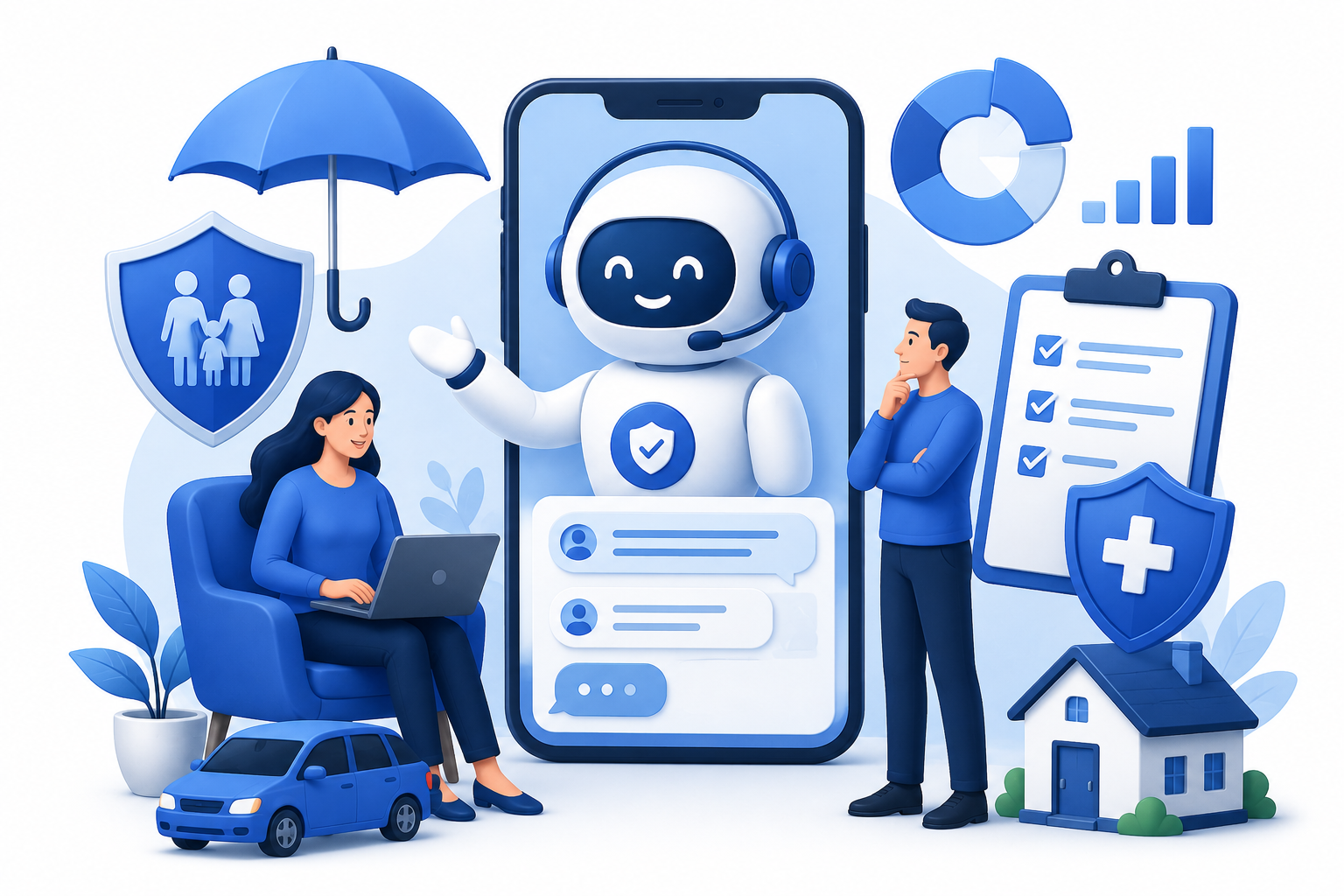
An insurance chatbot is one of the most effective tools insurers can implement to meet these evolving expectations. Powered by artificial intelligence, natural language processing, and automation technologies, insurance chatbots can assist customers with policy inquiries, claims processing, premium estimates, document collection, and customer support. These virtual assistants help insurance providers improve operational efficiency while delivering faster and more convenient service experiences.
At ChattBotz, businesses are increasingly recognizing the value of chatbot technology in modern customer engagement strategies. As competition continues to intensify within the insurance sector, organizations that adopt intelligent automation are better positioned to improve customer satisfaction, increase retention, reduce service costs, and create scalable digital experiences that meet the needs of today’s policyholders.
What Is an Insurance Chatbot?
An insurance chatbot is an AI-powered virtual assistant designed specifically to handle insurance-related interactions. Unlike traditional customer service systems that rely heavily on human agents, chatbots automate conversations and provide instant support through websites, mobile apps, social media platforms, and messaging services. These systems understand user questions, retrieve relevant information, and deliver accurate responses in real time.
Insurance chatbots can perform a wide range of functions, including answering policy questions, generating quotes, scheduling consultations, updating customer records, collecting documents, and assisting with claims. Modern conversational AI systems use advanced natural language processing to understand customer intent and respond in a conversational, human-like manner. This creates a smoother user experience while reducing the burden on support teams.
As AI technology continues to advance, insurance chatbots are becoming increasingly sophisticated. They can integrate with customer relationship management platforms, policy administration systems, payment gateways, and claims management software. This allows them to provide personalized assistance based on customer profiles, policy details, and interaction history, making them a valuable asset for insurance providers seeking digital transformation.
Why the Insurance Industry Needs Chatbots
Insurance customers expect immediate service regardless of time zones, business hours, or location. Traditional support channels often struggle to meet these expectations due to staffing limitations, high inquiry volumes, and operational costs. Insurance chatbots solve these challenges by providing instant support 24 hours a day, seven days a week.
Customer service teams in insurance companies often spend significant time handling repetitive inquiries such as policy coverage questions, premium payment reminders, claim status updates, and renewal information. By automating these routine interactions, chatbots allow human agents to focus on complex customer needs that require empathy, negotiation, or specialized expertise. This improves productivity while enhancing service quality.
The increasing adoption of digital channels has also accelerated chatbot demand. Consumers now prefer self-service options that allow them to obtain information quickly without waiting for agent availability. Insurance organizations that fail to offer convenient digital experiences risk losing customers to competitors that provide faster, more accessible support. Chatbots help bridge this gap while supporting broader digital transformation initiatives.
Key Benefits of Insurance Chatbots
Insurance chatbots provide numerous advantages that directly impact both operational performance and customer satisfaction. One of the most significant benefits is the ability to deliver immediate responses. Customers no longer need to wait for email replies or call center availability to obtain basic information about their policies or claims.
Cost reduction is another major advantage. Customer support operations can be expensive, particularly for large insurers handling thousands of inquiries daily. By automating routine conversations, chatbots significantly reduce staffing requirements while maintaining consistent service quality. This creates measurable savings without sacrificing customer experience.
Insurance chatbots also contribute to higher customer engagement and retention rates. Personalized interactions, proactive reminders, policy renewal notifications, and claims updates help maintain ongoing communication with policyholders. These continuous touchpoints strengthen customer relationships and increase the likelihood of long-term loyalty while supporting cross-selling and upselling opportunities.
How AI Powers Modern Insurance Chatbots
Artificial intelligence serves as the foundation of modern insurance chatbot technology. AI enables chatbots to understand natural language, identify customer intent, interpret context, and generate relevant responses. Rather than relying solely on predefined scripts, advanced AI systems continuously improve their performance by learning from interactions and user feedback.
Natural language processing (NLP) plays a critical role in helping chatbots understand human communication. Customers often phrase questions differently, use informal language, or provide incomplete information. NLP allows the chatbot to recognize meaning despite these variations and respond appropriately. This capability creates more natural and effective conversations.
Machine learning further enhances chatbot performance by identifying patterns within customer interactions. Over time, AI systems become more accurate in predicting user needs, recommending suitable products, and resolving inquiries efficiently. Combined with analytics and automation tools, AI transforms chatbots into intelligent digital assistants capable of delivering highly personalized insurance experiences.
Insurance Chatbots for Customer Support
Customer support remains one of the most common applications of insurance chatbot technology. Policyholders frequently require assistance with coverage details, payment schedules, policy changes, document requests, and claims inquiries. Chatbots provide instant access to this information without requiring customers to contact a human representative.
A well-designed chatbot can handle thousands of simultaneous conversations while maintaining consistency and accuracy. This capability becomes particularly valuable during peak periods, natural disasters, or major events when customer inquiries increase significantly. Rather than overwhelming support teams, chatbots absorb much of the demand and ensure customers receive timely assistance.
Additionally, chatbots improve customer satisfaction by reducing wait times and offering support through preferred communication channels. Whether customers interact through a website, mobile application, or messaging platform, they receive a seamless experience that aligns with modern expectations for digital convenience and responsiveness.
Streamlining Insurance Claims Processing

Claims processing is often one of the most stressful experiences for insurance customers. Long waiting periods, complex documentation requirements, and limited visibility into claim status can create frustration and dissatisfaction. Insurance chatbots help simplify and accelerate the claims journey through automation and real-time communication.
Chatbots can guide customers through claim submission processes step by step. They collect essential information, request supporting documents, verify data accuracy, and route cases to the appropriate departments. This structured approach reduces errors and ensures claims move through workflows more efficiently.
Once a claim has been submitted, chatbots can provide automated status updates, estimated processing timelines, and additional documentation requests when necessary. These proactive communications improve transparency and reduce inbound inquiries from customers seeking updates. As a result, both policyholders and claims teams benefit from a smoother and more efficient experience.
Lead Generation and Insurance Sales Automation
Insurance chatbots are not limited to customer support; they also serve as powerful lead generation and sales tools. Visitors exploring insurance products often have questions about coverage options, premiums, eligibility requirements, and policy features. Chatbots can engage these prospects instantly and guide them through the decision-making process.
By asking targeted questions, chatbots can qualify leads based on customer needs, demographics, budget preferences, and risk profiles. This information helps insurers identify high-intent prospects and prioritize sales opportunities. Qualified leads can then be transferred directly to sales representatives for further consultation and policy recommendations.
Chatbots also support automated quote generation and policy comparisons. Prospective customers can receive personalized estimates within minutes rather than waiting for manual calculations. This convenience accelerates the sales cycle, improves conversion rates, and creates a more engaging customer acquisition process that aligns with modern consumer expectations.
Personalization in Insurance Customer Experiences
Modern consumers expect personalized interactions from every business they engage with, including insurance providers. Generic communication often fails to meet customer expectations, while tailored experiences foster stronger relationships and increased trust. Insurance chatbots play a crucial role in delivering personalized customer journeys at scale.
By integrating with customer databases and policy management systems, chatbots can access relevant information such as policy types, renewal dates, claim history, and communication preferences. This allows them to provide context-aware recommendations and responses tailored to individual customer needs.
Personalization also extends to proactive engagement strategies. Chatbots can send policy renewal reminders, recommend additional coverage options, notify customers of payment deadlines, and provide customized educational content. These targeted interactions enhance customer satisfaction while creating opportunities for increased revenue and retention.
Omnichannel Insurance Chatbots and Customer Engagement
Today’s insurance customers interact with businesses across multiple digital touchpoints. Some prefer visiting websites, while others communicate through mobile applications, social media platforms, messaging apps, or customer portals. An effective insurance chatbot strategy requires a consistent experience across all these channels to ensure convenience and continuity.
Omnichannel insurance chatbots allow customers to begin a conversation on one platform and continue it on another without losing context. For example, a customer may start a policy inquiry through a website chatbot and later continue the discussion through a mobile application. This seamless experience improves customer satisfaction and eliminates the frustration associated with repeating information multiple times.
Beyond convenience, omnichannel engagement helps insurance providers maintain stronger customer relationships. Consistent communication across channels increases accessibility, strengthens brand trust, and improves overall engagement rates. Organizations that successfully implement omnichannel chatbot solutions often experience higher customer retention and stronger digital adoption among policyholders.
Insurance Chatbot Security, Privacy, and Compliance
Insurance companies handle highly sensitive information, including personal details, financial records, policy information, and claims documentation. As a result, security and compliance must remain top priorities when implementing chatbot technology. Customers need confidence that their data is protected throughout every interaction.
Insurance chatbots should incorporate strong authentication methods, encrypted communications, secure data storage, and role-based access controls. These security measures help prevent unauthorized access and reduce the risk of data breaches. Organizations should also regularly audit chatbot systems to identify vulnerabilities and maintain security standards.
Compliance requirements vary across regions and insurance sectors, making regulatory alignment essential. Following Zero Trust Security principles and implementing practices recommended through OWASP Top 10 guidance can help organizations strengthen their chatbot security posture. Maintaining transparent privacy policies and obtaining proper user consent further contributes to customer trust and regulatory compliance.
Integrating Insurance Chatbots with Existing Systems
The effectiveness of an insurance chatbot depends heavily on its ability to integrate with existing business systems. A chatbot operating in isolation may provide limited value, whereas a fully integrated solution can access real-time information and automate complex workflows across the organization.
Integration with customer relationship management platforms enables chatbots to personalize conversations based on customer history and preferences. Connections to policy administration systems allow customers to retrieve policy details, coverage information, renewal dates, and payment records instantly. Claims management integrations streamline reporting, tracking, and documentation processes.
Modern chatbot implementations also connect with payment gateways, analytics platforms, customer portals, and document management systems. These integrations create a unified digital ecosystem that enhances operational efficiency while delivering a superior customer experience. Organizations that prioritize integration often achieve greater automation capabilities and stronger return on investment.
Common Mistakes Businesses Make When Implementing Insurance Chatbots
Many insurance organizations invest in chatbot technology expecting immediate results, only to discover that poor planning limits effectiveness. One common mistake is focusing exclusively on automation while ignoring customer experience. A chatbot should solve real customer problems rather than simply reduce support costs.
Another frequent issue involves inadequate training data. AI-powered chatbots require quality information to understand customer inquiries accurately. Organizations that fail to provide comprehensive training data often experience misunderstandings, inaccurate responses, and frustrated users. Continuous monitoring and optimization are essential to maintaining performance.
Businesses also make the mistake of eliminating human support options entirely. While chatbots excel at handling routine inquiries, some situations require empathy, judgment, or specialized expertise. Providing seamless escalation paths to human agents ensures customers receive appropriate assistance when chatbot capabilities reach their limits.
Common Mistakes Checklist
- Deploying chatbots without clear business objectives.
- Ignoring customer feedback and interaction analytics.
- Failing to integrate chatbot systems with core insurance platforms.
- Using overly complex conversational flows.
- Neglecting compliance and security requirements.
- Not offering human-agent escalation options.
- Launching without proper testing and optimization.
- Focusing on cost reduction rather than customer value.
Best Practices for Building a Successful Insurance Chatbot
A successful insurance chatbot begins with clearly defined goals. Organizations should identify the specific challenges they want to address, whether improving customer service, accelerating claims processing, increasing lead generation, or reducing operational costs. Clear objectives guide implementation decisions and measurement strategies.
Conversation design is equally important. Chatbots should communicate in a natural, professional, and customer-friendly manner. Interactions should be intuitive, concise, and focused on helping users achieve their goals quickly. Well-designed conversational flows reduce confusion and improve completion rates across various use cases.
Continuous improvement is another critical success factor. Insurance providers should regularly analyze chatbot performance metrics, review customer feedback, identify conversation bottlenecks, and update chatbot knowledge bases. Ongoing optimization ensures the chatbot remains effective as customer expectations, products, and regulations evolve.
Measuring Insurance Chatbot Performance and ROI
Implementing an insurance chatbot is only the first step. Organizations must also measure performance to determine whether business objectives are being achieved. Establishing key performance indicators helps insurers track effectiveness and identify opportunities for improvement.
Common chatbot metrics include response times, conversation completion rates, customer satisfaction scores, lead conversion rates, claim processing efficiency, and support ticket reduction. These metrics provide valuable insights into how well the chatbot serves customers and contributes to operational goals.
Return on investment should be evaluated from both financial and customer experience perspectives. Cost savings from automation, increased policy sales, higher retention rates, and improved customer satisfaction all contribute to chatbot value. Organizations that consistently measure outcomes can refine their strategies and maximize long-term benefits.
The Future of Insurance Chatbots and Conversational AI

The future of insurance chatbots is closely tied to advancements in artificial intelligence, machine learning, and predictive analytics. As these technologies mature, chatbots will become increasingly capable of understanding complex customer needs and delivering highly personalized recommendations.
Voice-enabled conversational interfaces are expected to play a larger role in insurance interactions. Customers may soon file claims, request policy information, and receive recommendations using natural voice conversations rather than text-based interfaces. This evolution will further improve accessibility and convenience.
Predictive AI will also transform insurance operations by proactively identifying customer needs, detecting potential risks, and recommending preventive actions. Rather than simply responding to inquiries, future insurance chatbots will act as intelligent advisors that help customers make informed decisions while strengthening long-term relationships with insurers.
Frequently Asked Questions
1. What is an insurance chatbot?
An insurance chatbot is an AI-powered virtual assistant that helps customers with policy information, claims processing, premium estimates, customer support, and other insurance-related tasks through automated conversations.
2. How do insurance chatbots improve customer service?
They provide instant responses, reduce wait times, offer 24/7 support, automate repetitive inquiries, and ensure consistent service across multiple communication channels.
3. Can insurance chatbots process claims?
Yes. Modern insurance chatbots can collect claim information, request documentation, verify data, provide claim status updates, and assist customers throughout the claims process.
4. Are insurance chatbots secure?
When properly implemented, insurance chatbots use encryption, authentication controls, secure integrations, and privacy protections to safeguard sensitive customer information.
5. Can chatbots generate insurance quotes?
Yes. Insurance chatbots can gather customer information, evaluate eligibility factors, and provide personalized policy estimates in real time.
6. Do insurance chatbots replace human agents?
No. Chatbots automate routine interactions, while human agents continue handling complex, sensitive, or specialized customer needs that require professional expertise.
7. What systems can insurance chatbots integrate with?
They can integrate with CRM platforms, policy administration systems, claims management software, payment gateways, analytics tools, and customer portals.
8. How can insurers measure chatbot success?
Success can be measured through customer satisfaction scores, response times, lead conversions, cost reductions, claim processing improvements, and customer retention metrics.
Best Practices Summary
Implementing an insurance chatbot successfully requires more than deploying AI technology. Organizations should focus on customer-centric design, seamless system integration, strong security practices, and continuous optimization. Chatbots should support both self-service and human-assisted experiences to ensure customers always receive the help they need.
Businesses should establish measurable goals before implementation and track performance using relevant metrics. Regular analysis of chatbot interactions helps identify improvement opportunities and ensures the solution continues delivering value over time. Security, privacy, and regulatory compliance should remain ongoing priorities throughout the chatbot lifecycle.
The most effective insurance chatbots combine automation, personalization, and intelligent decision-making to create experiences that benefit both customers and insurance providers. Organizations that follow these best practices are better positioned to achieve sustainable success in an increasingly digital marketplace.
Conclusion
Insurance chatbots are transforming how insurers interact with customers, manage operations, and deliver services. From customer support and claims processing to lead generation and policy management, these intelligent virtual assistants help organizations improve efficiency while enhancing customer satisfaction. As artificial intelligence continues to evolve, chatbot capabilities will become even more sophisticated and valuable.
For businesses seeking to remain competitive in the digital age, chatbot adoption is no longer simply an innovation initiative—it is becoming a strategic necessity. Organizations that embrace conversational AI can streamline operations, reduce costs, improve customer experiences, and unlock new growth opportunities. At ChattBotz, insurance businesses can leverage advanced chatbot solutions to build stronger customer relationships and create scalable digital engagement strategies that drive long-term success.
Want to Implement This Easily?
Prompt Text:
You are an expert consultant. Based on the blog post titled “Insurance Chatbot”, provide a step-by-step, practical implementation guide. Include tools, best practices, common mistakes to avoid, and advanced tips. Assume the reader wants to implement everything discussed in this article effectively.
Call to Action:
Want our help implementing this? Just reach out to us via our website contact form: