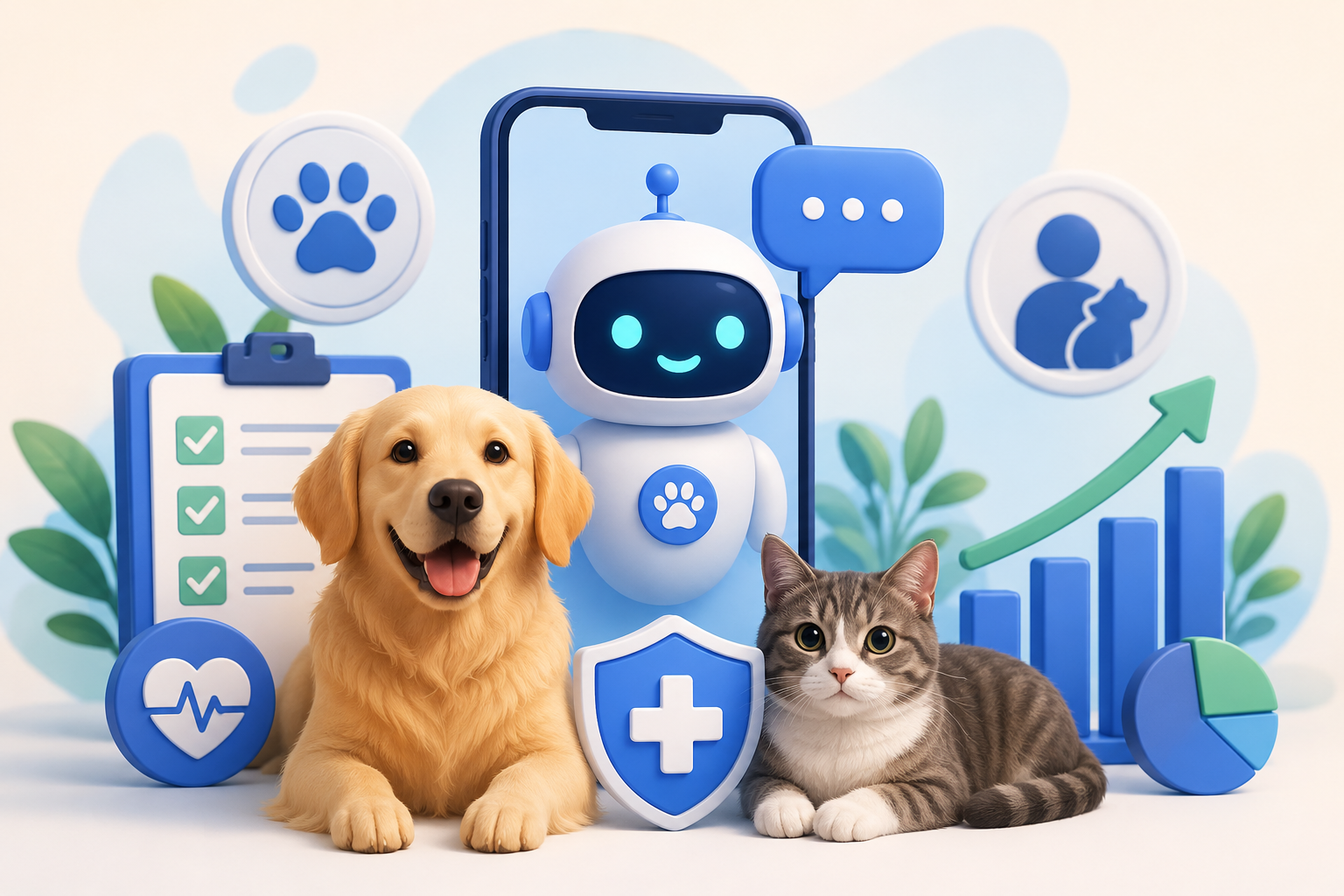

Discover how AI-powered pet care chatbots improve pet health management, automate support, enhance user engagement, and transform veterinary and pet service businesses.
Introduction
In today’s rapidly evolving digital landscape, pet owners expect instant, reliable, and personalized support for their furry companions. From scheduling veterinary appointments to receiving real-time health advice, convenience has become a necessity rather than a luxury. This is where Pet Care Chatbots step in—revolutionizing how pet owners interact with veterinary clinics, pet stores, and animal care services. These AI-driven systems are designed to provide accurate information, automate repetitive tasks, and enhance overall user satisfaction.
At its core, a pet care chatbot uses artificial intelligence, natural language processing (NLP), and machine learning to simulate human-like conversations. These chatbots can answer questions about pet nutrition, recommend products, remind users about vaccinations, and even assist in emergency situations. By reducing response time and ensuring 24/7 availability, they offer unmatched convenience to modern pet owners who rely heavily on digital solutions.
For businesses, implementing a chatbot is not just about automation—it is about building stronger relationships with customers. Platforms like Chatbotz help organizations deploy intelligent chatbot systems that improve engagement, reduce operational costs, and deliver a seamless user experience. As the demand for pet care services continues to grow, integrating AI chatbots is becoming a strategic necessity rather than an optional upgrade.
What is a Pet Care Chatbot?
A Pet Care Chatbot is an AI-powered virtual assistant specifically designed to provide support, information, and services related to pet care. Unlike generic chatbots, these systems are trained with specialized data sets that include veterinary knowledge, pet behavior insights, and product recommendations tailored to different animal species. This specialization ensures that users receive highly relevant and accurate responses.
These chatbots operate through various platforms, including websites, mobile apps, and messaging services. By leveraging natural language processing, they understand user queries in a conversational manner. Whether a pet owner asks about symptoms, feeding schedules, or grooming tips, the chatbot processes the request and delivers an appropriate response. Over time, machine learning enables these systems to improve accuracy based on user interactions.
Furthermore, pet care chatbots are not limited to answering questions. They can integrate with backend systems such as appointment scheduling tools, CRM platforms, and eCommerce systems. This allows them to handle tasks like booking vet visits, recommending products, and tracking pet health records. As a result, they act as a comprehensive digital assistant, enhancing both customer experience and operational efficiency.
Why Pet Care Chatbots Are Growing in Popularity
The increasing adoption of pet care chatbots is driven by the rising demand for instant and personalized support. Pet owners often face urgent situations where timely guidance is critical. Traditional customer support channels may not always be available, but chatbots provide round-the-clock assistance, ensuring that users can access information whenever they need it.
Another key factor contributing to their popularity is the growth of the pet care industry. As more households adopt pets, the need for efficient service delivery increases. Businesses must handle a high volume of inquiries related to pet health, grooming, and products. Chatbots help manage this demand by automating responses and reducing the workload on human staff, allowing them to focus on more complex tasks.
Additionally, advancements in artificial intelligence have significantly improved chatbot capabilities. Modern systems can understand context, detect user intent, and provide personalized recommendations. This level of sophistication enhances user trust and satisfaction, making chatbots an essential tool for businesses aiming to stay competitive in the evolving pet care market.
Key Features of a Pet Care Chatbot
A well-designed pet care chatbot offers a wide range of features that enhance both user experience and operational efficiency. One of the most important features is intelligent query handling. The chatbot can understand and respond to a variety of questions related to pet health, nutrition, and behavior, ensuring users receive accurate information quickly.
Another essential feature is appointment scheduling. Pet owners can book veterinary visits directly through the chatbot without navigating complex interfaces. This simplifies the process and reduces friction, leading to higher customer satisfaction. Additionally, automated reminders ensure that appointments are not missed, improving overall service reliability.
Personalization is also a critical component. By analyzing user data, chatbots can provide tailored recommendations based on the pet’s age, breed, and medical history. For example, a chatbot may suggest specific diets or grooming routines based on individual needs. This personalized approach not only enhances user engagement but also builds long-term trust with customers.
Benefits of Pet Care Chatbots for Pet Owners
For pet owners, the primary benefit of chatbots is convenience. Instead of searching through multiple sources for information, users can receive instant answers through a single platform. This is especially valuable during emergencies when quick guidance can make a significant difference in a pet’s well-being.
Another advantage is accessibility. Chatbots are available 24/7, allowing users to seek help at any time. Whether it is late at night or during holidays, pet owners can rely on chatbots for support. This continuous availability ensures that users are never left without assistance when they need it most.
Additionally, chatbots provide consistent and reliable information. Unlike human interactions that may vary in quality, chatbots deliver standardized responses based on verified data. This consistency helps build trust and ensures that pet owners receive accurate guidance every time they interact with the system.
Benefits for Veterinary Clinics and Pet Businesses
Pet care chatbots offer significant advantages for veterinary clinics and businesses by streamlining operations and improving efficiency. One of the most notable benefits is the reduction in workload for customer support teams. By handling repetitive queries, chatbots free up staff to focus on more complex tasks that require human expertise.
Another key benefit is improved customer engagement. Chatbots provide instant responses, reducing wait times and enhancing user satisfaction. This leads to higher retention rates and increased customer loyalty. Businesses can also use chatbots to send personalized messages, promotions, and reminders, further strengthening their relationship with customers.
Furthermore, chatbots contribute to cost savings. Automating routine tasks reduces the need for large support teams, resulting in lower operational expenses. At the same time, improved efficiency leads to increased revenue, as businesses can handle more inquiries and convert more leads without additional resources.
How AI Powers Pet Care Chatbots
Artificial intelligence is the backbone of modern pet care chatbots, enabling them to deliver accurate and personalized responses. Natural language processing (NLP) allows chatbots to understand user queries in a conversational manner. This technology breaks down sentences, identifies key elements, and determines the user’s intent, ensuring relevant responses.
Machine learning further enhances chatbot capabilities by enabling continuous improvement. As the chatbot interacts with users, it collects data and learns from previous conversations. This allows it to refine its responses and become more accurate over time. The result is a system that evolves and adapts to user needs.
Additionally, AI enables advanced features such as sentiment analysis and predictive recommendations. By analyzing user behavior and emotions, chatbots can provide more empathetic and context-aware responses. This level of sophistication not only improves user experience but also builds trust and credibility.
Use Cases of Pet Care Chatbots

Pet care chatbots can be applied across various scenarios, making them a versatile tool for businesses and pet owners alike. One common use case is veterinary support, where chatbots assist with symptom checking, appointment scheduling, and post-treatment follow-ups. This helps improve patient care and ensures timely interventions.
Another important use case is eCommerce integration. Pet stores can use chatbots to recommend products, guide users through the purchasing process, and provide order updates. This enhances the shopping experience and increases conversion rates by offering personalized suggestions.
Additionally, chatbots can be used for pet training and education. They can provide tips on behavior management, training techniques, and general care practices. This empowers pet owners with knowledge and helps them make informed decisions, ultimately improving the quality of life for their pets.
Integration with Pet Care Platforms
Integrating a pet care chatbot with existing platforms is crucial for maximizing its effectiveness. These integrations allow chatbots to access and utilize data from various systems, such as customer relationship management (CRM) tools, appointment scheduling software, and eCommerce platforms. This seamless connectivity ensures a unified user experience.
One of the key benefits of integration is data synchronization. For example, when a user books an appointment through the chatbot, the information is automatically updated in the clinic’s scheduling system. This eliminates the need for manual data entry and reduces the risk of errors.
Moreover, integration enables advanced functionalities such as personalized recommendations and targeted marketing. By analyzing user data, chatbots can deliver tailored messages and offers that resonate with individual customers. This not only enhances user engagement but also drives business growth.
Security and Data Privacy in Pet Care Chatbots
Security and data privacy are critical considerations when implementing pet care chatbots. These systems often handle sensitive information, including pet health records and user details. Ensuring robust security measures is essential to protect this data and maintain user trust.
One of the primary aspects of security is data encryption. Encrypting data during transmission and storage prevents unauthorized access and ensures that sensitive information remains protected. Additionally, implementing secure authentication mechanisms helps verify user identity and prevent unauthorized usage.
Compliance with data protection regulations is also crucial. Businesses must adhere to relevant guidelines and standards to ensure ethical and legal use of data. By prioritizing security and privacy, organizations can build trust with their users and establish a strong reputation in the market.
Challenges in Implementing Pet Care Chatbots
While pet care chatbots offer numerous benefits, their implementation comes with certain challenges. One of the primary challenges is ensuring accuracy. Providing incorrect information, especially in medical scenarios, can have serious consequences. Therefore, chatbots must be trained with reliable and up-to-date data.
Another challenge is integration complexity. Connecting chatbots with existing systems can be technically demanding, requiring careful planning and execution. Businesses must ensure that all components work seamlessly together to deliver a smooth user experience.
Additionally, maintaining and updating the chatbot is an ongoing process. As user expectations evolve and new information becomes available, the chatbot must be continuously improved. This requires regular monitoring, updates, and optimization to ensure optimal performance.
Future Trends in Pet Care Chatbots
The future of pet care chatbots is promising, with continuous advancements in technology driving innovation. One emerging trend is the integration of voice assistants, allowing users to interact with chatbots through voice commands. This enhances accessibility and provides a more natural user experience.
Another trend is the use of predictive analytics. By analyzing user data, chatbots can anticipate needs and provide proactive recommendations. For example, they can remind users about upcoming vaccinations or suggest dietary changes based on health trends.
Furthermore, the integration of IoT devices is set to revolutionize pet care. Smart collars and health monitors can provide real-time data, which chatbots can use to offer personalized insights and recommendations. This creates a comprehensive ecosystem that enhances pet health management.
Common Mistakes to Avoid
One common mistake businesses make is relying solely on chatbots without human support. While chatbots are powerful tools, they cannot replace human expertise entirely. Providing an option to connect with a human agent ensures better customer satisfaction.
Another mistake is neglecting user experience. A poorly designed chatbot can frustrate users and lead to disengagement. It is essential to focus on intuitive design, clear communication, and seamless navigation.
Additionally, failing to update the chatbot regularly can result in outdated information. Continuous improvement is necessary to keep up with user expectations and technological advancements. Regular updates ensure that the chatbot remains relevant and effective.
Advanced Personalization in Pet Care Chatbots
Personalization is one of the most powerful capabilities of modern pet care chatbots, allowing businesses to deliver highly relevant and meaningful interactions. By collecting and analyzing user data such as pet type, breed, age, medical history, and user preferences, chatbots can tailor responses that feel customized rather than generic. This level of personalization enhances user engagement and creates a more satisfying experience for pet owners.
For example, a chatbot can recommend a specific diet plan for a senior dog or suggest grooming routines for a long-haired cat. These recommendations are not random—they are based on data-driven insights and behavioral patterns. Over time, as the chatbot interacts more with the user, it refines its suggestions, becoming increasingly accurate and valuable. This continuous learning process is powered by machine learning algorithms that adapt to user needs.
Moreover, personalization extends beyond recommendations. Chatbots can send reminders for vaccinations, vet visits, and medication schedules based on individual pet profiles. This proactive approach ensures better pet health management and strengthens the relationship between the user and the service provider. Ultimately, advanced personalization transforms chatbots into trusted digital assistants rather than simple support tools.
Role of Natural Language Processing in Pet Care Chatbots
Natural Language Processing (NLP) is a foundational technology that enables pet care chatbots to understand and respond to human language effectively. Unlike traditional systems that rely on predefined commands, NLP-powered chatbots can interpret conversational language, making interactions more intuitive and user-friendly. This is particularly important in pet care, where users may describe symptoms or concerns in various ways.
NLP works by analyzing the structure and meaning of user input. It identifies keywords, context, and intent, allowing the chatbot to generate accurate responses. For instance, if a user types, “My dog is not eating and seems tired,” the chatbot can recognize this as a potential health concern and provide relevant guidance or suggest contacting a veterinarian.
Additionally, NLP enables multilingual support, making chatbots accessible to a broader audience. While this article is in English, businesses can deploy chatbots that understand multiple languages, expanding their reach globally. As NLP technology continues to evolve, chatbots are becoming more capable of handling complex conversations, improving both accuracy and user satisfaction.
Enhancing Customer Experience Through Automation
Automation is a key driver of improved customer experience in pet care services. Pet care chatbots automate repetitive tasks such as answering frequently asked questions, scheduling appointments, and providing order updates. This not only saves time for users but also ensures consistency in service delivery.
One of the most significant advantages of automation is reduced response time. Users no longer need to wait for human agents to become available. Instead, they receive instant responses, which is particularly valuable in urgent situations. This immediacy enhances user satisfaction and builds trust in the service.
Furthermore, automation allows businesses to scale their operations efficiently. As the number of users grows, chatbots can handle increased demand without compromising performance. This scalability ensures that businesses can maintain high-quality service even during peak times. By combining automation with personalization, pet care chatbots create a seamless and engaging user experience.
SEO Benefits of Implementing Pet Care Chatbots
Integrating pet care chatbots into a website can significantly enhance SEO performance. One of the primary benefits is improved user engagement. When users interact with a chatbot, they spend more time on the website, reducing bounce rates and signaling to search engines that the content is valuable.
Additionally, chatbots contribute to better content accessibility. They can guide users to relevant pages, answer queries, and provide information in a structured manner. This improves navigation and ensures that users find what they are looking for quickly. Enhanced user experience is a critical factor in search engine rankings.
According to Google Search Essentials guidelines, high-quality content and user satisfaction are essential for ranking success. Moreover, chatbots can assist in keyword optimization by identifying common user queries and incorporating them into content strategies. This helps businesses target relevant keywords and improve their visibility in search results. Overall, pet care chatbots are not just a customer support tool—they are a powerful asset for SEO growth.
Building Trust and Authority with AI Chatbots

Trust is a crucial factor in the pet care industry, where users rely on accurate and reliable information. Pet care chatbots help build trust by providing consistent, data-driven responses. Unlike human agents who may vary in expertise, chatbots deliver standardized information based on verified sources.
Authority is established through the use of credible data and continuous improvement. By integrating authoritative knowledge bases and updating information regularly, chatbots ensure that users receive accurate guidance. This aligns with Google’s E-E-A-T principles (Experience, Expertise, Authoritativeness, Trustworthiness), which emphasize the importance of reliable content.
Furthermore, transparency plays a vital role in building trust. Chatbots should clearly communicate their capabilities and limitations, especially in medical scenarios. Providing disclaimers and encouraging users to consult professionals when necessary ensures ethical use and enhances credibility.
FAQs
1. What is a pet care chatbot?
A pet care chatbot is an AI-powered virtual assistant designed to provide information, support, and services related to pet health, nutrition, and care.
2. Are pet care chatbots reliable?
Yes, when properly trained with accurate data, chatbots provide consistent and reliable information. However, they should complement, not replace, professional veterinary advice.
3. Can chatbots handle emergency situations?
Chatbots can provide initial guidance, but users should always contact a veterinarian for emergencies.
4. Do pet care chatbots support multiple languages?
Many advanced chatbots use NLP to support multiple languages, making them accessible to a global audience.
5. How do chatbots improve customer experience?
They provide instant responses, personalized recommendations, and 24/7 support, enhancing convenience and satisfaction.
6. Are chatbots secure?
Yes, when implemented with proper encryption and compliance measures, they ensure data privacy and security.
7. Can chatbots integrate with existing systems?
Yes, they can integrate with CRM, scheduling tools, and eCommerce platforms for seamless functionality.
8. Do chatbots help with SEO?
Yes, they improve user engagement, reduce bounce rates, and support keyword optimization strategies.
Best Practices for Pet Care Chatbots
Implementing a successful pet care chatbot requires careful planning and adherence to best practices. First, ensure that the chatbot is trained with accurate and up-to-date information. This is particularly important in pet care, where incorrect advice can have serious consequences. Regular updates and monitoring are essential to maintain accuracy.
Second, focus on user experience. The chatbot should have a clear and intuitive interface, making it easy for users to interact. Avoid overly complex conversations and ensure that responses are concise and helpful. Providing options for users to connect with human agents when needed enhances satisfaction.
Third, prioritize security and compliance. Protect user data through encryption and adhere to relevant regulations. Transparency about data usage builds trust and ensures ethical implementation. By following these best practices, businesses can maximize the effectiveness of their pet care chatbots.
Conclusion
Pet care chatbots are transforming the way pet owners and businesses interact, offering a powerful combination of convenience, efficiency, and personalization. From providing instant support to improving operational efficiency, these AI-driven tools are becoming an essential part of the pet care ecosystem.
For businesses, adopting chatbot technology is no longer optional—it is a strategic move to stay competitive in a rapidly evolving market. By leveraging advanced technologies such as NLP, machine learning, and predictive analytics, organizations can deliver exceptional user experiences and build lasting relationships with their customers.
At Chatbotz, we understand the importance of innovation and customer-centric solutions. Implementing a pet care chatbot can help you streamline operations, enhance engagement, and drive growth. As technology continues to evolve, those who embrace AI-driven solutions will be better positioned to succeed in the future.
Want to Implement This Easily?
Prompt:
You are an expert consultant. Based on the blog post titled “Pet Care Chatbot”, provide a step-by-step, practical implementation guide. Include tools, best practices, common mistakes to avoid, and advanced tips. Assume the reader wants to implement everything discussed in this article effectively.
Call to Action:
Want our help implementing this? Just reach out to us via our website contact form:
https://appledew.co.uk/cb/contact-us/