
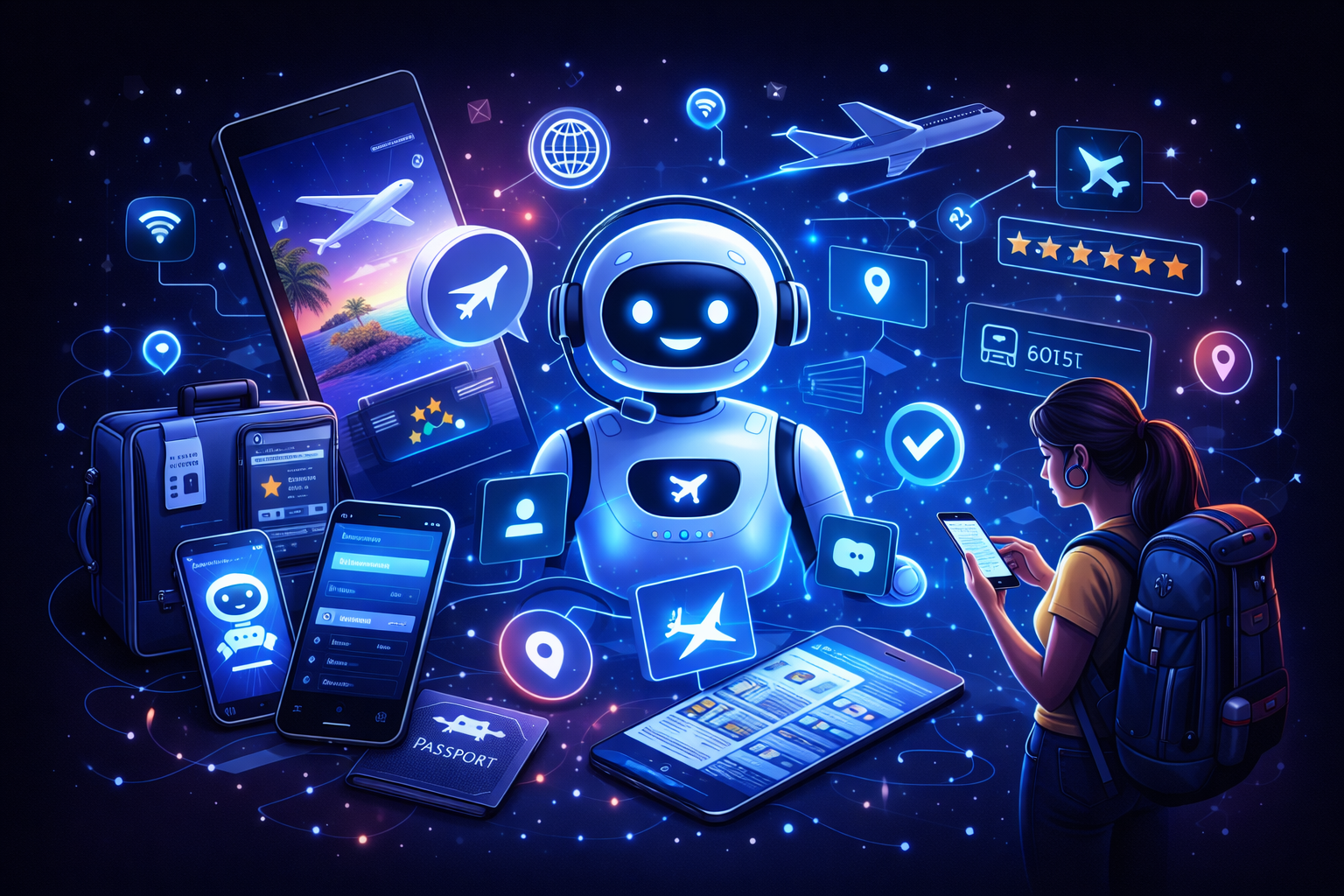

In an era where every traveler expects instant responses, personalization, and friction‑free planning, travel businesses are transforming customer engagement with automated systems known as travel chatbots. These intelligent assistants streamline bookings, answer inquiries, deliver real‑time updates, and guide travelers through every stage of their journey. By integrating best‑practice sources and authoritative design, travel chatbots are reshaping modern travel expectations and digital experiences.
Introduction: What Is a Travel Chatbot?
In today’s digital travel ecosystem, guests demand 24/7 support, intelligent recommendations, and instant booking assistance. A travel chatbot is an AI‑powered conversational assistant deployed on websites, social apps, or messaging platforms to automate traveler interactions — such as itinerary planning, flight reminders, hotel bookings, policy queries, and local suggestions. These chatbots use advanced artificial intelligence to understand user intent and provide personalized answers.
Travel chatbots are revolutionizing customer experience by enabling real‑time responses, reduced operational costs, increased conversions, and proactive engagement. They help travel brands deliver exceptional support while capturing insights that drive better service and customer satisfaction.
The Evolution of Travel Chatbots — From Scripts to Smart AI
Travel chatbots weren’t always intelligent. Early versions were limited to static scripts and rigid menus. Modern chatbots use AI and machine learning to understand complex language patterns, provide contextual responses, and improve over time as they interact with users. Today’s travel bots can mimic human dialogue and even offer suggestions based on previous interactions, thanks to breakthroughs in conversational AI like natural language processing.
The transition from rule‑based bots to AI assistants mirrors the broader tech shift toward more intuitive, human‑centric experiences. This evolution allows travel brands to delight users with fast, accurate, and tailored support.
Core Features Every Effective Travel Chatbot Should Have
A world‑class travel chatbot is more than a scripted responder — it’s a dynamic, user‑centric assistant that enhances every part of the traveler journey. Key features include:
• Real‑Time Alerts: Get flight updates, gate changes, and weather alerts instantly via chatbot.
• Multilingual Understanding: Communicate with travelers in their preferred language using multilingual NLP.
• 24/7 Availability: Users get support anytime, across time zones.
• Personalization: Bots can offer customized recommendations and itinerary suggestions.
• Integration with Booking Engines: Chatbots connected to reservation systems ensure real‑time pricing and availability.
Travel chatbots that include these core elements significantly improve convenience and satisfaction for modern travelers.
Enhancing Customer Experience With Travel Chatbots
Travelers today are digitally savvy and expect instantaneous support. Chatbots enhance customer experience by offering hyper‑personalized, real‑time assistance. Rather than navigating complicated help pages or waiting for human support, users can request information in natural language, like “Find me a flight from New York to Tokyo next Friday” and receive instant answers.
They serve as virtual travel guides — offering destination tips, local recommendations, packing reminders, and policy insights. Bots are particularly powerful during travel disruptions, sending updates before the traveler even asks, which increases trust and loyalty.
Modern travel platforms that adopt AI chat capabilities also enable staff to focus on complex tasks, while the chatbot handles repeat questions — boosting efficiency and user satisfaction.
Personalization: The Secret to Travel Engagement
Personalization is at the heart of high‑performing travel chatbots. Instead of offering generic options, bots analyze user history and preferences to deliver tailored suggestions. For example:
• A traveler who frequently explores beaches might get beach‑side tour recommendations.
• A business traveler may be shown premium lounges and flexible flight options.
These personalized interactions go beyond simple automation — they help brands forge deeper emotional connections with users and improve conversion rates significantly.
AI‑driven personalization also enables travel bots to send tailored deals, upsells, and localized content that feels intuitive and relevant.
Integrating Chatbots With Booking Systems and CRM
The true power of a travel chatbot lies in its back‑end integrations. When bots are connected with booking engines, CRM systems, and flight APIs, they can pull up real‑time availability, pricing, past travel history, and traveler preferences. This makes interactions more intelligent and efficient.
Integrations also unlock valuable upsell opportunities — like suggesting travel insurance, excursions, or hotel upgrades based on user behavior and previous choices. Bots with CRM access can recognize returning users and serve personalized conversations, boosting loyalty and repeat purchases.
Integration is a vital step toward building conversational systems that not only chat but convert.
Proactive Messaging: Anticipating Traveler Needs
Rather than waiting for travelers to ask questions, advanced chatbots can reach out proactively. This includes alerts about:
• Flight delays and cancellations
• Weather changes
• Local event recommendations
• Visa and documentation updates
Proactive chat not only boosts satisfaction but also positions the travel brand as thoughtful and efficient. Travelers feel supported at every step — leading to trust, recommendations, and repeat engagement.
Multilingual and Accessibility Support
Travelers come from diverse regions, cultures, and language backgrounds, making multilingual support a critical feature for modern travel chatbots. A chatbot that communicates in multiple languages allows businesses to reach a global audience seamlessly, eliminating language barriers that could otherwise frustrate users or prevent bookings. Beyond language, accessibility features such as screen reader compatibility, keyboard navigation, and text-to-speech options ensure that travelers with disabilities can interact with the bot effectively. By embracing inclusivity, travel brands create a more welcoming environment for all users, demonstrating social responsibility and enhancing brand reputation. Moreover, multilingual chatbots can interpret local nuances, idiomatic expressions, and cultural context, which further improves the user experience. These bots also reduce support overhead by managing international queries automatically, freeing human agents for complex tasks. With travelers increasingly expecting convenience and personalized communication, multilingual and accessible chatbots have become essential for improving engagement, increasing conversions, and driving customer satisfaction in the global travel market.
Reducing Operational Costs With AI Automation
One of the most significant benefits of travel chatbots is their ability to reduce operational costs for travel businesses. By automating repetitive and time-consuming tasks, such as responding to frequently asked questions, processing cancellations, or providing flight updates, chatbots minimize the need for large customer support teams. This enables human staff to focus on complex issues that require empathy or nuanced decision-making. During peak travel seasons, chatbots can scale effortlessly to handle high volumes of interactions without additional cost, unlike human teams that require overtime or temporary hiring. Furthermore, AI-powered bots deliver instant responses, reducing response time and increasing customer satisfaction while lowering support overhead. Businesses can also leverage chatbots to streamline internal processes like reservation verification, itinerary updates, or cross-selling travel packages, maximizing efficiency. The combination of automated efficiency, consistent performance, and high availability translates into measurable cost savings while maintaining a high-quality user experience. In today’s competitive travel industry, investing in AI automation is not just a convenience—it’s a strategic advantage that improves profitability, operational efficiency, and customer loyalty simultaneously.
Designing Conversational Flows That Feel Human
A key differentiator for successful travel chatbots is their ability to deliver conversational flows that feel natural and human-like. Travelers expect intuitive interactions that guide them toward solutions without frustration or confusion. Designing effective flows requires anticipating user intent, handling ambiguous questions gracefully, and providing helpful suggestions while maintaining a friendly tone. Techniques such as quick-reply buttons, personalized greetings, contextual prompts, and fallback messages enhance the experience, making it feel interactive rather than robotic. A well-designed chatbot can simulate empathy, understand follow-up questions, and maintain continuity throughout the conversation. Additionally, visual cues like images, icons, or rich media can complement the dialogue, enhancing engagement and comprehension. Thoughtful conversation design also reduces errors, increases task completion rates, and minimizes user frustration, which ultimately improves conversion rates and satisfaction. For travel businesses, investing time in human-centric chatbot design ensures the bot can handle real-world scenarios smoothly, fostering trust, encouraging bookings, and creating a memorable user experience. By combining AI intelligence with well-structured conversational flows, brands can deliver digital interactions that feel genuinely human, even in fully automated systems.
Empowering Mobile Travel Experiences

With travelers increasingly relying on smartphones for planning, booking, and navigating trips, mobile-enabled travel chatbots have become essential. These bots integrate seamlessly with mobile apps and messaging platforms like WhatsApp, Messenger, and SMS, providing convenience directly in the channels travelers already use. Mobile chatbots enable users to receive instant booking confirmations, flight reminders, itinerary updates, and personalized recommendations while on the go. They allow travelers to interact with brands without switching between websites or apps, enhancing usability and engagement. Mobile-optimized chatbots also support push notifications, location-based alerts, and offline reminders, ensuring users stay informed even in dynamic travel scenarios. By offering a frictionless experience on mobile devices, chatbots increase customer satisfaction, improve task completion rates, and drive higher conversion rates. Travel brands leveraging mobile chatbots gain a competitive edge by providing proactive assistance, immediate solutions, and contextual recommendations, all accessible in real-time. Ultimately, mobile integration empowers travelers to manage every aspect of their journey efficiently, fostering loyalty, reducing support load, and creating a seamless travel experience that meets modern expectations.
AI Ethics, Data Privacy & Regulations in Travel Bots
Travel chatbots collect sensitive traveler data — from personal identification to payment details. Data privacy and AI ethics are crucial for compliance and maintaining user trust. Modern chatbots must follow regulations like GDPR in Europe and CCPA in California.
Ethical AI involves transparency about automated decision-making, minimizing bias, and protecting personal data. Travel brands should implement secure data storage, encryption, and anonymization for user interactions. Ensuring these ethical practices prevents reputational damage, enhances trust, and improves adoption of chatbots by security-conscious travelers.
Measuring Success: KPIs for Travel Chatbots
Monitoring chatbot performance is vital to optimize its value. Key KPIs include:
- Resolution Rate: Percentage of queries resolved without human intervention.
- Response Time: Speed of bot replies affects user satisfaction.
- Engagement Metrics: Active users, session lengths, and conversation depth.
- Conversion Rates: How often interactions lead to bookings or upsells.
- Customer Satisfaction: Feedback surveys and net promoter scores.
Tools like Zendesk and Botpress Analytics help track these metrics. Continuous analysis ensures chatbots evolve with user needs and business goals.
Case Studies: Travel Chatbot Success Stories
Case Study 1: Booking.com
Using chatbots for real-time customer support, Booking.com reduced response time and increased booking efficiency. Travelers receive personalized suggestions, confirmations, and updates directly via their preferred channels. (booking.com)
Case Study 2: KLM Royal Dutch Airlines
KLM’s chatbot handles flight inquiries, boarding pass delivery, and baggage updates through Messenger. Integration with their CRM ensures contextual responses and personalized service. (klm.com)
Case Study 3: Expedia
Expedia leverages AI-powered chatbots for multilingual support and travel assistance, enabling travelers to explore hotels, flights, and activities seamlessly. (expedia.com)
These examples demonstrate measurable benefits in efficiency, user satisfaction, and brand loyalty.
Future Trends: Voice AI & Travel Assistants
The future of travel chatbots is moving toward voice AI and multi-modal conversational agents. Platforms like Google Assistant and Amazon Alexa allow travelers to interact via voice, making bookings and inquiries more intuitive.
Future chatbots may combine voice recognition, visual search, and AR integrations, creating fully immersive travel planning experiences. These advancements will shift traveler expectations and raise the bar for service innovation.
SEO and Chatbot Integration for Travel Websites
Integrating chatbots with SEO-friendly websites can enhance discoverability and conversions. Chatbots improve user engagement, dwell time, and interaction rates, which are positive signals for Google’s ranking algorithms.
Embedding structured data and using bots to guide users to high-value pages also strengthens content authority. Following Google SEO Best Practices ensures your travel bot complements your overall digital marketing strategy.
Building vs. Buying: Which Approach Is Best?

Travel brands face a choice: build a custom chatbot or purchase a ready-made solution.
Building a Custom Chatbot:
- Pros: Fully tailored to your processes and branding, deeper integrations, unique conversational flows.
- Cons: Requires development resources, maintenance, and longer deployment time.
Buying a Ready-Made Solution:
- Pros: Fast implementation, cost-effective, supported updates, pre-trained AI.
- Cons: Limited customization, subscription costs, dependency on vendor.
The choice depends on budget, scale, and business needs. Many brands opt for hybrid solutions, starting with pre-built bots and customizing critical modules over time.
Common Mistakes When Implementing Travel Chatbots
• Over-automation: Bots that never escalate to humans frustrate users. (metadialog.com)
• Ignoring Analytics: Failing to track KPIs limits optimization. (botpress.com)
• Weak Integration: Bots not linked with booking engines or CRM deliver poor user experience. (pickyassist.com)
• Poor Conversational Design: Rigid scripts frustrate users; dynamic, intuitive flows are essential.
Frequently Asked Questions
Q1: Are travel chatbots safe for booking payments?
A: Yes, when integrated with secure payment APIs and compliant with PCI standards, transactions are safe.
Q2: Can a travel chatbot replace human agents?
A: No, chatbots handle repetitive queries, but humans are needed for complex or sensitive requests.
Q3: How do chatbots handle multiple languages?
A: Using multilingual AI models, they can converse in dozens of languages.
Q4: Can chatbots offer personalized recommendations?
A: Yes, they leverage user data and booking history for tailored suggestions.
Q5: How can chatbots improve operational efficiency?
A: By automating repetitive inquiries, reducing wait times, and freeing staff for complex tasks.
Q6: Are travel chatbots GDPR/CCPA compliant?
A: Leading bots integrate privacy policies and secure data handling practices.
Q7: Can chatbots handle emergency travel alerts?
A: Absolutely — they push real-time notifications like flight delays, cancellations, or weather disruptions.
Q8: What metrics should businesses track?
A: Resolution rate, response time, engagement, conversion, and satisfaction scores.
Q9: Can chatbots integrate with mobile apps?
A: Yes, integration with messaging platforms or mobile apps is standard.
Q10: Are chatbots future-proof?
A: With continuous AI improvements, chatbots evolve to include voice AI, AR, and predictive recommendations.
Conclusion
Travel chatbots are transforming the travel industry, offering seamless support, personalized experiences, and cost-effective scalability. From flight bookings to localized recommendations, they handle repetitive tasks, empower human agents, and delight users worldwide. As AI evolves, future travel bots will integrate voice AI, AR, and predictive insights, creating fully immersive experiences.
For travel businesses aiming to stay competitive and elevate customer satisfaction, adopting travel chatbots is no longer optional — it’s essential. With the insights shared here, Chattbotz encourages brands to embrace AI-driven travel solutions, ensuring smarter, faster, and more enjoyable journeys for every traveler.