
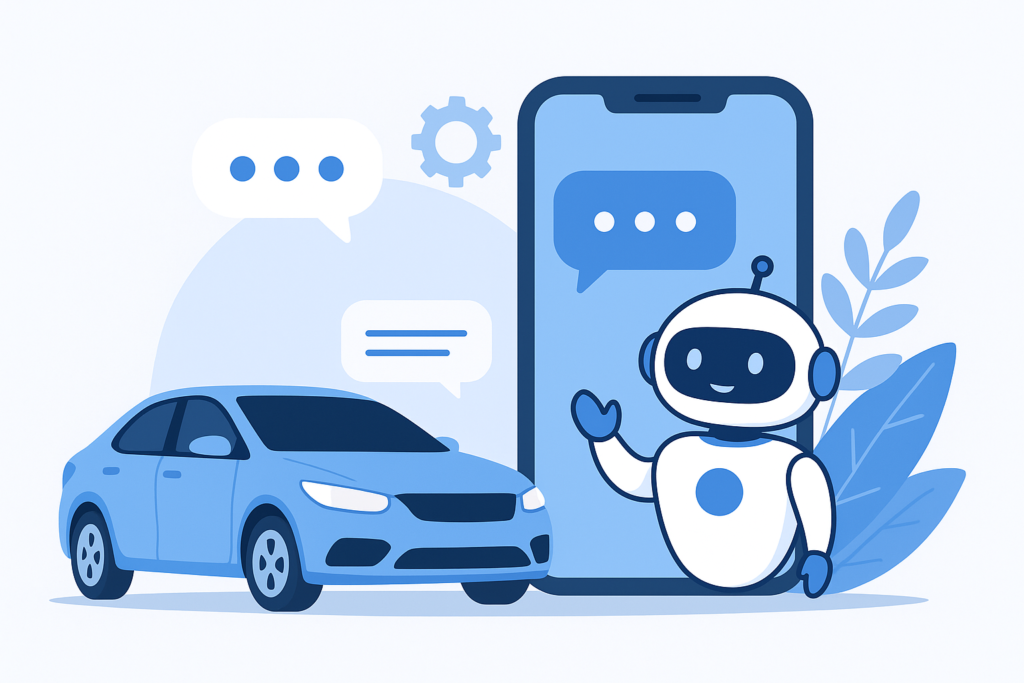
Automotive chatbots are revolutionizing the way car dealerships, service centers, and automotive businesses interact with customers. These AI-powered virtual assistants handle inquiries, schedule appointments, assist in vehicle selection, and even guide users through financing and insurance options. By integrating chatbots, automotive businesses can significantly improve customer engagement, reduce operational costs, and increase overall satisfaction. In this post, we explore the full potential of automotive chatbots and how they are shaping the future of the automobile industry.
Introduction
In today’s fast-paced automotive industry, businesses need innovative solutions to engage customers effectively. One such transformative tool is the automotive chatbot, which streamlines communication and enhances the overall customer experience. At Chattbotz, we specialize in designing and implementing intelligent chatbots for automotive businesses, helping them improve lead generation, customer support, and operational efficiency. In this blog, we will dive deep into the world of automotive chatbots, exploring their benefits, types, integration strategies, and real-world applications.
What is an Automotive Chatbot?
An automotive chatbot is an AI-powered virtual assistant specifically designed for the automotive industry. It interacts with customers via messaging platforms, websites, and mobile apps, automating tasks that would traditionally require human staff. Automotive chatbots can answer queries about vehicle models, availability, pricing, and even schedule test drives or service appointments.
These chatbots utilize natural language processing (NLP) to understand and respond to user questions accurately. Modern automotive chatbots can learn from previous interactions, improving their responses over time. They provide 24/7 support, reduce wait times, and free up human employees to focus on more complex tasks. The result is a seamless and efficient customer experience that enhances the dealership’s reputation and customer satisfaction.
Benefits of Automotive Chatbots
Automotive chatbots offer numerous benefits to businesses and customers alike. First, they enhance customer engagement by providing instant responses, reducing frustration caused by long wait times. They can handle multiple inquiries simultaneously, ensuring no customer feels neglected.
Second, they improve operational efficiency. By automating repetitive tasks such as appointment scheduling, vehicle inquiries, and FAQs, dealerships can focus their staff on more critical aspects like closing sales or performing vehicle maintenance.
Third, chatbots provide data-driven insights. They record customer interactions, helping dealerships understand preferences, identify trends, and improve marketing strategies. Additionally, chatbots can increase lead generation by capturing user information during conversations, nurturing potential buyers through automated follow-ups.
Types of Automotive Chatbots
Automotive chatbots can be broadly categorized into three types: informational, transactional, and service-oriented.
- Informational chatbots provide details about vehicles, prices, and promotions.
- Transactional chatbots assist in tasks such as booking test drives, purchasing vehicles online, or financing options.
- Service-oriented chatbots handle after-sales support, including maintenance reminders, service appointments, and warranty queries.
Choosing the right type of chatbot depends on the business’s goals and customer interaction requirements. Many automotive businesses implement a hybrid approach, combining multiple chatbot types to provide a seamless experience.
How Automotive Chatbots Improve Customer Experience
Customer experience is paramount in the automotive industry, where decisions often involve significant investment. Automotive chatbots enhance the experience by providing instant responses, personalized recommendations, and 24/7 availability.
For instance, a customer searching for an SUV can interact with a chatbot to receive tailored suggestions based on preferences, budget, and location. Chatbots can also offer virtual tours of vehicles, show images, videos, and detailed specifications. Furthermore, by handling routine inquiries efficiently, chatbots reduce the workload on human staff, allowing them to focus on high-value interactions, such as closing sales or addressing complex issues.
Key Features of an Automotive Chatbot
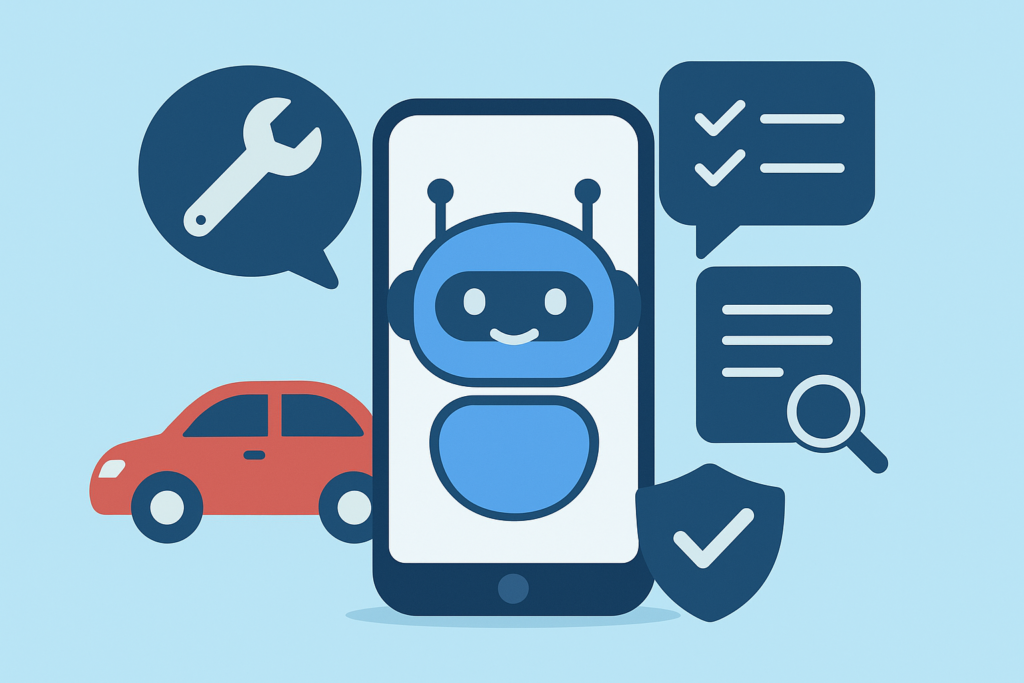
Modern automotive chatbots come equipped with a variety of features designed to maximize efficiency and engagement:
- Natural Language Understanding (NLU): NLU enables the chatbot to comprehend user inputs in everyday language, accurately interpreting questions and commands to provide relevant automotive information, support, or guidance seamlessly.
- Multi-channel support: Multi-channel support allows the chatbot to interact with users across platforms like websites, mobile apps, social media, and messaging apps, ensuring consistent, seamless customer experiences anytime, anywhere.
- Lead capture: Lead capture enables the chatbot to collect potential customer information such as names, emails, and preferences, helping automotive businesses generate qualified leads and boost sales opportunities efficiently.
- Integration with CRM: CRM integration allows the chatbot to sync customer interactions and data with business systems, enhancing personalized communication, tracking leads, and improving overall customer relationship management effectively.
- Appointment scheduling: Appointment scheduling allows the chatbot to efficiently book test drives, service appointments, or consultations, reducing manual effort, preventing scheduling conflicts, and enhancing customer convenience and satisfaction.
These features help automotive businesses streamline communication, improve productivity, and ultimately drive sales.
Implementing Automotive Chatbots in Dealerships
Implementing a chatbot in an automotive dealership involves several steps. First, businesses must identify their primary objectives, such as lead generation, appointment scheduling, or customer support.
Next, it is essential to design conversation flows that cater to the target audience, ensuring the chatbot provides relevant, accurate, and engaging responses. Integration with CRM and inventory management systems is crucial for real-time vehicle availability updates. Finally, continuous monitoring and optimization ensure the chatbot evolves with customer needs and industry trends.
Automotive Chatbots for Vehicle Sales
Chatbots can significantly enhance the vehicle sales process by assisting customers at every step. They provide information about available models, features, pricing, and financing options. By offering personalized recommendations based on user preferences, chatbots help customers make informed decisions quickly.
Some advanced automotive chatbots also support online vehicle purchasing, allowing users to complete the transaction seamlessly. By automating repetitive sales tasks, dealerships can focus on high-touch interactions that require human expertise, improving overall sales performance.
Chatbots in After-Sales Support
After-sales support is critical in the automotive industry, affecting brand loyalty and customer satisfaction. Automotive chatbots streamline this process by automating service reminders, warranty queries, and maintenance booking.
Customers can interact with the chatbot to check service schedules, receive troubleshooting guidance, or even track ongoing repairs. This reduces phone calls, emails, and in-person visits while ensuring customers receive timely and accurate support, enhancing overall satisfaction.
Integrating Chatbots with CRM Systems
For maximum efficiency, automotive chatbots should be integrated with Customer Relationship Management (CRM) systems. This allows dealerships to track leads, monitor interactions, and gather valuable data.
CRM integration enables personalized marketing campaigns, targeted offers, and follow-ups based on customer behavior. Chatbots can also record user preferences, vehicle interests, and service history, helping sales and support teams provide tailored solutions, improving engagement and conversion rates.
AI and Machine Learning in Automotive Chatbots
Artificial Intelligence (AI) and Machine Learning (ML) empower automotive chatbots to learn from past interactions, continuously improving their responses. AI algorithms can analyze user queries, detect intent, and provide contextual answers.
Machine learning enables chatbots to recognize patterns in customer behavior, predict vehicle preferences, and offer proactive recommendations. This ensures a highly personalized and engaging experience for every customer, reducing response errors and improving satisfaction.
Voice-Enabled Automotive Chatbots
With the rise of voice assistants like Alexa and Google Assistant, voice-enabled automotive chatbots are gaining popularity. They allow customers to interact naturally using speech, making the experience more intuitive and convenient.
Voice chatbots can perform tasks such as booking service appointments, providing vehicle specifications, or giving navigation instructions. This hands-free interaction enhances accessibility, particularly for users who prefer voice communication over text-based chats.
Automotive Chatbots for Marketing and Promotions
Automotive chatbots are not just for support—they are also powerful marketing tools. They can promote new vehicle launches, special offers, and seasonal discounts directly to customers via chat.
By analyzing user behavior, chatbots can send personalized recommendations, increasing the likelihood of conversion. Additionally, chatbots help automotive businesses engage with potential buyers in real time, creating a more dynamic and interactive marketing strategy.
Measuring Automotive Chatbot Performance
To ensure chatbots deliver value, businesses need to track key performance metrics. Important KPIs include:
- Response accuracy: Response accuracy measures how correctly the chatbot understands and answers user queries, ensuring reliable information delivery, improving customer satisfaction, and identifying areas for continuous improvement in automotive support.
- User engagement: User engagement tracks how actively customers interact with the chatbot, including message frequency and session duration, helping assess effectiveness, identify improvements, and enhance overall user experience in automotive services.
- Conversion rates: Conversion rates track how effectively the chatbot turns interactions into desired actions, such as bookings or inquiries, helping automotive businesses measure ROI and optimize strategies for higher sales and engagement.
- Customer satisfaction: Customer satisfaction measures how well the chatbot meets user expectations, gathering feedback on service quality, responsiveness, and support effectiveness, helping improve experiences and build stronger automotive customer relationships.
Analyzing these metrics allows businesses to optimize chatbot performance, identify areas for improvement, and enhance customer experience.
Chatbots for Automotive Financing Assistance
Financing is often a complex aspect of vehicle purchases. Automotive chatbots simplify this process by providing real-time financing options, EMI calculations, and loan approvals.
Chatbots can guide customers through documentation, eligibility criteria, and payment schedules, reducing confusion and speeding up the buying process. This not only enhances customer experience but also increases the likelihood of closing sales successfully.
Common Mistakes in Implementing Automotive Chatbots
Even with advanced technology, businesses often make mistakes when deploying chatbots:
- Overcomplicating the conversation: Long, confusing flows can frustrate users.
- Neglecting integration: Failing to connect with CRM or inventory systems reduces efficiency.
- Ignoring user feedback: Continuous improvement is essential for chatbot success.
- Not personalizing interactions: Generic responses fail to engage customers.
- Underestimating training needs: AI chatbots require proper datasets to function accurately.
Avoiding these mistakes ensures chatbots are effective, user-friendly, and result-driven.
Automotive Chatbots for Dealership Websites
Integrating chatbots into dealership websites allows visitors to interact instantly, browse inventory, and request information. This reduces bounce rates and encourages users to stay longer, exploring available vehicles.
Chatbots can capture lead information, schedule test drives, and provide 24/7 support, turning website visitors into potential buyers. A well-integrated chatbot transforms a standard dealership website into a dynamic sales and support platform, improving overall business performance.
Future of Automotive Chatbots
The future of automotive chatbots looks promising with advancements in AI, NLP, and voice technology. Expect more predictive, proactive, and personalized interactions, seamless integration with connected cars, and enhanced real-time support.
Future chatbots may also leverage AR/VR experiences, allowing customers to virtually explore vehicles or visualize modifications before purchase. As technology evolves, automotive chatbots will continue to be a critical driver of customer satisfaction and business growth.
Choosing the Right Automotive Chatbot Provider
Selecting the right provider is crucial for maximizing chatbot benefits. Businesses should consider:
- Customization options: Customization options allow businesses to tailor the chatbot’s appearance, tone, and functionality to match their brand identity, ensuring personalized interactions and a seamless customer experience in the automotive industry.
- Integration capabilities: Integration capabilities ensure the chatbot can connect seamlessly with existing systems like CRM, inventory, and booking platforms, enabling smooth workflows, accurate data sharing, and enhanced operational efficiency.
- AI and NLP proficiency: AI and NLP proficiency ensures the chatbot understands natural language, provides accurate responses, learns from interactions, and delivers intelligent, human-like conversations for superior automotive customer experiences.
- Support and maintenance: Reliable support and maintenance ensure the chatbot operates smoothly, receives timely updates, and quickly resolves technical issues, guaranteeing uninterrupted service and a consistent, high-quality experience for automotive customers.
- Proven track record: A proven track record demonstrates the provider’s experience, reliability, and successful implementations, giving confidence that the chatbot will deliver effective performance, measurable results, and a positive impact on automotive business operations.
Choosing a reliable provider like Chattbotz ensures a high-performing, efficient, and ROI-driven chatbot solution.
FAQs About Automotive Chatbots
Q1: Are automotive chatbots expensive to implement?
Not necessarily. Costs vary depending on features and customization, but the ROI often outweighs the initial investment due to increased leads and operational efficiency.
Q2: Can chatbots handle complex customer queries?
Yes, modern AI chatbots can escalate complex queries to human agents while handling routine tasks autonomously.
Q3: Do chatbots work on mobile apps?
Absolutely. Chatbots can be integrated with websites, social media, and mobile applications to ensure multi-channel support.
Q4: How do chatbots capture leads?
They collect user information during conversations, such as contact details, vehicle preferences, and appointment requests.
Q5: Will a chatbot replace sales staff?
No. Chatbots complement human staff by automating repetitive tasks and freeing employees for high-value interactions.
Conclusion
Automotive chatbots are transforming the way automotive businesses interact with customers, enhancing engagement, efficiency, and sales. By implementing a well-designed chatbot, dealerships and service centers can deliver seamless experiences, capture valuable leads, and stay ahead in a competitive industry. At Chattbotz, we specialize in creating intelligent, customized automotive chatbots that drive results, ensuring businesses remain at the forefront of innovation and customer satisfaction.