
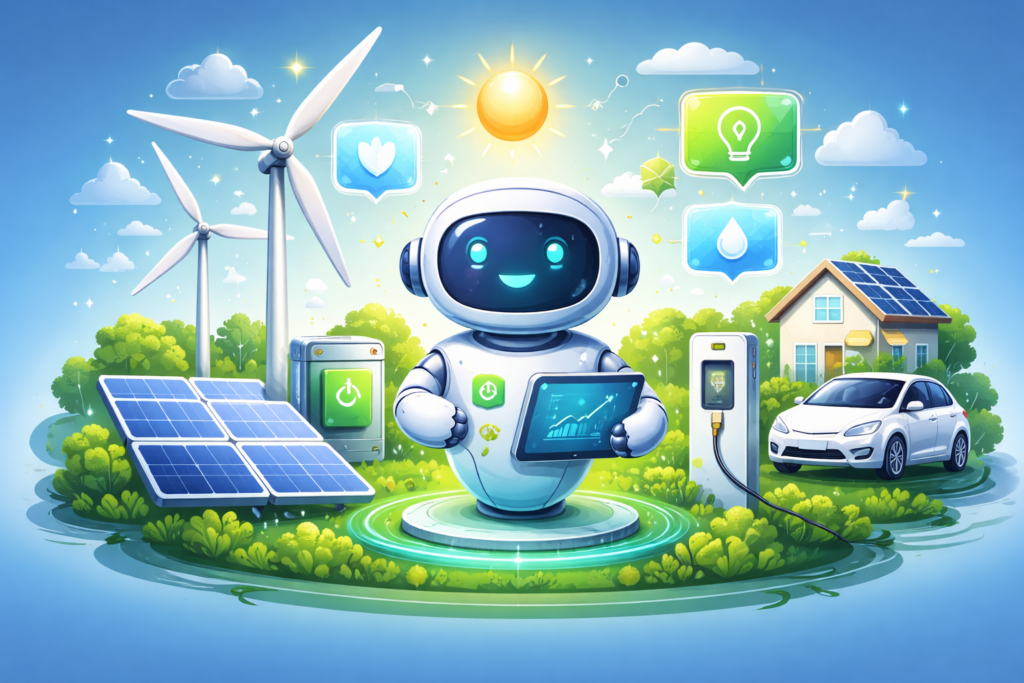
Renewable energy is rapidly transforming the way the world generates and consumes power. With advancements in artificial intelligence (AI), renewable energy chatbots are emerging as essential tools to simplify energy management, provide real-time insights, and enhance user engagement. These chatbots help users understand complex energy data, make informed decisions, and promote sustainable energy adoption. By integrating AI with renewable energy platforms, organizations can provide smarter solutions while encouraging cleaner, greener practices worldwide.
Introduction
In today’s digital era, managing renewable energy systems can be challenging for both consumers and businesses. At Chattbotz, we understand the importance of simplifying this process through innovative AI-powered solutions. Renewable energy chatbots combine advanced AI algorithms with energy analytics to provide personalized guidance, monitoring, and recommendations for solar, wind, and other renewable energy systems. These chatbots not only enhance efficiency but also promote sustainability by educating users and encouraging responsible energy consumption. In this blog, we explore the various aspects, benefits, and implementation strategies of renewable energy chatbots, backed by high-authority sources and practical insights.
Understanding Renewable Energy Chatbots
A renewable energy chatbot is an AI-driven virtual assistant designed to interact with users and provide information related to renewable energy systems. These chatbots can monitor energy production, suggest optimizations, and answer user queries regarding solar panels, wind turbines, and energy storage solutions. Unlike conventional platforms, chatbots provide instantaneous responses, improving both user experience and operational efficiency.
The integration of AI allows chatbots to learn from user interactions and provide increasingly accurate insights. For example, a user can ask the chatbot about the most efficient energy usage schedule, and it can provide personalized suggestions based on historical consumption data. According to McKinsey Energy Insights, leveraging AI in energy management can increase system efficiency by up to 20%, making chatbots an indispensable tool for renewable energy adoption.
Furthermore, chatbots help bridge the knowledge gap by simplifying complex energy concepts. Users can learn about net metering, peak load management, and carbon footprint reduction directly through interactive AI interfaces. This approach makes renewable energy more accessible to non-experts while promoting informed decision-making.
Key Benefits of Renewable Energy Chatbots
Renewable energy chatbots offer numerous benefits for users and organizations alike. Firstly, they enhance user engagement by providing 24/7 support and instant responses to energy-related queries. This improves customer satisfaction and reduces the burden on traditional customer service teams. Studies from the International Energy Agency show that user education through interactive platforms significantly improves engagement and sustainable energy adoption.
Secondly, these chatbots provide real-time energy monitoring and optimization. By analyzing consumption patterns and energy generation data, chatbots can suggest actionable improvements, such as adjusting usage during peak hours or optimizing solar energy storage. This proactive approach ensures efficient energy use and reduces operational costs.
Lastly, renewable energy chatbots support sustainability education. By guiding users toward eco-friendly energy practices and explaining technical concepts in simple terms, chatbots foster awareness and encourage responsible behavior. This aligns with global efforts to reduce carbon emissions and combat climate change.
How AI Enhances Renewable Energy Chatbots
Artificial intelligence is at the core of modern renewable energy chatbots. Machine learning algorithms analyze large datasets from energy production, consumption, and weather patterns to provide accurate, real-time insights. These AI capabilities allow chatbots to offer personalized recommendations and predictive maintenance alerts, ensuring optimal system performance.
For instance, AI can detect anomalies in solar panel performance or wind turbine output and notify users before major issues occur. This predictive capability reduces downtime and prevents costly repairs. According to Gartner, AI-driven chatbots can handle up to 70% of routine queries, freeing human teams for more strategic tasks.
Additionally, AI enables chatbots to continuously improve based on user interactions. Over time, chatbots become better at understanding user preferences, predicting energy needs, and providing more relevant advice. This makes renewable energy management both smarter and more user-friendly.
Applications of Renewable Energy Chatbots
Renewable energy chatbots have diverse applications across residential, commercial, and industrial sectors. In homes, chatbots can guide users on energy-saving strategies, monitor solar panel efficiency, and provide usage alerts. In commercial buildings, they optimize energy consumption, schedule maintenance, and reduce operating costs.
In industrial settings, chatbots monitor large-scale renewable installations, providing insights into production efficiency and predictive maintenance. They also support energy reporting and compliance with environmental standards. The U.S. Department of Energy emphasizes that automated tools like AI chatbots can significantly improve energy efficiency and reduce carbon emissions, making them vital in sustainable energy management.
Furthermore, chatbots can integrate with smart grids, energy management platforms, and Internet of Things (IoT) devices, creating a fully connected ecosystem for efficient energy monitoring and control.
Chatbots for Solar Energy Optimization

Solar energy systems are increasingly popular, but managing them efficiently can be complex. Renewable energy chatbots provide users with real-time monitoring, performance analysis, and energy-saving recommendations. For example, they can track solar panel efficiency, calculate energy storage needs, and alert users to maintenance requirements. By analyzing weather patterns and energy consumption data, chatbots help users maximize energy output and reduce costs.
AI-powered chatbots can also predict solar generation based on historical data, helping users schedule appliance usage during peak solar production. According to National Renewable Energy Laboratory (NREL), predictive analytics can enhance solar energy efficiency by up to 15%, making AI chatbots a valuable tool for homeowners and businesses alike.
Moreover, chatbots simplify technical concepts. Users can ask about “net metering” or “solar inverter performance,” and the chatbot provides clear, actionable answers. This reduces reliance on human technical support and empowers users to manage their renewable energy systems independently.
Chatbots in Wind Energy Management
Wind energy requires careful monitoring due to variable wind speeds and equipment maintenance needs. Renewable energy chatbots analyze turbine performance, predict maintenance issues, and optimize energy output. They provide alerts about abnormal readings or potential downtime, preventing costly repairs and ensuring continuous energy production.
Wind energy chatbots also integrate with IoT sensors, collecting real-time data on wind speed, turbine rotation, and environmental conditions. According to WindEurope, predictive maintenance using AI can reduce turbine downtime by up to 20%, increasing overall energy efficiency.
Additionally, chatbots educate users about wind energy production, maintenance schedules, and energy storage options. By providing user-friendly explanations, they make wind energy management more accessible to non-experts and support sustainable practices.
Enhancing Energy Storage with Chatbots
Energy storage is critical for renewable energy systems, particularly to balance supply and demand. Chatbots help users monitor battery health, optimize charging cycles, and extend battery life. By analyzing usage patterns and energy production, chatbots suggest the best times to store or use energy.
For industrial energy storage systems, chatbots can forecast demand spikes and manage load distribution, reducing energy costs and improving system reliability. According to IEA, efficient energy storage management can increase the usability of renewable energy by 30–40%.
Furthermore, chatbots provide alerts for potential failures, overcharging, or undercharging, helping users avoid costly battery damage. These predictive insights ensure renewable energy systems remain efficient and sustainable.
Reducing Carbon Footprint Through Chatbots
One of the key benefits of renewable energy chatbots is their ability to help users reduce their carbon footprint. By tracking energy consumption, providing personalized recommendations, and promoting efficient practices, chatbots encourage environmentally responsible behavior.
For example, a chatbot can suggest running high-energy appliances during peak solar generation or optimizing heating and cooling schedules. This reduces reliance on fossil fuels and lowers carbon emissions. According to the United Nations Environment Programme, informed energy management can significantly contribute to achieving climate goals.
Additionally, chatbots educate users about sustainable energy practices, recycling, and energy-efficient technologies, fostering long-term behavioral change that supports global sustainability initiatives.
Integration with Smart Grids
Smart grids rely on real-time data and intelligent control systems to optimize energy distribution. Renewable energy chatbots interface with smart grid platforms, providing insights on energy flow, load balancing, and consumption trends. This integration ensures efficient energy usage and reduces system losses.
Chatbots can alert users to peak demand periods, recommend energy-saving measures, and suggest when to use stored energy. According to World Economic Forum, smart grid integration with AI tools like chatbots improves energy efficiency and grid resilience, making renewable energy systems more reliable and user-friendly.
Cost Savings with Renewable Energy Chatbots
Implementing renewable energy chatbots can lead to substantial cost savings. By monitoring energy usage, predicting maintenance needs, and optimizing production, users can reduce operational expenses. For businesses, this means lower energy bills, fewer equipment failures, and improved ROI on renewable energy installations.
Additionally, AI-powered chatbots reduce the need for extensive human technical support. According to McKinsey, AI automation can cut operational costs by up to 20%, emphasizing the financial benefits of integrating chatbots in energy systems.
User Education and Engagement
Renewable energy chatbots excel at educating users on energy efficiency and sustainable practices. They break down complex concepts like peak load management, net metering, and energy storage optimization into simple, actionable advice. Users can ask questions about energy usage, solar or wind system performance, and receive instant, personalized guidance. This improves engagement and promotes responsible energy behavior.
Interactive features, such as quizzes, tips, and scenario simulations, make learning enjoyable. According to the U.S. Department of Energy, interactive tools significantly improve energy literacy and increase the adoption of renewable practices. Chatbots also track user behavior, providing insights into areas where users need more guidance.
By actively engaging users, chatbots create a feedback loop, allowing continuous improvement of the advice and recommendations offered. This ensures users are not just passive consumers but informed participants in sustainable energy management.
Customization for Different Users
Renewable energy chatbots offer personalized experiences tailored to residential, commercial, and industrial users. Residential users may receive recommendations on solar panel maintenance or battery storage, while businesses get guidance on load balancing and predictive maintenance. This ensures advice is relevant, actionable, and efficient.
Personalization improves satisfaction and system performance. AI algorithms analyze historical data, weather patterns, and consumption trends to forecast energy needs and optimize usage. According to McKinsey Energy Insights, tailored AI solutions can increase energy efficiency by up to 20%.
Customization also considers language preferences, accessibility needs, and technical expertise. Users can interact comfortably, receive understandable explanations, and make informed decisions about their energy systems.
Predictive Maintenance Capabilities
AI-enabled chatbots provide predictive maintenance alerts, reducing downtime and repair costs. By monitoring equipment such as solar panels, wind turbines, or battery storage, chatbots detect anomalies early and notify users before issues escalate.
Predictive insights optimize system longevity and efficiency. For example, turbines showing performance fluctuations can be serviced proactively, reducing unplanned outages. According to WindEurope, predictive maintenance can cut unscheduled downtime by 20–25%, demonstrating tangible benefits for renewable energy operations.
By combining data from IoT sensors, weather forecasts, and historical trends, chatbots ensure renewable energy systems remain reliable, efficient, and cost-effective.
Overcoming Language and Accessibility Barriers
Modern renewable energy chatbots support multiple languages and voice commands, making energy management inclusive. Users can interact in their preferred language, while voice features help those with visual impairments or limited tech experience.
Accessibility ensures broader adoption of renewable energy systems. Chatbots also offer simplified explanations for technical terms, making complex energy topics understandable to non-experts. According to IEA, accessible tools significantly improve engagement and adoption rates.
By removing barriers, chatbots allow a wider audience to actively participate in sustainable energy practices, fostering inclusivity and environmental responsibility.
Data Privacy and Security
Handling user energy data securely is critical. Renewable energy chatbots implement encryption, secure authentication, and regulatory compliance to protect sensitive information. Users can confidently adopt AI tools knowing their data is safe.
Cybersecurity measures prevent data breaches, unauthorized access, and manipulation of energy systems. The International Energy Agency highlights that robust security protocols in AI-powered energy tools build trust and ensure system reliability.
Secure chatbots allow users to focus on efficiency and sustainability without worrying about data vulnerabilities, supporting long-term adoption of renewable technologies.
Future Trends in Renewable Energy Chatbots

The future of renewable energy chatbots includes advanced predictive analytics, AI-driven energy trading, and smart city integration. Chatbots will become more intuitive, capable of proactive energy management and automated decision-making.
Emerging trends also involve integration with IoT devices, machine learning for energy forecasting, and enhanced user personalization. According to Gartner, AI-driven tools in energy management will continue to expand, becoming central to efficiency and sustainability efforts globally.
As renewable energy adoption grows, chatbots will evolve from informational assistants to strategic energy partners, guiding users and organizations toward smarter, greener energy decisions.
Common Mistakes in Implementing Renewable Energy Chatbots
- Neglecting User Education: Assuming users know how to interact with AI tools can reduce engagement. Always provide tutorials and guidance.
- Overlooking Data Security: Failing to implement encryption and compliance measures can compromise trust.
- Ignoring Integration with Existing Systems: Chatbots should sync with energy management platforms, IoT devices, and smart grids.
- Lack of Personalization: One-size-fits-all solutions reduce efficiency. Tailor recommendations to user type and consumption patterns.
- Not Using Predictive Analytics: Failing to leverage AI for predictive maintenance reduces potential savings and system efficiency.
FAQs about Renewable Energy Chatbots
Q1: What is a renewable energy chatbot?
A renewable energy chatbot is an AI-powered virtual assistant that provides insights, guidance, and recommendations for managing renewable energy systems.
Q2: How do chatbots improve energy efficiency?
Chatbots analyze energy production and consumption, provide real-time alerts, and recommend optimizations to reduce waste and maximize output.
Q3: Are renewable energy chatbots secure?
Yes, when proper data encryption, privacy policies, and compliance measures are implemented.
Q4: Can chatbots integrate with smart grids?
Absolutely. Chatbots can communicate with smart grids to optimize energy distribution and manage peak load demand.
Q5: Do chatbots support multiple energy sources?
Yes. They can monitor solar, wind, hydro, and energy storage systems, providing unified insights.
Conclusion
Renewable energy chatbots are transforming the landscape of energy management by providing real-time monitoring, predictive analytics, user education, and sustainability insights. They empower users to optimize renewable energy systems, reduce costs, and lower carbon footprints. By integrating AI with renewable energy solutions, organizations can improve efficiency, foster user engagement, and support global sustainability goals.
At Chattbotz, we are committed to leveraging AI to make renewable energy accessible, understandable, and efficient for everyone. By adopting renewable energy chatbots, you’re not just embracing innovation — you’re contributing to a cleaner, smarter, and more sustainable future.