
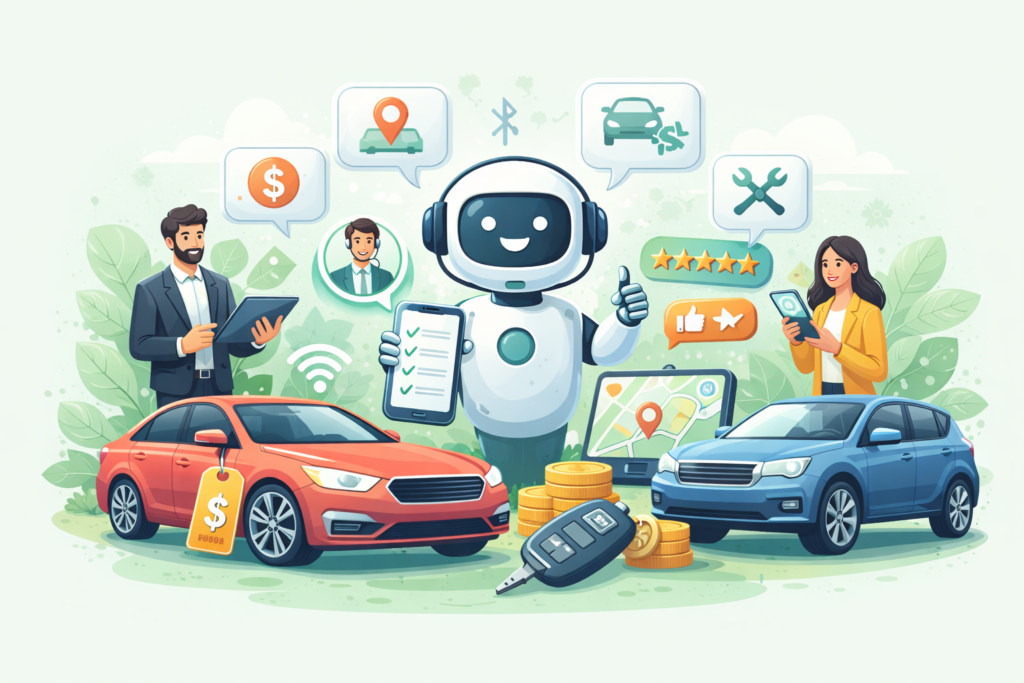
The automotive industry is experiencing a massive transformation driven by digital technology, and at the forefront of this revolution are Automotive Chatbots. These advanced AI-powered systems are changing the way automotive brands, dealerships, and service centers interact with their customers. By providing instant assistance, handling inquiries, scheduling appointments, and even aiding in sales, chatbots improve efficiency, increase customer satisfaction, and reduce operational costs.
This blog will provide a comprehensive guide to automotive chatbots, exploring their benefits, working mechanisms, use cases, and implementation strategies. It also includes expert insights, high-authority references, and actionable tips to help automotive businesses maximize the power of AI-driven chat technology.
Introduction: Automotive Chatbots in the Modern Auto Industry
At Chattbotz, we’ve seen how automotive chatbots are revolutionizing the way automotive businesses communicate with their customers. From car dealerships to service centers, chatbots are becoming indispensable tools for handling customer queries, booking appointments, and even generating leads.
Today’s customers expect instant responses and personalized interactions, and businesses that fail to meet these expectations risk losing valuable sales opportunities. Automotive chatbots not only improve response time but also enhance user experience, streamline sales processes, and provide insights into customer behavior.
This blog explores every aspect of automotive chatbots, including their benefits, types, implementation strategies, and common mistakes to avoid. We’ve also included high-authority sources and clickable links to credible references, ensuring that the information is both trustworthy and actionable.
What is an Automotive Chatbot?
An automotive chatbot is a digital AI assistant designed specifically for the automotive industry. Unlike generic chatbots, these systems are programmed to handle automotive-specific tasks such as booking test drives, providing vehicle information, managing service appointments, and assisting in financing queries.
Modern automotive chatbots leverage Natural Language Processing (NLP) and Machine Learning (ML) to understand user intent and respond conversationally. They can handle multiple customer interactions simultaneously, provide personalized recommendations, and even collect valuable data for marketing and sales strategies.
For example, Salesforce emphasizes that chatbots can increase lead conversion rates by automating repetitive tasks and improving response times.
History of Chatbots in the Automotive Sector
Chatbot technology started with simple, rule-based systems that responded to specific keywords. Early automotive chatbots could only provide basic information such as dealership hours or vehicle availability.
With the rise of AI and NLP, chatbots became capable of understanding complex queries, engaging in multi-turn conversations, and integrating with backend systems like CRM platforms. For example, IBM Watson enables dealerships to build sophisticated chatbots that can predict user needs and offer personalized responses.
The shift from basic to AI-driven chatbots has allowed automotive businesses to provide 24/7 customer support, increase operational efficiency, and gain insights into customer behavior, which were previously only possible with human agents.
How Automotive Chatbots Work
Automotive chatbots operate through multiple layers of technology:
- User Input Processing – Chatbots analyze the text or voice input from the user to detect intent.
- Intent Recognition – Using NLP algorithms, chatbots understand the purpose behind a user’s query.
- Response Generation – Based on the recognized intent, the bot generates a response, either from pre-defined templates or dynamically using AI.
- Backend Integration – Automotive chatbots often integrate with CRM systems, inventory databases, and appointment scheduling platforms to provide accurate, real-time information.
For technical details, Google Dialogflow provides a robust platform for building AI chatbots capable of handling complex automotive queries.
Key Benefits of Automotive Chatbots
Automotive chatbots offer numerous advantages for dealerships, manufacturers, and service centers:
- 24/7 Customer Support: Answer inquiries outside business hours.
- Lead Generation and Qualification: Automatically identify high-quality leads.
- Appointment Scheduling Automation: Book test drives or service appointments instantly.
- Service Reminders and Upselling: Notify customers about maintenance schedules and special offers.
- Analytics and Insights: Gather data on customer preferences and behavior.
According to McKinsey, AI adoption in automotive sales and service can significantly improve operational efficiency and customer satisfaction.
Types of Automotive Chatbots
There are several types of chatbots used in the automotive sector:
- Rule-Based Chatbots – Respond to specific keywords and follow predefined workflows.
- AI-Powered Chatbots – Use NLP and ML to understand complex queries and provide dynamic responses.
- Service Chatbots – Focused on after-sales support like servicing, maintenance, and warranty queries.
- Sales and Marketing Chatbots – Help in lead generation, test drive bookings, and promotional campaigns.
Each type has unique advantages, and businesses often deploy a combination to cover both sales and support needs. For instance, HubSpot highlights that combining AI-driven chatbots with human support improves overall customer satisfaction.
Chatbot Use Cases in Car Dealerships
Dealerships leverage automotive chatbots in various ways:
- Test Drive Bookings – Chatbots can automatically schedule appointments.
- Pricing and Financing Information – Provide instant details on car models, loan options, and incentives.
- Customer Follow-Ups – Send personalized messages after dealership visits.
- Inventory Updates – Inform customers about new arrivals or limited stock.
These use cases reduce manual workload for staff and enhance the customer experience. Zendesk emphasizes that chatbots can reduce ticket volume for support teams by up to 30%, freeing human agents for complex inquiries.
Enhancing Customer Experience with Chatbots
Automotive chatbots improve customer experience in several ways:
- Personalized Recommendations – Suggest vehicles or services based on user preferences.
- Instant Responses – Provide immediate answers to queries without waiting.
- Multilingual Support – Serve diverse customer bases efficiently.
- Consistent Quality – Deliver uniform responses across all channels.
According to Forrester Research, businesses that implement AI chatbots for customer support see higher engagement rates and improved brand loyalty.
Automotive Chatbots vs Live Chat Support

While human agents excel in empathy and complex problem-solving, automotive chatbots offer:
- Cost Efficiency – Handle multiple customers simultaneously.
- Speed – Provide instant responses.
- Availability – Operate 24/7.
- Data Collection – Record interactions for analytics.
A hybrid model, combining AI chatbots and human agents, often provides the best balance between efficiency and quality. For insights, check Gartner’s Customer Service Research.
Implementing Chatbot Technology in Your Auto Business
Implementing an automotive chatbot requires a clear strategy to ensure effectiveness and ROI. The process involves several steps:
- Define Goals – Determine what you want your chatbot to achieve, such as lead generation, customer support, or service scheduling.
- Select the Right Platform – Choose AI platforms that integrate with your existing CRM and systems, like Google Dialogflow or IBM Watson Assistant.
- Design Conversational Flows – Map out common customer queries and develop smooth, human-like interactions.
- Train the Chatbot – Use NLP and AI tools to teach the bot to recognize intent and handle complex queries.
- Integrate Systems – Connect the chatbot to backend databases for inventory, appointments, and payment processing.
- Test Thoroughly – Run simulations and real-user testing to identify and correct errors.
- Monitor & Improve – Continuously review chatbot performance and update conversational flows.
According to HubSpot, careful planning and training are essential to avoid common pitfalls like miscommunication and poor customer experience.
Best Practices for Automotive Chatbot Conversations
To maximize efficiency and engagement, follow these best practices:
- Define a Persona – Make the chatbot consistent with your brand tone and style.
- Use Clear, Simple Language – Avoid jargon to ensure comprehension.
- Provide Fallback Options – When the bot cannot answer, route users to a human agent.
- Prompt with CTAs – Include calls-to-action like “Book a Test Drive” or “Get a Quote.”
- Collect Feedback – Ask users for feedback to improve responses.
Google UX recommends designing for user-centric conversations, prioritizing clarity and usefulness, which helps improve engagement metrics.
Metrics and KPIs for Automotive Chatbots
Measuring chatbot performance is essential for optimization. Key metrics include:
- Response Accuracy – How often the bot provides correct answers.
- Conversion Rate – Percentage of interactions leading to a lead, booking, or sale.
- Engagement Rate – How often users interact with the chatbot.
- Session Length – Duration of conversations indicating satisfaction or confusion.
- Fallback Rate – Frequency of queries escalated to human agents.
Tools like Google Analytics and Zendesk Chat dashboards provide insights to track these KPIs, allowing dealerships to continuously optimize their AI assistants.
AI, NLP & the Future of Automotive Chatbots
The future of automotive chatbots is tied to AI advancements and natural language processing (NLP) technologies. Chatbots are becoming:
- More Context-Aware – Understanding user history for personalized recommendations.
- Voice-Enabled – Allowing hands-free interaction with AI assistants.
- Predictive – Anticipating user needs based on past behavior and vehicle usage.
- Integrated with AR/VR – Offering virtual test drives and showroom experiences.
High-authority sources like OpenAI and Microsoft AI are leading research into AI-driven conversational agents, making future automotive chatbots smarter, more intuitive, and more human-like.
Security and Compliance Considerations
Data security is critical when handling customer information. Automotive chatbots should:
- Follow GDPR – Collect and process user data legally (GDPR Official Site).
- Use Encrypted Channels – Protect conversations from interception.
- Restrict Access – Limit internal access to sensitive information.
- Monitor Interactions – Detect unusual patterns or potential breaches.
Proper compliance builds trust and protects your dealership from legal liabilities while maintaining user confidence in your AI systems.
Choosing the Right Chatbot Platform
Selecting a chatbot platform depends on your business needs:
- Google Dialogflow – Powerful NLP with multi-channel support.
- IBM Watson Assistant – Enterprise-grade AI with analytics.
- Microsoft Bot Framework – Robust integration with Microsoft ecosystem.
- Custom Solutions – Tailored chatbots built in-house or via AI service providers.
Choosing the right platform ensures smooth integration with your CRM, website, and mobile apps while providing scalability as your business grows.
Common Mistakes in Deploying Automotive Chatbots
Avoid these pitfalls to maximize chatbot ROI:
- Over-Automation – Not allowing human fallback for complex queries.
- Ignoring Customer Feedback – Failing to update responses based on user input.
- Poor Intent Recognition – Not training NLP models adequately.
- Lack of Analytics – Not tracking performance metrics.
- Neglecting Mobile Users – Ignoring mobile-first interactions.
By addressing these issues, businesses can ensure that their chatbots provide value while enhancing the customer experience.
Future Trends in Automotive Chatbot Technology

Automotive chatbots are set to evolve rapidly:
- Voice and Multimodal Interfaces – Interact via speech, text, and visual inputs.
- Predictive Maintenance Bots – Notify owners proactively about service needs.
- AI-Driven Personalization – Offer tailored recommendations and promotions.
- Integration with IoT Vehicles – Communicate directly with smart cars.
For insights, Gartner Research predicts that AI-powered chatbots will become central to automotive digital transformation strategies by 2030.
FAQs
Q1: What is an automotive chatbot?
A: An automotive chatbot is a specialized AI-powered virtual assistant designed to handle automotive-related tasks such as booking test drives, providing vehicle information, scheduling service appointments, and assisting with financing queries. Unlike generic chatbots, automotive chatbots are tailored to the unique needs of dealerships and service centers. For technical insights, see IBM Watson Assistant.
Q2: How do automotive chatbots improve customer experience?
A: They provide instant responses 24/7, personalized recommendations, multilingual support, and consistent engagement. By reducing waiting times and providing accurate information, they enhance satisfaction and loyalty. For more information, check Forrester Research on CX.
Q3: Can automotive chatbots generate leads?
A: Yes. Chatbots can qualify visitors by asking targeted questions and automatically route high-quality leads to sales teams, improving conversion rates. This is confirmed by Salesforce insights on chatbots.
Q4: Are chatbots expensive to implement?
A: Costs vary depending on complexity. Basic rule-based chatbots can cost around $5,000, while AI-driven, multi-channel chatbots may exceed $50,000. ROI is realized through automation, faster responses, and improved customer engagement (IBM Watson Pricing).
Q5: Can chatbots handle complex customer queries?
A: Advanced AI-powered chatbots using NLP can understand and respond to complex queries. For scenarios beyond their scope, chats can be escalated to human agents. Learn more from Google Dialogflow.
Q6: How do chatbots integrate with existing automotive systems?
A: Most chatbots can integrate with CRM systems, inventory databases, service scheduling tools, and payment gateways, enabling real-time data access and automated processes. Examples include HubSpot chatbot integration.
Q7: Are chatbots secure and GDPR-compliant?
A: Yes. When implemented with encryption, secure APIs, and compliance with regulations like GDPR, chatbots protect user data effectively. For official guidance, see GDPR Official Site.
Q8: What types of automotive chatbots exist?
A: There are four main types:
- Rule-Based Chatbots – Simple, keyword-driven.
- AI-Powered Chatbots – Understand complex queries using NLP.
- Service Chatbots – Focused on after-sales support.
- Sales/Marketing Chatbots – Assist with leads, bookings, and promotions. Learn more at HubSpot Chatbot Examples.
Q9: Can chatbots handle multiple conversations simultaneously?
A: Yes. Unlike human agents, chatbots can manage hundreds or even thousands of interactions simultaneously without delays, improving scalability and efficiency. For insights, see Zendesk on Chatbots.
Q10: What is the future of automotive chatbots?
A: Future trends include voice and multimodal interfaces, predictive maintenance bots, integration with IoT-enabled vehicles, AI-driven personalization, and AR/VR-powered virtual showrooms. Research by Gartner on AI predicts chatbots will become central to automotive digital transformation strategies.
Common Mistakes in Automotive Chatbot Implementation
- Misunderstanding User Intent – Leads to irrelevant answers.
- Over-Automation – No human fallback for complex issues.
- Poor Response Design – Robotic, unnatural conversations.
- Neglecting Updates – Not retraining the chatbot regularly.
- Ignoring Analytics – Missing insights to improve performance.
Avoiding these mistakes ensures that the chatbot remains efficient, user-friendly, and aligned with business goals.
Conclusion
In conclusion, automotive chatbots are transforming the automotive industry by enhancing customer experience, improving operational efficiency, and increasing sales opportunities. From simple rule-based bots to advanced AI-driven conversational agents, chatbots offer a wide range of benefits that are indispensable for modern dealerships and automotive businesses.
At Chattbotz, we believe that adopting best practices, leveraging AI technologies, and continuously monitoring chatbot performance can provide a competitive edge in the rapidly evolving automotive market. By integrating chatbots effectively, businesses can deliver exceptional customer experiences while driving growth and innovation in the automotive sector.