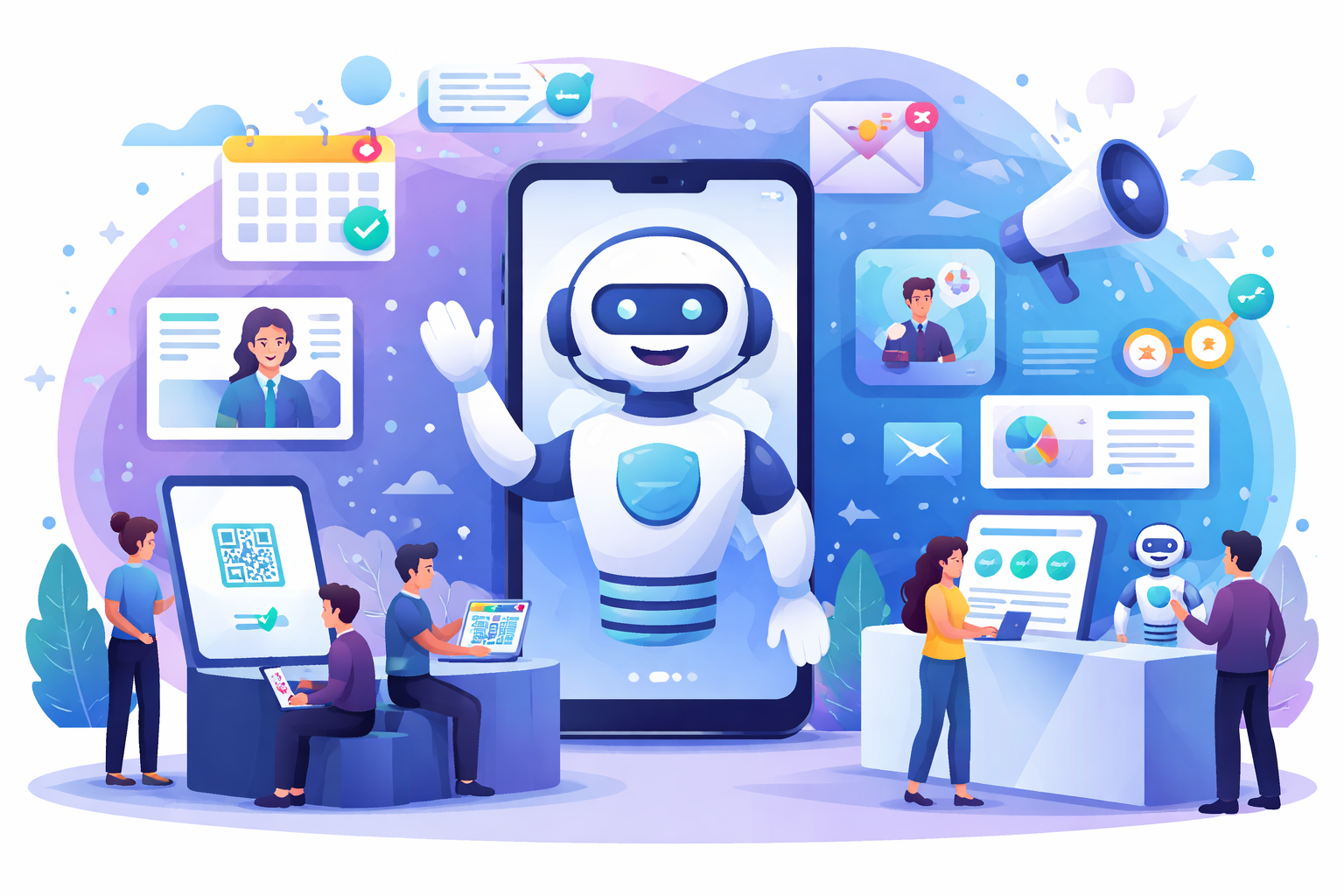

Events & Conferences Chatbot solutions automate attendee registration, improve engagement, streamline event logistics, and enhance real-time communication for conferences, trade shows, and corporate events.
Introduction: Transforming Event Experiences with Intelligent Automation
Modern events and conferences are becoming more complex, interactive, and digitally driven than ever before. From global trade shows to corporate seminars, organizers are under immense pressure to deliver seamless attendee experiences while managing multiple logistical layers. Traditional event communication methods—emails, manual support desks, and static websites—often struggle to keep pace with the expectations of today’s digital-first audiences.
This is where Events & Conferences Chatbots are redefining how organizers communicate, manage, and engage attendees. These AI-powered systems provide instant responses, automate repetitive processes, and enable personalized communication at scale. Instead of waiting hours for responses or navigating confusing schedules, attendees receive real-time assistance, reminders, and updates through conversational interfaces.
On platforms like Chattbotz, businesses are adopting advanced chatbot solutions designed specifically for live events, exhibitions, webinars, and hybrid conferences. These chatbots serve as virtual assistants that handle everything from registration to attendee engagement, making event management more efficient, data-driven, and scalable.
As artificial intelligence evolves, chatbots are becoming smarter, faster, and more context-aware. Their ability to integrate with ticketing platforms, CRM systems, and event management tools allows organizers to automate workflows while delivering consistent, high-quality support. In today’s competitive event landscape, adopting chatbot technology is no longer optional—it is becoming essential for delivering memorable and efficient event experiences.
Understanding Events & Conferences Chatbots and Their Core Purpose
Events and Conferences Chatbots are intelligent software tools designed to automate communication between event organizers and attendees. Unlike traditional support systems that rely heavily on manual responses, chatbots provide immediate, automated replies to attendee queries. This allows organizers to manage large-scale communication without overwhelming their support teams.
The primary purpose of these chatbots is to streamline event operations while improving attendee satisfaction. During the planning phase, chatbots assist with registration, ticket purchases, and session selection. Once the event begins, they act as virtual guides, providing schedules, venue directions, speaker details, and reminders. After the event, they can collect feedback, distribute certificates, and provide follow-up information.
One of the defining characteristics of modern event chatbots is their ability to leverage Natural Language Processing (NLP). NLP enables chatbots to understand human language and respond contextually rather than relying on rigid, pre-defined scripts. This makes interactions feel natural and conversational, increasing user trust and engagement.
Additionally, event chatbots support multiple communication channels such as websites, mobile apps, messaging platforms, and social media. This omnichannel presence ensures attendees can access information wherever they are. Whether someone needs help finding a session room or wants to connect with exhibitors, the chatbot acts as a centralized communication hub.
As event organizers aim to deliver personalized experiences, chatbots are becoming powerful tools for customization. By analyzing attendee preferences, interests, and behavior, chatbots recommend relevant sessions, networking opportunities, and resources. This personalized guidance enhances attendee satisfaction and encourages deeper engagement throughout the event lifecycle.
The Evolution of Event Communication and the Rise of Chatbot Technology
Event communication has undergone significant transformation over the past decade. Previously, organizers relied on static websites, printed schedules, and manual customer support teams to manage attendee interactions. While these methods were functional, they lacked scalability and responsiveness, especially for large events with thousands of participants.
The shift toward digital transformation introduced mobile apps, email automation, and cloud-based event platforms. However, even these tools required users to actively search for information rather than receiving proactive assistance. This gap created the opportunity for chatbot technology to emerge as a real-time communication solution.
Chatbots began gaining popularity alongside advancements in artificial intelligence and machine learning. As technologies such as conversational AI matured, chatbots became capable of handling complex queries and providing intelligent responses. Organizations started integrating chatbots into their event workflows to reduce response times and enhance user satisfaction.
A major turning point occurred when chatbots began supporting multilingual communication. Global events often attract attendees from different regions, and language barriers can create confusion. Multilingual chatbots eliminated this challenge by providing automated translation and localized responses, making events more inclusive and accessible.
Today, chatbots are evolving into fully integrated event assistants capable of performing predictive analytics. They analyze attendee behavior patterns to anticipate needs and deliver proactive notifications. For example, a chatbot may remind an attendee about an upcoming session based on their selected interests or notify them about changes in venue arrangements.
As technology continues to advance, the role of chatbots in event management is expected to expand further. Integration with wearable devices, virtual reality platforms, and hybrid event environments will unlock new possibilities for immersive and interactive attendee experiences.
Key Features That Define Modern Events & Conferences Chatbots
Modern Events & Conferences Chatbots are equipped with advanced capabilities designed to enhance event efficiency and user engagement. One of the most critical features is automated registration management. Chatbots simplify the registration process by guiding users through ticket selection, payment options, and confirmation steps. This reduces friction and increases conversion rates.
Another essential feature is real-time event information delivery. Chatbots provide instant access to schedules, speaker profiles, venue maps, and session updates. Instead of navigating complex websites, attendees simply ask questions and receive immediate answers. This improves accessibility and reduces confusion during busy event schedules.
Personalization is also a defining feature of advanced chatbots. By collecting user preferences and analyzing behavioral data, chatbots tailor recommendations for sessions, networking opportunities, and exhibitors. This targeted approach ensures attendees receive relevant content that aligns with their interests.
Integration capabilities further enhance chatbot functionality. Modern chatbots connect with CRM systems, ticketing platforms, and analytics tools to synchronize data across multiple systems. This enables organizers to track attendee activity, monitor engagement metrics, and generate actionable insights for future events.
Security and data privacy features are equally important. With increasing concerns about data protection, chatbots must comply with recognized standards such as General Data Protection Regulation (GDPR). Ensuring secure data handling builds trust among users and protects sensitive information from unauthorized access.
Another noteworthy feature is feedback collection and sentiment analysis. After sessions or events, chatbots prompt attendees to share their experiences. This data helps organizers identify strengths, address weaknesses, and continuously improve event quality.
Benefits of Using Chatbots for Event Registration and Ticketing
Event registration is often the first point of interaction between organizers and attendees. A complicated or slow registration process can discourage potential participants. Chatbots simplify this experience by offering step-by-step guidance, ensuring users complete registrations quickly and accurately.
Automated ticketing is one of the most significant advantages of chatbot implementation. Attendees can browse ticket categories, select options, and complete payments directly within the chat interface. This streamlined workflow reduces cart abandonment rates and enhances the overall user experience.
Another benefit is 24/7 availability. Unlike human support teams that operate during fixed hours, chatbots remain active around the clock. This ensures attendees from different time zones can register without delays. The constant availability also reduces the workload on support staff, allowing them to focus on high-priority tasks.
Chatbots also enable dynamic ticket recommendations. Based on user preferences and event history, the chatbot suggests suitable ticket packages, workshops, or VIP upgrades. This personalized approach increases revenue opportunities while enhancing attendee satisfaction.
Furthermore, automated confirmations and reminders play a crucial role in reducing no-show rates. Once registration is completed, chatbots send confirmation messages, calendar invites, and reminders about upcoming sessions. This proactive communication keeps attendees informed and engaged throughout the event lifecycle.
From an operational perspective, chatbot-driven registration systems generate detailed analytics. Organizers gain insights into ticket sales trends, peak registration times, and attendee demographics. These insights help optimize marketing strategies and improve future event planning.
Enhancing Attendee Engagement Before, During, and After Events
Attendee engagement is one of the most critical success factors for any event. Chatbots significantly enhance engagement by delivering personalized communication throughout the entire event journey. Before the event begins, chatbots provide updates about speakers, session highlights, and networking opportunities.
Pre-event engagement also includes automated reminders and promotional messages. These notifications keep attendees excited and informed about upcoming sessions. Chatbots may suggest curated agendas based on user interests, ensuring participants attend sessions most relevant to their goals.
During the event, chatbots act as real-time assistants. They help attendees locate session rooms, access presentation materials, and connect with exhibitors. Interactive features such as polls, quizzes, and live Q&A sessions further enhance audience participation.
Post-event engagement is equally important for maintaining long-term relationships. After the event concludes, chatbots distribute feedback forms, certificates, and session recordings. They may also recommend future events or related content, encouraging repeat participation.
Another valuable engagement strategy involves personalized content delivery. By analyzing attendee behavior, chatbots send targeted recommendations and follow-ups. This tailored communication strengthens attendee relationships and increases brand loyalty.
Additionally, chatbots support community-building initiatives. They facilitate networking by matching attendees with similar interests or professional backgrounds. This feature transforms events into collaborative experiences where participants actively interact and exchange ideas.
Role of Artificial Intelligence and Natural Language Processing in Event Chatbots

Artificial Intelligence (AI) and Natural Language Processing (NLP) are the core technologies that power modern event chatbots. AI enables chatbots to learn from interactions, adapt to user behavior, and improve responses over time. This continuous learning capability ensures chatbots remain effective even as event requirements evolve.
Natural Language Processing allows chatbots to understand human language in its natural form. Instead of relying on rigid commands, users can communicate conversationally. The chatbot interprets intent, identifies keywords, and generates appropriate responses based on context.
Machine learning algorithms play a vital role in enhancing chatbot accuracy. These algorithms analyze large datasets to identify patterns and predict user needs. For example, if multiple attendees frequently ask about parking details, the chatbot proactively displays relevant information.
Speech recognition technology is another advancement shaping the future of chatbot interactions. Voice-enabled chatbots allow users to speak commands instead of typing messages. This feature is particularly useful in busy event environments where hands-free interaction improves convenience.
AI-powered sentiment analysis is also gaining popularity. By analyzing user responses, chatbots detect emotions such as frustration or satisfaction. This allows organizers to address issues promptly and enhance overall attendee satisfaction.
As AI technology continues to advance, chatbots are becoming more intelligent and context-aware. Their ability to deliver personalized experiences and predictive insights makes them invaluable tools for modern event management strategies.
Integration of Chatbots with Event Management Platforms and CRM Systems
Seamless integration is one of the defining features of successful Events & Conferences Chatbots. These chatbots are not standalone tools; they function as part of a broader event management ecosystem. Integrating chatbots with event platforms ensures that data flows smoothly between systems, eliminating redundancy and improving efficiency.
One of the most valuable integrations involves Customer Relationship Management (CRM) systems. When chatbots connect with CRM platforms, they automatically update attendee profiles, track interactions, and store communication history. This centralized data storage allows organizers to maintain detailed records of attendee preferences and engagement patterns.
Event management platforms also benefit from chatbot integration. For example, chatbots synchronize schedules, speaker updates, and venue changes in real time. If a session location changes, attendees receive immediate notifications without requiring manual updates from support teams.
Another key advantage of integration is advanced analytics and reporting. By connecting chatbots with analytics tools, organizers gain insights into attendee behavior, frequently asked questions, and engagement levels. These insights help refine event strategies and improve overall performance.
Security is a crucial consideration when integrating multiple systems. Event organizers must follow recognized standards such as Google Cloud security best practices. Adhering to these guidelines ensures data integrity and protects sensitive information from cyber threats.
Integration also supports marketing automation workflows. Chatbots can trigger email campaigns, send promotional messages, and manage lead generation processes. This unified communication strategy strengthens marketing effectiveness and improves conversion rates.
Personalization Strategies That Improve Event Experiences
Personalization is one of the most powerful capabilities of Events & Conferences Chatbots. In today’s competitive event landscape, attendees expect tailored experiences that match their interests and professional goals. Chatbots achieve personalization by analyzing user data and delivering customized recommendations.
One effective strategy involves personalized session recommendations. Based on registration details and past interactions, chatbots suggest sessions aligned with attendee preferences. This reduces decision fatigue and ensures participants attend sessions that provide maximum value.
Another personalization method includes targeted networking suggestions. Chatbots identify attendees with similar interests, industries, or professional roles. By connecting participants with relevant contacts, chatbots enhance networking opportunities and encourage meaningful collaborations.
Behavior-based messaging further strengthens personalization efforts. If an attendee frequently visits exhibitor pages related to a specific topic, the chatbot sends notifications about related sessions or product demonstrations. This proactive approach increases engagement and satisfaction.
Location-based personalization is particularly useful in large venues. Chatbots use geolocation data to guide attendees to nearby sessions, food courts, or networking lounges. This reduces confusion and improves navigation efficiency.
Personalization also extends to post-event communication. Chatbots deliver tailored follow-up messages, including recommended resources and upcoming event invitations. This continuous engagement fosters long-term relationships between organizers and attendees.
Multichannel Communication and Omnichannel Support for Event Attendees
Modern attendees interact with events through multiple digital channels, including websites, messaging apps, mobile applications, and social platforms. A successful Events & Conferences Chatbot must operate seamlessly across these environments to deliver consistent support. Multichannel communication ensures attendees can receive assistance regardless of their preferred platform.
Omnichannel support is particularly valuable for global conferences where attendees use different devices and applications. Some participants may interact through web chat, while others prefer messaging platforms or mobile apps. A well-integrated chatbot synchronizes conversations across channels, allowing users to switch devices without losing context. This unified experience reduces frustration and improves accessibility.
Another advantage of multichannel support is increased reach and responsiveness. Chatbots deployed across multiple platforms capture inquiries from diverse audiences and respond instantly. This reduces delays that often occur when attendees rely on traditional support methods such as email or call centers. Real-time communication ensures attendees remain informed about schedule updates, speaker changes, and event announcements.
Consistency in messaging is also critical. When chatbots operate across multiple platforms, they maintain standardized responses and branding. This consistency strengthens trust and reinforces professionalism. Organizers benefit from centralized communication management, enabling them to update information across all channels simultaneously.
Furthermore, multichannel chatbots support targeted engagement strategies. For example, reminders sent through messaging apps may encourage higher attendance compared to email notifications alone. By leveraging different communication channels strategically, organizers maximize attendee participation and improve overall event success.
Leveraging Data Analytics and Insights from Event Chatbot Interactions
Data-driven decision-making is essential for modern event management, and chatbot interactions generate valuable insights that can transform planning strategies. Every question asked, session viewed, or ticket purchased provides data that organizers can analyze to improve future events.
One of the primary advantages of chatbot analytics is identifying frequently asked questions. By analyzing these queries, organizers gain clarity on areas where attendees require additional support or information. This insight enables improvements in website content, event instructions, and promotional messaging.
Another significant benefit involves tracking attendee behavior patterns. Chatbots record user actions such as session selections, content interactions, and navigation preferences. These patterns reveal trends that help organizers optimize event schedules and resource allocation. For example, sessions with high interest levels can be assigned larger venues or repeated multiple times.
Advanced analytics also support predictive modeling. By studying historical chatbot data, organizers anticipate attendee needs and adjust strategies accordingly. Predictive insights help determine peak registration periods, optimal communication timing, and preferred content formats.
Data security remains a critical consideration when collecting and analyzing attendee information. Organizers should follow Google Analytics data protection best practices to ensure compliance with privacy standards. Maintaining secure data practices strengthens trust and protects sensitive information.
Ultimately, analytics-driven decision-making transforms events into measurable, continuously improving experiences. Chatbots serve as both communication tools and data collection systems, enabling organizers to make informed choices that enhance attendee satisfaction.
Supporting Hybrid and Virtual Events with Advanced Chatbot Capabilities
Hybrid and virtual events have become integral components of modern event strategies. These formats allow organizations to reach global audiences without geographical limitations. Events & Conferences Chatbots play a vital role in supporting hybrid and virtual environments by delivering interactive and responsive communication.
One of the primary functions of chatbots in virtual events is session navigation assistance. Virtual platforms often include multiple tracks and breakout rooms, making navigation complex. Chatbots simplify this process by guiding attendees directly to relevant sessions based on their preferences.
Chatbots also enhance engagement during live sessions. Interactive features such as polls, surveys, and live Q&A sessions encourage active participation. These tools create dynamic experiences that mimic in-person interactions, ensuring virtual attendees remain engaged throughout the event.
Another essential capability involves managing time zone differences. Global attendees may join events from different regions, making scheduling challenging. Chatbots automatically convert session times based on user location, ensuring accurate and convenient scheduling.
Hybrid events benefit significantly from chatbots that bridge communication between physical and virtual attendees. For example, virtual participants can ask questions that are displayed to speakers in real time, enabling seamless interaction across environments.
Accessibility is another major advantage. Chatbots support multilingual communication, ensuring attendees from diverse backgrounds can interact comfortably. This inclusive approach increases participation rates and strengthens the global reach of events.
Security, Privacy, and Compliance Considerations in Event Chatbots
Security and privacy are fundamental aspects of implementing Events & Conferences Chatbots. With large volumes of attendee data being processed, organizers must ensure secure data handling practices. Failure to protect sensitive information can lead to reputational damage and legal consequences.
One of the primary security measures involves encryption. Chatbots must use secure protocols such as HTTPS to protect communication between users and servers. Encryption ensures data transmitted during registration or payment processes remains confidential and protected from unauthorized access.
Compliance with recognized privacy standards is equally important. Regulations such as Google Privacy and Data Protection Guidelines provide valuable frameworks for managing user data responsibly. Adhering to these guidelines helps organizations maintain transparency and trust.
Access control mechanisms also play a crucial role in protecting data. Only authorized personnel should have access to sensitive information. Role-based permissions ensure that employees interact only with relevant data, reducing the risk of accidental exposure.
Regular security audits further strengthen chatbot reliability. By conducting routine assessments, organizations identify vulnerabilities and address them before they become serious threats. These proactive measures ensure chatbot systems remain secure and resilient.
Ultimately, prioritizing security and compliance enhances user confidence. Attendees are more likely to engage with chatbot systems when they trust that their personal information is protected.
Customization and Branding Opportunities with Event Chatbots
Customization plays a vital role in creating memorable event experiences. Events & Conferences Chatbots provide extensive branding opportunities that align communication with organizational identity. A customized chatbot reflects the tone, style, and messaging of the event, reinforcing brand recognition.
Visual customization is one of the most noticeable elements. Chatbot interfaces can include brand colors, logos, and themed designs that match event branding. This visual consistency enhances professionalism and creates a cohesive experience across digital touchpoints.
Language customization further strengthens branding. Chatbots can be programmed to use specific tone styles—formal, friendly, or conversational—depending on event requirements. Consistent messaging ensures that interactions feel authentic and aligned with brand personality.
Another significant advantage involves customizing conversation flows. Event organizers design chatbot responses tailored to specific event objectives. For example, a technology conference may emphasize innovation-focused messaging, while a corporate seminar may prioritize professionalism.
Customization also extends to interactive features such as welcome messages, personalized greetings, and targeted announcements. These elements create engaging experiences that make attendees feel valued and recognized.
Branding through chatbots is not limited to attendee interactions. Sponsors and exhibitors can also benefit from customized chatbot features that promote products or services. This additional exposure increases sponsorship value and enhances overall event revenue opportunities.
Measuring ROI and Performance Metrics for Events Chatbot Implementation
Measuring return on investment (ROI) is essential for evaluating the success of chatbot implementation. Without clear performance metrics, organizers cannot determine whether chatbot solutions are delivering measurable benefits.
One of the most commonly tracked metrics is response time. Chatbots significantly reduce response delays by providing instant answers. Comparing response times before and after chatbot implementation highlights improvements in operational efficiency.
Another important metric involves attendee engagement levels. Metrics such as message interactions, session recommendations accepted, and feedback submissions provide insights into chatbot effectiveness. High engagement rates indicate successful communication strategies.
Conversion tracking is equally valuable. Chatbots influence ticket sales, workshop registrations, and sponsor interactions. Monitoring conversion rates reveals how chatbot interactions impact revenue generation.
Cost savings represent another measurable benefit. By automating repetitive tasks, chatbots reduce the need for large support teams. This efficiency translates into lower operational costs and improved resource allocation.
Performance dashboards provide visual summaries of chatbot data. These dashboards enable organizers to identify trends, evaluate outcomes, and refine strategies. Regular performance evaluations ensure chatbot systems remain aligned with event goals.
Ultimately, measuring ROI ensures that chatbot investments deliver tangible value. Data-driven evaluations empower organizations to optimize chatbot features and achieve long-term success.
Future Trends Shaping the Evolution of Events & Conferences Chatbots

The future of Events & Conferences Chatbots is shaped by continuous technological innovation. Emerging trends indicate that chatbots will become even more intelligent, interactive, and immersive in the coming years.
One of the most significant trends involves voice-enabled interactions. Voice assistants are becoming increasingly popular, allowing attendees to interact with chatbots using spoken commands. This hands-free communication method improves accessibility and convenience.
Another emerging trend is integration with augmented reality (AR) and virtual reality (VR) platforms. Chatbots may guide users through virtual event spaces, providing real-time directions and interactive experiences. This immersive approach enhances engagement and creates memorable event journeys.
Artificial intelligence advancements are also enabling predictive personalization. Chatbots analyze historical data to anticipate attendee needs before questions are asked. For example, they may recommend sessions or networking opportunities based on user preferences.
Blockchain technology is expected to play a role in secure ticketing and authentication processes. By integrating blockchain systems, chatbots ensure transparent and tamper-proof transactions.
Sustainability initiatives are another key trend. Digital communication tools reduce reliance on printed materials, supporting environmentally responsible event practices. Chatbots contribute to this effort by delivering schedules, maps, and resources digitally.
As technology evolves, chatbots will become central to event innovation. Organizations that adopt these advancements early will gain competitive advantages and deliver exceptional attendee experiences.
Common Mistakes to Avoid When Implementing Events Chatbots
One of the most common mistakes organizations make is deploying chatbots without clear objectives. Without defined goals, chatbot interactions become generic and fail to deliver meaningful value. Establishing measurable targets—such as increasing registrations or improving engagement—is essential for success.
Another frequent issue involves poor chatbot training. If chatbots lack accurate data or structured responses, they may deliver incorrect information. This leads to confusion and reduces user trust. Continuous testing and refinement ensure chatbot accuracy and reliability.
Ignoring user experience design is another critical error. Complex conversation flows frustrate attendees and discourage interaction. Designing intuitive navigation and simple response structures enhances usability.
Organizations also underestimate the importance of integration. Standalone chatbots without connections to CRM or event platforms limit functionality. Seamless integration ensures data consistency and enhances performance.
Finally, neglecting data privacy practices can lead to serious consequences. Failing to implement security protocols exposes sensitive information to risks. Following recognized security guidelines protects user data and maintains credibility.
Frequently Asked Questions
1. What is an Events & Conferences Chatbot?
An Events & Conferences Chatbot is an AI-powered communication tool designed to assist attendees with registration, schedules, directions, and event-related queries. It automates repetitive tasks and enhances attendee engagement.
2. How do chatbots improve event registration processes?
Chatbots simplify registration by guiding users step-by-step through ticket selection, payment, and confirmation. This reduces errors and accelerates the registration process.
3. Can chatbots support multilingual communication?
Yes, modern chatbots support multiple languages, enabling global audiences to interact comfortably and access event information without language barriers.
4. Are chatbots suitable for hybrid and virtual events?
Absolutely. Chatbots help virtual attendees navigate sessions, participate in Q&A sessions, and receive updates in real time, improving engagement across digital environments.
5. How secure are event chatbots?
Event chatbots can be highly secure when implemented using encryption protocols, access controls, and privacy compliance standards. Regular audits ensure ongoing security.
6. What platforms can event chatbots integrate with?
Chatbots integrate with CRM systems, ticketing platforms, event management tools, and analytics dashboards to create unified workflows and data synchronization.
7. How do chatbots increase attendee engagement?
Chatbots deliver personalized recommendations, reminders, and interactive features such as polls and surveys, encouraging active participation throughout the event lifecycle.
8. What industries benefit from Events & Conferences Chatbots?
Industries such as education, technology, healthcare, finance, and corporate training benefit significantly from chatbot-enabled event management solutions.
Best Practices Summary
Implementing an Events & Conferences Chatbot successfully requires careful planning and execution. Start by defining clear objectives aligned with event goals. These objectives guide chatbot design and ensure measurable outcomes.
Focus on user experience when designing conversation flows. Clear navigation and intuitive responses encourage engagement and reduce confusion. Regular testing ensures chatbots deliver accurate information and adapt to evolving requirements.
Integration is another critical best practice. Connecting chatbots with CRM systems, ticketing tools, and analytics platforms ensures seamless workflows and improved data accuracy.
Security should remain a top priority. Implement encryption, access controls, and regular security audits to protect sensitive data. Following established privacy guidelines enhances trust and compliance.
Continuous improvement is essential. Monitor chatbot performance metrics, gather feedback, and refine responses regularly. This ongoing optimization ensures long-term success and improved attendee satisfaction.
Conclusion: Driving Smarter Events with Intelligent Chatbot Technology
Events today demand efficiency, personalization, and real-time communication. Chatbots provide the tools necessary to meet these expectations while simplifying complex event workflows. From registration and engagement to analytics and post-event follow-ups, chatbot technology enhances every stage of the event lifecycle.
Organizations seeking scalable and efficient solutions are increasingly turning to intelligent automation. Platforms like Chattbotz empower event organizers to deliver exceptional experiences through advanced chatbot capabilities. By embracing these technologies, businesses gain competitive advantages and create memorable event journeys for attendees worldwide.
The future of event management is deeply connected to intelligent communication systems. Implementing chatbot technology today prepares organizations for tomorrow’s evolving event landscape, ensuring sustained growth and innovation.
Want to Implement This Easily?
Prompt:
You are an expert consultant. Based on the blog post titled “(Events & Conferences Chatbot)”, provide a step-by-step, practical implementation guide. Include tools, best practices, common mistakes to avoid, and advanced tips. Assume the reader wants to implement everything discussed in this article effectively.
Call to Action:
Want our help implementing this? Just reach out to us via our website contact form:
https://appledew.co.uk/cb/contact-us/