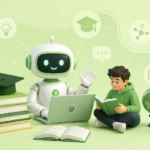
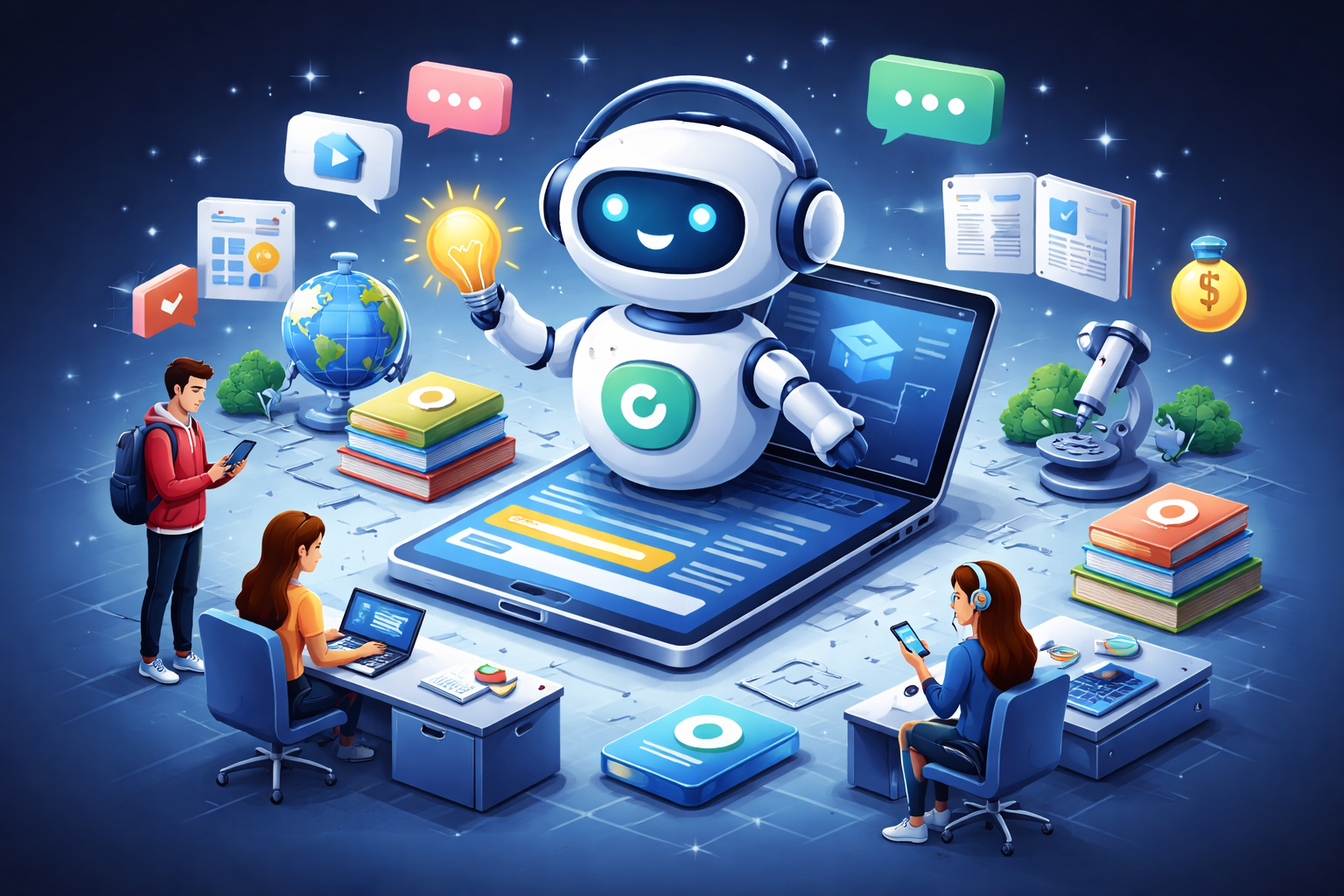

Education Chatbot solutions are transforming modern learning by automating student support, enhancing engagement, personalizing education, and improving institutional efficiency through AI-powered digital assistants.
Introduction
Digital transformation has reshaped nearly every industry, and education is no exception. As institutions adapt to evolving learner expectations, technology-driven communication tools are becoming essential. One of the most impactful innovations in this transformation is the education chatbot, an AI-powered virtual assistant designed to support students, teachers, and administrators through automated communication and personalized learning support.
On platforms like Chattbotz, education chatbots are developed to enhance the learning experience while streamlining administrative processes. These intelligent systems enable schools, universities, and training providers to provide real-time assistance, improve accessibility, and create highly interactive educational environments. With growing demand for online education and hybrid learning models, institutions increasingly rely on automated solutions to deliver timely responses and support.
Modern learners expect fast answers, personalized recommendations, and seamless digital experiences. Education chatbots help meet these expectations by providing instant support for academic inquiries, admissions processes, course navigation, and learning assistance. By integrating artificial intelligence into education workflows, organizations create scalable systems that improve communication, reduce workload, and foster deeper engagement. As we explore the capabilities and benefits of education chatbots, it becomes clear that they are not just technological tools but strategic assets shaping the future of learning.
Understanding Education Chatbots and Their Role in Modern Learning
Education chatbots are intelligent software systems designed to simulate human-like conversation using artificial intelligence and natural language processing. These tools allow students and educators to interact with digital assistants through messaging platforms, websites, or mobile applications. By answering questions, providing guidance, and delivering resources instantly, education chatbots enhance communication efficiency and create more responsive learning environments.
At their core, education chatbots function as virtual teaching assistants capable of handling repetitive tasks such as answering frequently asked questions, providing course information, and guiding students through learning materials. These systems reduce administrative workload while ensuring consistent support for learners. In large educational institutions where thousands of students require assistance simultaneously, chatbots play a vital role in maintaining service quality without overwhelming staff resources.
The role of education chatbots extends beyond simple question-answering. Advanced AI-powered chatbots support tutoring, feedback collection, and performance tracking. By analyzing user interactions, these systems generate insights into student behavior and learning patterns. This capability allows institutions to identify areas where students struggle and deliver targeted support. As digital learning environments continue to evolve, education chatbots are becoming essential tools for enhancing accessibility, improving response times, and creating highly interactive educational ecosystems.
The Evolution of Educational Technology and AI Integration
Educational technology has progressed significantly over the past few decades, transitioning from static digital resources to dynamic, AI-powered learning environments. Early learning management systems primarily focused on hosting course materials, assignments, and announcements. While these systems provided structure, they lacked real-time interaction and personalized guidance. The integration of artificial intelligence has changed this landscape, enabling more adaptive and interactive educational experiences.
The adoption of AI technologies in education aligns with best practices recommended by organizations such as Google Developers, which emphasizes scalable system design, user-focused experiences, and reliable performance standards. By following established development guidelines, institutions ensure their chatbot systems maintain accuracy, speed, and security. AI-driven chatbots are now capable of understanding context, recognizing user intent, and delivering tailored responses that improve engagement and learning outcomes.
Today’s education chatbots incorporate machine learning algorithms that continuously improve their responses based on user interactions. This adaptive capability allows systems to become more accurate over time, delivering highly relevant answers and recommendations. Additionally, integration with other digital tools such as learning management systems and content libraries creates a unified ecosystem where information flows seamlessly. As educational technology continues to advance, AI integration is expected to drive even more personalized and efficient learning models.
Key Features That Make Education Chatbots Effective
The effectiveness of education chatbots depends on a combination of advanced features designed to enhance communication, usability, and learning outcomes. One of the most important features is natural language understanding, which enables chatbots to interpret user queries accurately. Instead of relying on rigid commands, students can ask questions in conversational language, making interactions more intuitive and user-friendly.
Another essential feature is multi-platform accessibility. Education chatbots are designed to operate across websites, messaging apps, and mobile devices. This accessibility ensures students receive consistent support regardless of the device they use. Integration with widely adopted communication platforms improves user convenience while increasing engagement rates. In addition, chatbot dashboards provide administrators with tools to monitor performance, analyze user activity, and refine system responses.
Security and data privacy are also critical components of effective chatbot design. Institutions must follow industry security standards to protect sensitive student information. Guidelines from organizations such as National Institute of Standards and Technology provide frameworks for secure data handling and risk management. By implementing encryption protocols and secure authentication methods, education chatbots maintain trust while delivering reliable services. These combined features ensure that chatbot systems remain efficient, secure, and highly valuable for educational environments.
Benefits of Education Chatbots for Students
Students benefit significantly from education chatbots because these tools provide immediate assistance whenever help is needed. Unlike traditional support systems that rely on office hours or scheduled appointments, chatbots offer 24/7 availability. This constant accessibility allows learners to receive guidance at their convenience, improving productivity and reducing frustration associated with delayed responses.
Education chatbots also enhance learning efficiency by delivering personalized content recommendations. Based on user interactions, chatbots identify learning patterns and suggest resources tailored to individual needs. For example, if a student struggles with specific topics, the chatbot can recommend practice materials, tutorials, or relevant coursework. This personalized approach fosters deeper understanding and encourages continuous learning.
Additionally, chatbots support student confidence and independence. By providing instant feedback and guidance, learners feel more empowered to explore topics without hesitation. Interactive features such as quizzes, reminders, and progress tracking encourage consistent engagement with learning materials. As students become more comfortable using chatbot systems, they develop stronger digital literacy skills, which are increasingly essential in modern academic and professional environments.
Advantages for Teachers and Educational Institutions
Teachers and administrators experience substantial benefits when implementing education chatbots within their institutions. One of the primary advantages is workload reduction. Chatbots handle repetitive tasks such as responding to common inquiries, distributing course materials, and scheduling reminders. This automation allows educators to focus on more meaningful activities such as lesson planning, student mentoring, and curriculum development.
Education chatbots also improve operational efficiency across departments. Admissions teams, for example, use chatbots to answer prospective student questions, guide applicants through registration processes, and provide deadline reminders. This streamlined communication reduces response times and improves user satisfaction. Administrative workflows become more organized, resulting in smoother institutional operations and better resource management.
Furthermore, education chatbots enhance data-driven decision-making. By collecting and analyzing user interaction data, institutions gain insights into student behavior and preferences. These insights enable administrators to identify trends, measure engagement levels, and refine educational strategies. When combined with performance analytics, chatbot systems become powerful tools for improving academic outcomes and institutional performance.
How Education Chatbots Improve Student Engagement

Student engagement is one of the most critical factors influencing academic success, and education chatbots play a significant role in enhancing this engagement. Interactive communication encourages students to participate actively in learning activities. Unlike static learning platforms, chatbots provide real-time responses that create a dynamic and responsive educational environment.
Gamification features further enhance engagement by introducing elements such as quizzes, rewards, and achievement tracking. These interactive components motivate students to complete tasks and explore learning materials. Chatbots can also send reminders for assignments, upcoming exams, and scheduled classes, ensuring students stay organized and maintain consistent study habits.
Another important aspect of engagement is accessibility. Chatbots provide multilingual support and voice-based interaction options, making education more inclusive for diverse learner groups. Students who may feel hesitant to ask questions in traditional classroom settings often find it easier to communicate with chatbots. This increased participation leads to better knowledge retention and improved learning outcomes, demonstrating the transformative impact of chatbot technology on student engagement.
Personalization and Adaptive Learning Through AI Chatbots
Personalization has become a cornerstone of modern education, and AI-powered chatbots play a crucial role in delivering adaptive learning experiences. By analyzing user behavior, chatbots identify individual learning preferences and tailor content accordingly. This adaptive approach ensures that each student receives support aligned with their unique learning style.
Adaptive learning systems leverage machine learning algorithms to adjust difficulty levels and recommend resources based on performance metrics. For instance, if a student consistently performs well in certain topics, the chatbot may introduce more advanced materials to challenge them. Conversely, learners who struggle receive additional support through simplified explanations and practice exercises.
Personalization also enhances motivation by creating a sense of progress and achievement. When students see measurable improvements in their performance, they become more engaged and committed to learning. By combining analytics with user-friendly interfaces, education chatbots create customized learning pathways that maximize efficiency and satisfaction. This capability makes AI-driven personalization one of the most valuable features of modern educational technology.
Use Cases of Education Chatbots Across Learning Environments
Education chatbots are highly versatile and can be implemented across various learning environments. In schools and universities, chatbots assist with student onboarding, course selection, and academic guidance. They provide step-by-step instructions for registration, helping students navigate complex administrative processes without confusion.
Online learning platforms also benefit from chatbot integration. These systems provide real-time technical support, answer content-related questions, and guide learners through digital modules. In corporate training environments, chatbots serve as virtual mentors, delivering training materials and tracking employee progress. This functionality ensures consistent learning experiences across distributed teams.
Specialized learning programs, such as language training and certification courses, utilize chatbots to provide interactive practice sessions. These systems simulate real-world conversations, allowing learners to develop practical skills in a controlled environment. By adapting to diverse educational contexts, chatbots demonstrate their flexibility and effectiveness as tools for enhancing learning outcomes.
Integration of Education Chatbots with Learning Management Systems
Integrating education chatbots with learning management systems (LMS) significantly enhances the efficiency and functionality of digital learning platforms. Learning management systems serve as centralized hubs for course materials, assessments, communication, and performance tracking. When chatbots are integrated into these systems, students gain instant access to academic support without navigating multiple interfaces. This seamless connectivity improves usability and reduces the time required to locate information.
A well-integrated chatbot can perform numerous LMS-related tasks, such as guiding students through course enrollment, notifying them about assignment deadlines, and delivering personalized study recommendations. These automated processes reduce administrative workload and ensure that students remain informed about important updates. Integration also enables chatbots to retrieve data directly from course modules, ensuring that responses remain accurate and contextually relevant.
From a technical perspective, integration requires secure data exchange between chatbot systems and LMS platforms. Developers often follow recommended interoperability frameworks such as those defined by IMS Global Learning Consortium. Adhering to these frameworks ensures compatibility, scalability, and reliable performance across digital ecosystems. By enabling smooth integration, institutions create cohesive digital learning environments that enhance productivity and user satisfaction.
Ensuring Data Security and Privacy in Education Chatbots
Data security and privacy are fundamental considerations when deploying education chatbots. Educational institutions handle sensitive information, including student records, grades, and personal details. Protecting this data requires strong encryption methods, secure authentication systems, and strict access controls. Without proper safeguards, institutions risk data breaches that could compromise trust and regulatory compliance.
Implementing robust security practices involves following recognized frameworks such as those provided by International Organization for Standardization. These guidelines outline best practices for data protection, risk management, and system monitoring. By adhering to established standards, institutions demonstrate their commitment to maintaining secure digital environments and protecting user data.
Privacy policies should also be transparent and easily accessible to users. Students and educators must understand how their information is collected, stored, and used. Features such as anonymized analytics and role-based access ensure that sensitive data remains protected. Regular security audits and updates further strengthen system reliability. By prioritizing security and privacy, education chatbots maintain trust while supporting safe digital learning experiences.
Designing User-Friendly Interfaces for Educational Chatbots
User-friendly design is a critical factor in the successful adoption of education chatbots. A well-designed interface ensures that users can interact with the chatbot easily, regardless of their technical proficiency. Clear navigation, intuitive layouts, and visually appealing elements contribute to a seamless user experience. When students can quickly understand how to use the chatbot, engagement levels increase significantly.
Accessibility is another essential component of interface design. Chatbots should accommodate users with varying needs, including those with visual or hearing impairments. Features such as voice interaction, adjustable text sizes, and multilingual support enhance inclusivity. Developers often follow accessibility guidelines recommended by World Wide Web Consortium to ensure compliance with international usability standards.
Testing and continuous improvement are equally important in maintaining user-friendly interfaces. Feedback from students and educators helps identify usability challenges and opportunities for enhancement. Regular updates ensure that the chatbot remains aligned with evolving user expectations and technological advancements. By focusing on usability and accessibility, institutions create chatbot systems that deliver consistent value and long-term adoption.
Measuring Performance and Effectiveness of Education Chatbots
Measuring chatbot performance is essential for ensuring that systems deliver meaningful results. Performance metrics help institutions evaluate the effectiveness of chatbot interactions, identify improvement areas, and optimize workflows. Common metrics include response accuracy, user satisfaction rates, engagement levels, and task completion times. These indicators provide valuable insights into how well the chatbot supports learning objectives.
Analytics tools integrated into chatbot platforms enable real-time monitoring of user interactions. Administrators can review conversation logs to identify frequently asked questions, common issues, and knowledge gaps. This data-driven approach allows institutions to refine chatbot responses and improve content delivery. Continuous monitoring ensures that the chatbot remains responsive to user needs and maintains high-quality performance standards.
Another important aspect of performance measurement involves benchmarking against recognized technology standards. Organizations such as Institute of Electrical and Electronics Engineers provide frameworks for evaluating system reliability and efficiency. By comparing performance metrics with established benchmarks, institutions gain a clear understanding of their chatbot’s effectiveness. Regular evaluation ensures that chatbot systems evolve alongside user expectations and educational requirements.
Future Trends in Education Chatbot Technology
Education chatbot technology continues to evolve rapidly, driven by advancements in artificial intelligence and machine learning. One of the most significant emerging trends is the integration of voice recognition capabilities. Voice-enabled chatbots allow students to interact through spoken commands, creating more natural and accessible learning experiences. This innovation is particularly beneficial for younger learners and individuals with disabilities.
Another promising trend involves the use of predictive analytics. By analyzing historical data, chatbots can anticipate user needs and provide proactive recommendations. For example, a chatbot may suggest revision materials before exams or notify students about potential performance risks. This predictive functionality enhances learning efficiency and supports timely intervention.
The integration of augmented reality (AR) and virtual reality (VR) technologies represents another exciting development. These immersive tools create interactive learning environments where students can explore complex concepts visually. Chatbots integrated into AR and VR systems guide learners through simulations, enhancing understanding and retention. As technological capabilities expand, education chatbots will continue to play a pivotal role in shaping the future of digital education.
Implementing Education Chatbots Successfully in Institutions
Successful implementation of education chatbots requires careful planning and strategic execution. Institutions must begin by identifying their specific goals, such as improving student support, automating administrative tasks, or enhancing learning outcomes. Clearly defined objectives ensure that chatbot systems align with institutional priorities and deliver measurable results.
Selecting the right technology platform is another crucial step. Institutions should evaluate chatbot providers based on scalability, integration capabilities, and customization options. Collaboration between IT teams, educators, and administrators ensures that the chatbot meets technical requirements while supporting educational objectives. Proper training programs also help staff understand how to use chatbot tools effectively.
Continuous evaluation and improvement are essential for long-term success. After deployment, institutions should monitor performance metrics, collect user feedback, and refine chatbot functionalities. Regular updates ensure that systems remain compatible with evolving technologies and user expectations. By following structured implementation strategies, educational institutions maximize the benefits of chatbot technology while minimizing operational challenges.
The Strategic Value of Education Chatbots in Digital Transformation

Education chatbots play a strategic role in digital transformation initiatives across the education sector. As institutions adopt digital-first approaches, automated communication tools become essential for managing complex workflows and delivering consistent services. Chatbots serve as foundational components of digital ecosystems, supporting both academic and administrative operations.
One of the most significant strategic benefits is scalability. Traditional support systems often struggle to accommodate growing student populations. Chatbots, however, can handle thousands of interactions simultaneously without compromising response quality. This scalability ensures that institutions maintain service excellence even during peak enrollment periods or examination seasons.
Education chatbots also contribute to long-term innovation. By collecting and analyzing data, these systems generate insights that inform curriculum design, resource allocation, and strategic planning. Institutions that adopt chatbot technology position themselves as forward-thinking organizations capable of adapting to future challenges. This strategic value highlights the importance of chatbot adoption in achieving sustainable digital transformation.
Common Mistakes When Implementing Education Chatbots
Many institutions adopt chatbot technology without proper planning, leading to avoidable challenges. One common mistake is deploying chatbots without clear objectives. Without defined goals, chatbot systems may fail to address critical needs, resulting in poor user engagement and limited functionality. Institutions should always establish measurable outcomes before launching chatbot initiatives.
Another frequent issue involves insufficient training data. Chatbots rely on accurate data to generate meaningful responses. When training datasets are incomplete or outdated, the chatbot may provide incorrect information. This can reduce user trust and limit system effectiveness. Regular updates and content reviews are necessary to maintain reliability.
A third mistake is neglecting user feedback. Many institutions overlook valuable insights provided by students and staff. Ignoring feedback prevents continuous improvement and limits system growth. Establishing feedback channels and conducting regular evaluations ensures that chatbot systems remain relevant and effective over time.
Frequently Asked Questions
1. What is an education chatbot?
An education chatbot is an AI-powered digital assistant designed to support students, teachers, and administrators. It provides automated responses to questions, guides users through learning materials, and enhances communication within educational environments.
2. How do education chatbots improve student learning?
Education chatbots enhance learning by providing instant support, personalized recommendations, and interactive activities. These features encourage continuous engagement and help students understand complex topics more effectively.
3. Are education chatbots secure?
Yes, education chatbots can be highly secure when implemented with proper encryption, authentication protocols, and compliance with industry standards. Regular security audits further strengthen data protection measures.
4. Can chatbots replace teachers?
No, chatbots are designed to support educators rather than replace them. They automate repetitive tasks, allowing teachers to focus on personalized instruction and student engagement.
5. What types of institutions can benefit from education chatbots?
Schools, universities, online learning platforms, and corporate training centers can all benefit from chatbot implementation. These systems improve communication efficiency and enhance learning experiences across diverse environments.
6. How long does it take to implement an education chatbot?
Implementation timelines vary depending on system complexity, integration requirements, and customization needs. Simple chatbots may be deployed within weeks, while advanced systems require several months of development and testing.
7. Do education chatbots support multilingual communication?
Yes, modern education chatbots often include multilingual capabilities. This feature improves accessibility and ensures that students from diverse backgrounds receive support in their preferred language.
8. What are the long-term benefits of education chatbots?
Long-term benefits include improved operational efficiency, enhanced student engagement, reduced administrative workload, and better data-driven decision-making for institutional growth.
Best Practices Summary
Implementing education chatbots successfully requires adherence to proven strategies. Institutions should begin with clear objectives that align with academic and operational goals. Defining measurable outcomes ensures that chatbot systems deliver tangible benefits.
Another essential best practice involves regular performance evaluation. Monitoring analytics and collecting user feedback allows institutions to refine chatbot responses and enhance usability. Continuous improvement ensures long-term effectiveness and reliability.
Security and accessibility should remain top priorities throughout implementation. Following recognized standards, maintaining secure data protocols, and designing inclusive interfaces contribute to user trust and satisfaction. By combining strategic planning with ongoing optimization, institutions maximize the value of chatbot technology.
Conclusion
Education chatbots represent a transformative force in modern learning environments. By automating communication, personalizing learning experiences, and improving operational efficiency, these systems empower institutions to meet the demands of digital education. Their ability to deliver real-time support, analyze user data, and adapt to evolving technologies makes them indispensable tools for academic success.
Platforms such as Chattbotz play an essential role in helping institutions adopt innovative chatbot solutions that enhance engagement and streamline workflows. As education continues to evolve, adopting intelligent automation technologies will become increasingly important for maintaining competitiveness and delivering exceptional learning experiences. Institutions that embrace chatbot technology today position themselves for sustainable growth and future innovation.
Want to Implement This Easily?
Prompt
You are an expert consultant. Based on the blog post titled “Education Chatbot”, provide a step-by-step, practical implementation guide. Include tools, best practices, common mistakes to avoid, and advanced tips. Assume the reader wants to implement everything discussed in this article effectively.
Call to Action
Want our help implementing this? Just reach out to us via our website contact form:
https://appledew.co.uk/cb/contact-us/