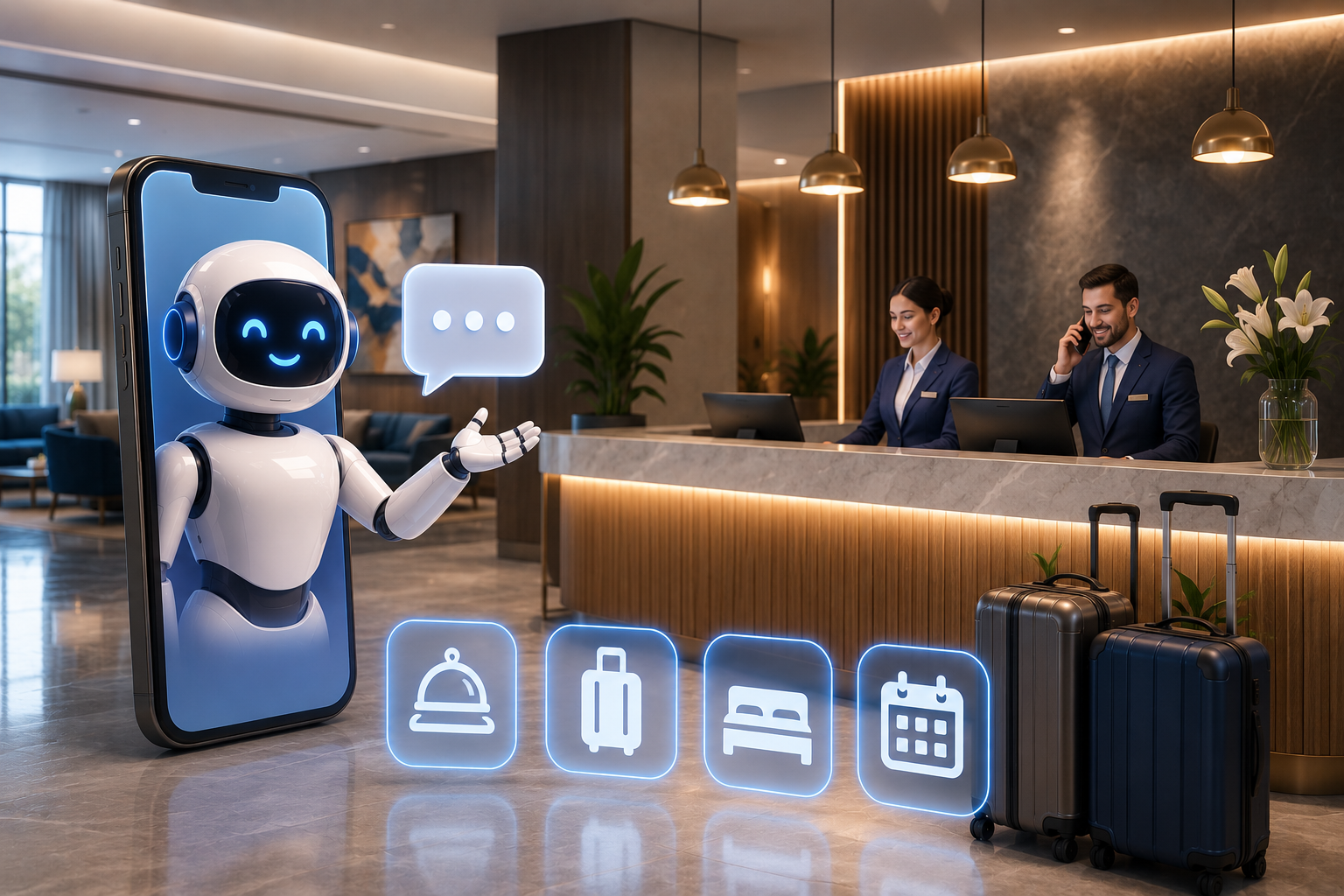

Discover how a Hotel Chatbot improves guest communication, automates reservations, boosts direct bookings, provides 24/7 support, and enhances hospitality experiences while reducing operational costs.
Introduction
The hospitality industry has evolved dramatically over the past decade. Modern travelers expect immediate responses, personalized recommendations, seamless booking experiences, and round-the-clock support. Traditional communication channels often struggle to meet these expectations, especially during peak travel seasons when hotels receive hundreds of inquiries daily. This growing demand for instant service has encouraged hotels worldwide to adopt intelligent automation technologies that improve guest satisfaction while reducing operational workloads.
A Hotel Chatbot has emerged as one of the most valuable digital tools for modern hospitality businesses. Powered by artificial intelligence, natural language processing, and automated workflows, hotel chatbots help guests receive immediate answers to common questions, complete reservations, request services, and access important travel information at any time. Unlike traditional support systems that rely heavily on staff availability, chatbots provide continuous assistance without delays, creating a smoother guest experience from booking through checkout.
At Chattbotz, businesses recognize that customer expectations continue to rise. Hotels that embrace intelligent chatbot solutions gain a competitive advantage by offering faster communication, improved guest engagement, and more efficient operational management. This guide explores everything hotel owners, managers, and hospitality professionals need to know about implementing and maximizing the benefits of a hotel chatbot.
What Is a Hotel Chatbot?
A Hotel Chatbot is an AI-powered virtual assistant designed specifically for hospitality businesses. It communicates with guests through websites, mobile applications, messaging platforms, and social media channels. Using conversational technology, the chatbot can understand user inquiries and provide relevant responses instantly. These systems help hotels automate guest interactions while maintaining high-quality service standards.
Modern hotel chatbots can perform a wide range of functions beyond answering frequently asked questions. They assist with room bookings, reservation modifications, check-in procedures, local recommendations, amenity information, room service requests, event inquiries, transportation arrangements, and post-stay feedback collection. Advanced solutions use machine learning capabilities to improve interactions over time and deliver increasingly personalized responses based on guest behavior and preferences.
The growing popularity of hotel chatbots reflects broader digital transformation trends within hospitality. Guests increasingly prefer self-service options that allow them to access information instantly without waiting on hold or sending emails. By integrating chatbot technology into customer communication strategies, hotels can improve responsiveness, increase guest satisfaction, and reduce the burden on front desk staff while maintaining exceptional service quality.
Why Hotel Chatbots Are Transforming the Hospitality Industry
The hospitality industry operates in an environment where guest satisfaction directly impacts revenue, reputation, and long-term success. Travelers expect immediate answers regardless of time zones, holidays, or staffing limitations. Hotel chatbots address these challenges by providing instant communication capabilities that support guests throughout their journey.
One major advantage is scalability. Human staff can only handle a limited number of conversations simultaneously, whereas chatbots can manage hundreds or even thousands of interactions at the same time. During busy seasons, promotional campaigns, or special events, this capability becomes invaluable. Guests receive immediate responses without experiencing delays, leading to improved customer satisfaction and stronger brand perception.
Additionally, hotel chatbots contribute significantly to operational efficiency. Routine inquiries often consume substantial staff resources, preventing employees from focusing on more complex guest needs. By automating repetitive conversations, hotels can optimize workforce productivity while maintaining service consistency. This transformation helps hospitality businesses reduce operational costs, improve guest experiences, and create more efficient communication processes across all customer touchpoints.
Enhancing Guest Experience Through Instant Communication
Guest experience remains the foundation of successful hospitality businesses. Travelers increasingly value convenience, speed, and accessibility when interacting with hotels. A hotel chatbot supports these expectations by delivering immediate assistance whenever guests require information or support.
Before arrival, guests often have questions regarding room availability, pricing, amenities, transportation, parking, cancellation policies, and nearby attractions. A chatbot provides accurate answers instantly, helping potential customers make informed booking decisions. This responsiveness improves trust and reduces friction throughout the reservation process.
During a guest’s stay, chatbot functionality becomes even more valuable. Guests can request housekeeping services, order room service, inquire about hotel facilities, schedule transportation, or seek local recommendations without calling the front desk. Quick access to assistance enhances convenience and contributes to a more enjoyable experience. After checkout, chatbots can collect feedback, distribute surveys, and encourage online reviews, supporting continuous service improvement and stronger customer relationships.
Increasing Direct Hotel Bookings with Chatbot Technology
Direct bookings are essential for maximizing hotel profitability because they reduce dependency on third-party travel platforms and associated commission fees. Hotel chatbots play an important role in encouraging guests to book directly through hotel websites and digital channels.
When potential guests visit a hotel website, they often have immediate questions before making reservations. Delayed responses can lead visitors to leave the website and complete bookings elsewhere. A chatbot engages visitors instantly, answers questions, highlights special offers, and guides users through the booking process. This real-time support increases conversion rates and improves overall booking performance.
Advanced hotel chatbots can also personalize recommendations based on visitor behavior and preferences. By analyzing guest interests, travel dates, group sizes, and accommodation needs, chatbots can suggest suitable room options, promotional packages, and upselling opportunities. These personalized interactions create a more engaging booking experience while increasing revenue through targeted recommendations and direct reservation conversions.
24/7 Customer Support Without Staffing Limitations
One of the most significant advantages of hotel chatbot technology is its ability to provide uninterrupted customer support. Travelers frequently seek information outside traditional business hours, especially when booking international travel or communicating across different time zones. Hotels that rely exclusively on human support teams may struggle to provide immediate assistance around the clock.
A hotel chatbot eliminates these limitations by remaining available twenty-four hours a day, seven days a week. Guests can access information whenever they need assistance, regardless of local operating hours. This constant availability improves customer confidence and ensures that inquiries are addressed promptly rather than waiting until staff become available.
Furthermore, continuous support contributes to higher booking conversion rates. Prospective guests often make travel decisions quickly and may choose competitors if they cannot obtain answers immediately. By offering instant assistance at any time, hotels capture opportunities that might otherwise be lost. The combination of convenience, accessibility, and responsiveness strengthens customer satisfaction while supporting revenue growth and operational excellence.
Streamlining Hotel Operations Through Automation
Operational efficiency is critical in hospitality management. Hotels must coordinate reservations, guest communications, housekeeping, maintenance requests, dining services, transportation arrangements, and numerous other responsibilities. Managing these activities manually can create bottlenecks and increase the likelihood of human error.
Hotel chatbots help streamline operations by automating repetitive tasks and standardizing communication processes. Common guest inquiries such as check-in times, Wi-Fi access, breakfast schedules, facility hours, and local recommendations can be handled automatically. This reduces workload pressures on front desk teams and allows employees to focus on delivering personalized guest experiences.
Automation also improves internal coordination. Chatbots can route requests directly to relevant departments, ensuring faster response times and more efficient service delivery. Housekeeping requests, maintenance concerns, and room service orders can be automatically categorized and assigned. This streamlined workflow enhances operational performance while ensuring guests receive timely assistance throughout their stay.
Personalization and AI-Driven Guest Engagement

Personalization has become a defining factor in hospitality success. Modern travelers expect experiences tailored to their preferences, interests, and behaviors. AI-powered hotel chatbots enable hotels to deliver highly personalized interactions at scale.
By analyzing guest data, previous bookings, communication history, and behavioral patterns, chatbots can generate customized recommendations and responses. Returning guests may receive personalized greetings, preferred room suggestions, dining recommendations, or loyalty program offers based on prior interactions. These tailored experiences help guests feel valued and appreciated.
AI-driven engagement also supports proactive communication. Instead of waiting for guests to ask questions, chatbots can provide relevant information automatically. For example, guests may receive weather updates, transportation recommendations, event notifications, or dining suggestions based on their travel itinerary. This proactive approach enhances convenience while creating memorable hospitality experiences that encourage repeat visits and positive reviews.
Multilingual Communication for Global Travelers
Hospitality is a global industry serving guests from diverse cultural and linguistic backgrounds. Language barriers can create misunderstandings, frustration, and service challenges that negatively impact guest satisfaction. Hotel chatbots help overcome these obstacles through multilingual communication capabilities.
Modern chatbot platforms can communicate in multiple languages, allowing international travelers to interact comfortably in their preferred language. This accessibility improves understanding, reduces confusion, and creates a more welcoming experience for guests from different regions. Travelers can ask questions, make requests, and receive information without struggling with language differences.
Multilingual support also expands a hotel’s market reach. Hotels serving international tourists can provide consistent communication across global audiences without hiring multilingual support teams for every language. This capability improves customer satisfaction while supporting international marketing efforts, global guest engagement strategies, and broader business growth opportunities.
Supporting Contactless Hospitality and Digital Guest Services
The hospitality industry has increasingly embraced contactless experiences to meet evolving guest expectations. Travelers now prefer convenient, technology-driven interactions that minimize wait times while maximizing comfort and efficiency. A Hotel Chatbot serves as a critical component of this digital transformation by enabling guests to access services without needing direct staff interaction for every request.
From the moment a guest arrives, chatbot technology can simplify numerous touchpoints throughout the stay. Guests can receive check-in instructions, access digital room information, request amenities, schedule housekeeping services, and obtain property details through a conversational interface. These self-service capabilities improve convenience while reducing operational pressure on hotel staff. The result is a smoother experience that combines efficiency with guest satisfaction.
Additionally, contactless communication enhances service consistency. Whether guests require information about hotel facilities, transportation options, dining reservations, or local attractions, the chatbot delivers accurate responses instantly. This creates a seamless hospitality experience that aligns with modern traveler preferences while supporting operational excellence and improved guest engagement.
Hotel Chatbots and Revenue Generation Opportunities
While many hospitality professionals initially view chatbots as customer support tools, their revenue-generating potential is equally significant. A strategically implemented Hotel Chatbot can increase average booking values, improve upselling performance, and create additional revenue streams throughout the guest journey.
During the booking process, chatbots can recommend premium room categories, extended stays, dining packages, spa treatments, airport transfers, and special promotions. These recommendations are delivered naturally within conversations, making them highly relevant to guest needs. Personalized suggestions often result in higher conversion rates compared to traditional promotional methods.
Revenue opportunities continue after booking confirmation. Prior to arrival, guests may receive offers for room upgrades, early check-in services, or exclusive experiences. During their stay, chatbots can promote restaurant reservations, local tours, wellness services, and event tickets. By presenting relevant options at the right time, hotels can increase guest spending while enhancing the overall experience through valuable recommendations.
Integrating Hotel Chatbots with Booking and Property Management Systems
The effectiveness of a Hotel Chatbot increases significantly when integrated with existing hospitality technology platforms. Modern hotels often rely on booking engines, customer relationship management systems, property management systems, and guest communication tools to manage operations efficiently.
Integration enables real-time access to reservation data, room availability, guest profiles, and service requests. Instead of providing generic information, the chatbot can deliver personalized responses based on current hotel inventory and guest-specific details. This creates a more accurate and helpful experience for users seeking information or completing transactions.
Connected systems also improve operational workflows. Reservation updates, booking confirmations, room assignments, and service requests can flow automatically between platforms without requiring manual intervention. This reduces administrative workloads, minimizes errors, and ensures guests receive timely information throughout every stage of their journey.
Data Collection, Analytics, and Guest Insights
One of the most valuable benefits of Hotel Chatbot technology is its ability to collect actionable guest insights. Every interaction provides data that can help hospitality businesses better understand customer preferences, behaviors, expectations, and service requirements.
Chatbot analytics reveal common guest questions, booking trends, frequently requested services, and areas where customers may encounter friction. These insights help hotel managers identify operational improvements and refine customer experience strategies. Understanding guest concerns allows businesses to proactively address issues before they impact satisfaction levels.
Furthermore, data-driven decision-making supports more effective marketing initiatives. Hotels can analyze interaction patterns to develop targeted promotions, personalized offers, and improved guest engagement campaigns. By leveraging chatbot-generated insights, hospitality businesses gain a deeper understanding of customer needs while optimizing service delivery and revenue-generation strategies.
Security, Privacy, and Trust in Hotel Chatbot Deployment
Trust plays a fundamental role in hospitality. Guests share personal information, payment details, travel plans, and accommodation preferences during their interactions with hotels. Consequently, chatbot implementations must prioritize security and privacy at every stage of the guest experience.
Hotels should follow established security standards and data protection best practices when deploying chatbot solutions. Guidance from the Google Helpful Content Guidelines emphasizes creating trustworthy user experiences that prioritize value and transparency. Similarly, recommendations from the NIST Cybersecurity Framework support strong security practices for digital systems handling sensitive information.
Secure chatbot environments protect guest data through encryption, authentication controls, secure integrations, and responsible data management procedures. Transparency regarding information usage further strengthens guest confidence. Hotels that demonstrate a commitment to privacy and security create stronger customer relationships while reducing potential risks associated with digital communication technologies.
Future Trends Shaping Hotel Chatbot Technology
Hotel chatbot technology continues to evolve rapidly as artificial intelligence capabilities become more sophisticated. Future developments are expected to deliver even more personalized, predictive, and conversational guest experiences across hospitality environments.
Advanced AI models will enable chatbots to understand context more effectively, recognize guest sentiment, and provide increasingly natural conversations. Predictive capabilities may allow systems to anticipate guest needs before requests are made. For example, chatbots could proactively recommend services, dining options, transportation arrangements, or local activities based on guest behavior patterns and travel preferences.
Voice-enabled interactions, multilingual advancements, and deeper integrations with smart hotel technologies will further expand chatbot functionality. As innovation continues, hospitality businesses that embrace these technologies will be better positioned to meet evolving customer expectations while maintaining competitive advantages within a rapidly changing marketplace.
Choosing the Right Hotel Chatbot Solution

Selecting the right chatbot platform requires careful evaluation of business objectives, operational requirements, and guest expectations. Not all chatbot solutions offer the same capabilities, making it important to identify features that align with hospitality-specific needs.
Hotels should consider factors such as AI sophistication, multilingual support, booking integration capabilities, customization options, analytics functionality, security standards, and scalability. A solution that supports both current operations and future growth objectives will provide greater long-term value. Flexibility is particularly important as guest communication channels and technological requirements continue to evolve.
Decision-makers should also evaluate vendor expertise within the hospitality sector. Industry-specific experience often translates into better workflows, more relevant features, and stronger implementation support. Investing in a solution designed specifically for hotel environments can accelerate adoption while maximizing both guest satisfaction and operational benefits.
Common Mistakes Hotels Make When Implementing Chatbots
Many hotels invest in chatbot technology but fail to achieve optimal results due to avoidable implementation mistakes. Understanding these challenges can help businesses maximize return on investment and improve guest experiences.
1. Treating the Chatbot as a Replacement for Human Staff
A chatbot should enhance human service rather than completely replace it. Guests occasionally require complex assistance that demands personal attention. Successful implementations combine automation with accessible human support when necessary.
2. Providing Limited Functionality
A chatbot that only answers basic questions may frustrate users. Effective hotel chatbots should support bookings, service requests, recommendations, and personalized interactions to deliver meaningful value.
3. Ignoring Personalization
Generic conversations reduce engagement. Hotels that leverage guest data to provide tailored recommendations typically achieve stronger customer satisfaction and higher conversion rates.
4. Failing to Update Information
Outdated pricing, policies, or service details can damage trust. Chatbot content should be regularly reviewed and synchronized with operational systems.
5. Overlooking Analytics
Many organizations deploy chatbots without monitoring performance metrics. Analytics provide valuable insights that help improve conversations, workflows, and guest experiences over time.
6. Neglecting Security Measures
Weak security practices can expose sensitive guest information. Hotels must prioritize privacy protection, secure integrations, and responsible data management.
Best Practices for Maximizing Hotel Chatbot Success
To achieve the greatest value from chatbot technology, hotels should follow proven implementation and optimization strategies.
- Focus on guest convenience and user experience.
- Provide clear pathways to human assistance when required.
- Integrate chatbot functionality with booking and management systems.
- Continuously update responses and service information.
- Use analytics to identify opportunities for improvement.
- Personalize interactions whenever possible.
- Support multiple communication channels.
- Offer multilingual capabilities for international travelers.
- Maintain strong security and privacy standards.
- Regularly test chatbot performance and conversation quality.
Hotels that consistently follow these best practices are more likely to improve guest satisfaction, increase operational efficiency, and generate stronger business results from their chatbot investments.
Frequently Asked Questions
What is a Hotel Chatbot?
A Hotel Chatbot is an AI-powered virtual assistant that helps guests obtain information, make reservations, request services, and communicate with hotels through automated conversations.
Can a Hotel Chatbot handle room bookings?
Yes. Modern hotel chatbots can assist with room searches, availability checks, booking confirmations, reservation modifications, and booking-related inquiries.
Do hotel chatbots operate 24/7?
Yes. One of the primary advantages of chatbot technology is continuous availability, allowing guests to receive assistance at any time.
Are hotel chatbots suitable for small hotels?
Absolutely. Hotels of all sizes can benefit from chatbot automation by improving communication efficiency and enhancing guest experiences.
Can a chatbot support multiple languages?
Most advanced chatbot platforms provide multilingual capabilities, enabling hotels to serve international travelers more effectively.
How do chatbots improve guest satisfaction?
They provide immediate responses, reduce wait times, simplify service requests, and deliver personalized experiences that improve convenience and overall satisfaction.
Can hotel chatbots increase revenue?
Yes. Chatbots support direct bookings, upselling opportunities, personalized promotions, and additional service recommendations that contribute to increased revenue.
Are hotel chatbots secure?
When implemented properly with strong security practices, chatbot platforms can securely handle guest interactions and protect sensitive information.
Conclusion
The hospitality industry continues to evolve toward more personalized, efficient, and technology-driven guest experiences. A Hotel Chatbot empowers hotels to meet these expectations by providing instant communication, automated support, personalized engagement, and operational efficiency. From increasing direct bookings to enhancing guest satisfaction and generating valuable business insights, chatbot technology has become an essential tool for modern hospitality organizations.
As traveler expectations continue to rise, hotels that embrace intelligent automation will be better positioned to deliver exceptional experiences while maintaining operational excellence. At Chattbotz, businesses can explore innovative chatbot solutions designed to transform guest interactions, streamline operations, and support sustainable hospitality growth in an increasingly digital world.
Want to Implement This Easily?
Prompt Text:
You are an expert consultant. Based on the blog post titled “Hotel Chatbot”, provide a step-by-step, practical implementation guide. Include tools, best practices, common mistakes to avoid, and advanced tips. Assume the reader wants to implement everything discussed in this article effectively.
Call to Action:
Want our help implementing this? Just reach out to us via our website contact form: https://appledew.co.uk/cb/contact-us/