
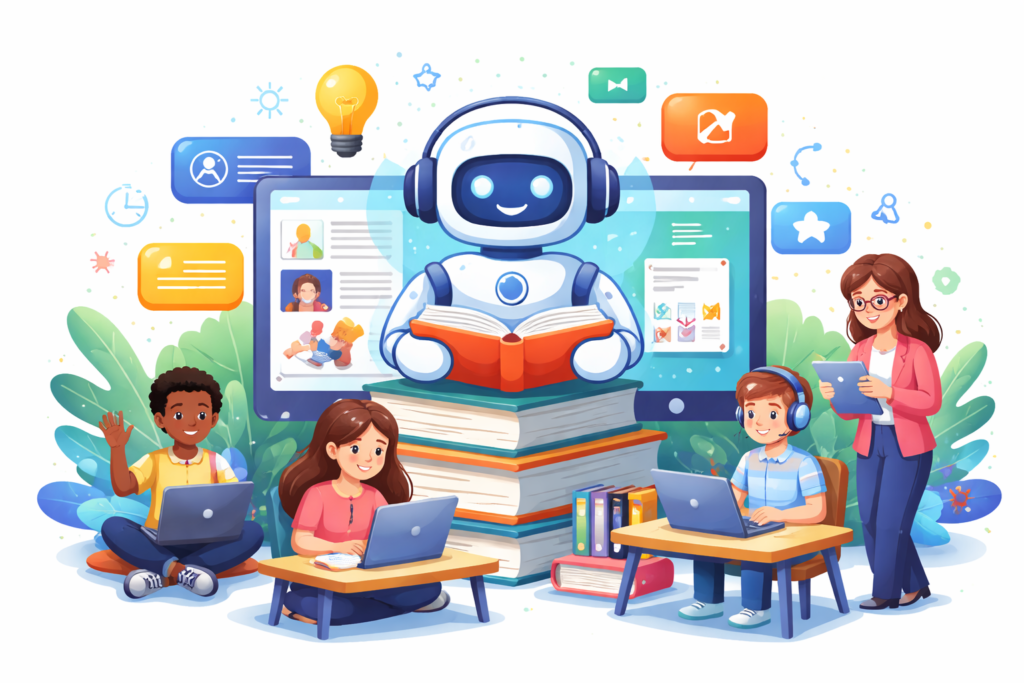
In the evolving landscape of educational technology, chatbots are rapidly transforming how students learn, engage, and achieve academic success. From personalized tutoring to round‑the‑clock assistance, educational chatbots offer dynamic, scalable solutions that empower learners and educators. This comprehensive guide explores the role of chatbots in modern education, offering insights, strategies, and best practices backed by authoritative sources.
Introduction
Welcome to this comprehensive guide on Education Chatbots, where we dive deep into how intelligent conversational agents are reshaping the future of learning. On Chattbotz, we believe that embracing innovative technologies offers educators and students unparalleled opportunities to enhance outcomes, improve engagement, and create sustainable education ecosystems.
In this extensive guide, we cover everything from the basics of educational chatbots to advanced implementation strategies, benefits, challenges, and real‑world use cases. This is your go‑to resource for understanding the full spectrum of chatbot applications in education.
What Are Education Chatbots?
Education chatbots are AI‑powered conversational agents designed to interact with users — students, teachers, parents — through natural language. They simulate human conversation and can provide information, guidance, and support across various learning contexts.
Education chatbots harness artificial intelligence (AI), natural language processing (NLP), machine learning (ML), and sometimes voice recognition to interpret user input and deliver relevant responses. Unlike static educational resources, chatbots can personalize responses based on user needs.
For example, chatbots can answer student queries about homework, explain complex topics, schedule study sessions, and even offer emotional support to learners under stress. Leading platforms such as IBM Watson and Google Dialogflow power many advanced educational chatbot implementations.
Additionally, chatbots can integrate with Learning Management Systems (LMS) like Canvas or Moodle to provide seamless support without disrupting the learning workflow. According to a study by EDUCAUSE, chatbots improve student engagement significantly when used as an interactive learning medium.
History and Evolution of Chatbots in Education
The concept of chatbots has been around since the 1960s, with ELIZA being one of the earliest examples developed by Joseph Weizenbaum at MIT. However, educational chatbots became mainstream only in the 2010s with advancements in AI and NLP.
Initially, chatbots were simple rule‑based systems that followed preset scripts. Over time, the integration of machine learning enabled chatbots to learn from interactions, thereby improving their responses and capabilities.
The evolution of platforms such as Microsoft Bot Framework and Google Dialogflow has accelerated chatbot adoption in education. These tools allow developers to create sophisticated bots capable of processing complex student queries, offering adaptive learning paths, and integrating with popular education tools.
In recent years, higher education institutions like Georgia State University have implemented chatbots to answer student questions about enrollment, financial aid, and campus resources — reducing administrative stress and improving student experience.
Research from the IEEE Educational Technology journal highlights how intelligent tutoring systems (a form of education chatbot) can tailor instruction to individual learning styles, making them a powerful tool for personalized education.
How Education Chatbots Work
Education chatbots operate through a combination of AI technologies. Here’s a simplified breakdown:
- User Input: The student types or speaks a query.
- Preprocessing: NLP analyzes the sentence structure and context.
- Intent Detection: The bot detects what the student wants — e.g., “Explain photosynthesis.”
- Response Generation: Based on intent, the bot pulls from a database, uses ML models, or queries external resources to answer.
- Feedback Loop: Continuous interactions help improve future responses.
Some chatbots use machine learning models like GPT (Generative Pre‑trained Transformer) to generate advanced, human‑like responses. NLP libraries such as spaCy and NLTK help break down sentences for better understanding.
Modern systems also incorporate sentiment analysis to gauge user emotions and adapt responses accordingly — a critical feature for educational support systems.
According to research published by the Journal of Educational Computing, AI‑driven chatbots have shown improvements in helping students retain information better than static content — largely due to the ability to simulate interactive learning experiences.
Key Benefits of Education Chatbots
Personalized Learning Experiences
Education is not one‑size‑fits‑all. Chatbots can tailor instruction based on individual student performance, learning speed, and preferences. They dynamically adapt content, assign remedial resources, and provide constructive feedback.
A key advantage is real‑time adaptation, which traditional methods lack. Research published by the International Journal of Artificial Intelligence in Education shows that adaptive learning leads to improved academic outcomes and higher learner satisfaction.
24/7 Accessibility
Students can access chatbot assistance around the clock. Whether preparing for late‑night exams or revising lessons early morning, chatbots provide consistent support without human limitations.
Schools and universities that implemented chatbot systems have reported reduced workload for instructors and support staff. For example, Pearson Education reports that chatbots can handle up to 80% of routine queries, freeing human educators to focus on complex and creative instruction.
Immediate Feedback
Traditional homework review could take days. With a chatbot, learners receive instant evaluation, clarification, and corrective feedback — which is essential for reinforcing concepts effectively.
Studies show that immediate feedback can accelerate learning and retention because students can quickly correct mistakes and build confidence.
Administrative Efficiency
Chatbots streamline routine tasks like enrollment inquiries, assignment reminders, and schedule planning. Administrative bots reduce operational overhead and improve student satisfaction.
Georgia State University saw a 22% drop in summer melt (students not enrolling after admission) after implementing an AI chatbot to answer questions about admission and financial aid.
Types of Education Chatbots
There are several distinct types of educational chatbots based on functionality:
FAQ Chatbots
Designed for responding to common queries — like deadlines, schedules, and policies — FAQ bots reduce administrative load. Examples include bots implemented by universities for registration support.
Tutoring and Learning Bots
These bots teach specific subjects, assess understanding, and provide explanations. Companies like Duolingo use conversational AI to teach languages.
Student Support Bots
Focus on emotional support, motivation, and soft‑skill development. These bots use sentiment analysis to respond empathetically.
Assessment Bots
These bots evaluate student performance through quizzes and knowledge checks, often integrating with LMS platforms.
Hybrid Systems
Some chatbots combine multiple functionalities — e.g., tutoring and administrative support — to provide holistic support.
Real‑World Use Cases of Education Chatbots
Universities and Colleges
Many higher education institutions use chatbots for:
- Answering questions about admissions
- Guiding course registration
- Providing campus information
Georgia State University’s chatbot, “Pounce,” reduced student uncertainty and helped clarify administrative hurdles.
K‑12 Education
Primary and secondary schools are experimenting with chatbots to help with homework and build foundational skills in subjects like math and science.
Online Learning Platforms
Platforms like Coursera and Udemy use bots to:
- Recommend courses
- Remind learners about deadlines
- Provide feedback
Language Learning
Apps like Duolingo and Busuu implement chatbot interactions to help students practice conversation, improving language acquisition.
Technical Challenges of Building Education Chatbots

While promising, there are challenges:
Natural Language Understanding Limitations
Chatbots may misinterpret complex queries due to nuances in language. Continuous training and data collection are necessary to improve accuracy.
Integration with Legacy Systems
Many educational institutions struggle to integrate chatbots with existing LMS platforms due to compatibility issues.
Cost and Resource Requirements
Developing sophisticated AI chatbots requires investment in data infrastructure, developer expertise, and continuous maintenance.
Ethical Concerns
Data privacy and transparency are critical — especially with minors. Institutions must ensure compliance with laws like FERPA and GDPR.
Designing an Effective Education Chatbot
Designing a successful educational chatbot requires careful planning:
- User-Centered Design: Understand student needs, goals, and pain points.
- Intuitive Conversation Flows: Ensure that dialogues are natural, concise, and context-aware.
- Adaptive Learning Features: Personalize lessons based on performance and behavior.
- Feedback Mechanisms: Allow users to rate responses and report errors.
- Accessibility Compliance: Support students with disabilities by incorporating text-to-speech, voice recognition, and screen-reader friendly designs.
According to Google best practices in conversational AI, high-quality, transparent, and user-focused designs improve engagement and trust in AI systems.
Integrating Chatbots with Learning Management Systems (LMS)
Integration with LMS platforms is crucial for maximizing the chatbot’s potential. Features may include:
- Automatic grade tracking
- Assignment reminders
- Customized learning paths
- Content recommendations
Popular LMS integrations include Canvas, Moodle, and Blackboard, which allow chatbots to access student data and provide personalized support without manual intervention. This integration helps maintain continuity and enhances the learning experience.
AI and Machine Learning in Education Chatbots
Modern chatbots rely heavily on AI and ML algorithms to:
- Understand natural language
- Predict learner needs
- Personalize responses
- Improve over time
Using reinforcement learning, chatbots can refine interactions by learning from past conversations. This allows them to adapt to changing student needs and improve accuracy, making learning more effective.
Role of Natural Language Processing (NLP)
NLP is the backbone of conversational AI. In education chatbots, NLP enables:
- Text and speech understanding
- Contextual awareness
- Question answering
- Multilingual support
Advanced NLP frameworks like spaCy, BERT, and GPT models help chatbots analyze and generate human-like responses, ensuring that students get precise and meaningful feedback.
Measuring Chatbot Effectiveness
To gauge success, institutions should track metrics like:
- Response accuracy
- User engagement
- Learning outcomes
- Feedback scores
- Usage patterns
A/B testing different versions and collecting student feedback helps refine the chatbot. Studies show that measuring the effectiveness of AI chatbots leads to better retention and improved student satisfaction.
Security and Privacy in Education Chatbots
Handling sensitive student data requires adherence to security protocols:
- Data Encryption: Protect student information from unauthorized access.
- User Authentication: Ensure only authorized users access the system.
- Regulatory Compliance: Follow FERPA, GDPR, and local privacy laws.
- Transparent Data Use: Inform users how data is collected and used.
Security is critical to trust, especially in education, where minors’ information is involved.
Common Mistakes in Implementing Education Chatbots
- Neglecting User Needs: Not understanding student workflows leads to low adoption.
- Overcomplicating Conversations: Long, unclear dialogues frustrate learners.
- Ignoring Analytics: Without data, bots cannot improve.
- Poor Integration: Standalone bots without LMS integration limit value.
- Weak Security Measures: Data breaches can ruin trust.
Avoiding these mistakes ensures higher adoption, better learning outcomes, and increased ROI.
Future Trends in Education Chatbots

The future is promising with trends like:
- Voice-activated chatbots for hands-free learning
- Multimodal learning bots combining text, audio, and visuals
- Emotional AI detecting stress or motivation
- Predictive analytics for proactive support
- Gamified experiences to increase engagement
According to EDUCAUSE, integrating AI chatbots with emerging edtech tools will create immersive, adaptive learning experiences.
Best Practices for Implementing Education Chatbots
- Start with clear objectives and student pain points
- Test extensively before full deployment
- Use high-authority resources to provide accurate content
- Ensure accessibility and multilingual support
- Monitor performance metrics and optimize continuously
Following these practices aligns with Google best practices for delivering high-quality, trustworthy AI-driven experiences.
FAQs
Q1: Can chatbots replace teachers?
A1: No, chatbots support teachers by handling repetitive tasks and enhancing learning but cannot replace human creativity and mentorship.
Q2: Are chatbots secure for student data?
A2: When implemented with proper encryption and regulatory compliance (FERPA, GDPR), chatbots can safely handle student data.
Q3: How do chatbots personalize learning?
A3: By analyzing past interactions, performance metrics, and user preferences, chatbots adapt responses and content for individual learners.
Q4: Can chatbots work offline?
A4: Most advanced AI chatbots require internet access to process queries, but some offline functionality can be built for limited tasks.
Q5: How much does developing a chatbot cost?
A5: Costs vary depending on complexity, integrations, and AI capabilities, ranging from a few thousand dollars to enterprise-scale solutions.
Q6: Can chatbots help in language learning?
A6: Yes, chatbots simulate conversations, provide feedback, and create immersive language practice scenarios.
Q7: How to measure chatbot effectiveness?
A7: Track metrics like accuracy, engagement, retention, and feedback scores. A/B testing improves performance.
Q8: Can chatbots handle multiple subjects?
A8: Yes, hybrid chatbots can be designed to support different topics and switch contexts seamlessly.
Q9: Do chatbots require continuous maintenance?
A9: Yes, AI models need updates, retraining, and monitoring to remain accurate and effective.
Q10: What platforms support educational chatbots?
A10: Popular platforms include Dialogflow, IBM Watson, Microsoft Bot Framework, and integration-ready LMS like Canvas and Moodle.
Conclusion
Education chatbots are transforming the learning landscape by offering personalized, 24/7, and interactive support for students and educators. From reducing administrative burdens to enhancing learning outcomes, the potential of chatbots is immense.
On Chattbotz, we believe that adopting AI-driven chatbots is essential for institutions aiming to modernize education, improve student satisfaction, and stay ahead in the competitive edtech space. By following best practices, integrating with LMS, ensuring security, and continuously measuring performance, educational chatbots can become an indispensable part of modern education.