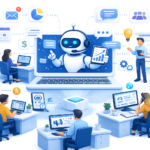

Discover how advanced AI-powered chatbots are transforming IT support, automation, cybersecurity, and digital operations. Learn strategies, tools, and best practices to implement scalable chatbot solutions for modern businesses.
Introduction
In today’s rapidly evolving digital ecosystem, businesses are increasingly relying on intelligent automation to manage complex IT environments. One of the most impactful innovations driving this transformation is the IT & Computing Chatbot—a smart, AI-driven assistant designed to streamline technical operations, improve support efficiency, and enhance user experience. From troubleshooting system errors to automating repetitive IT tasks, these chatbots are reshaping how organizations interact with technology.
At Chattbotz, the focus is on delivering intelligent chatbot solutions that empower businesses to optimize their IT infrastructure without increasing operational overhead. As organizations continue to scale, the demand for real-time, accurate, and automated IT support becomes critical. This is where IT chatbots step in as a reliable and scalable solution.
This comprehensive guide explores everything you need to know about IT & Computing Chatbots—from their core functionality to implementation strategies, SEO impact, and best practices. Whether you are a business owner, IT manager, or developer, this article will provide actionable insights to help you stay ahead in the digital era.
What Is an IT & Computing Chatbot?
An IT & Computing Chatbot is an AI-powered virtual assistant designed specifically to handle technical queries, automate IT processes, and provide real-time support for computing-related issues. These chatbots leverage advanced technologies such as Natural Language Processing (NLP), Machine Learning (ML), and automation frameworks to understand user queries and deliver accurate responses.
Unlike traditional chatbots that focus on customer service or marketing, IT chatbots are built to handle complex technical tasks. They can diagnose system errors, reset passwords, monitor network health, and even assist developers with coding-related queries. This makes them an essential tool for modern IT departments aiming to improve efficiency and reduce manual workload.
Another key advantage of IT chatbots is their ability to integrate with existing IT systems such as helpdesk platforms, cloud services, and enterprise software. This integration allows them to provide contextual and personalized support, ensuring users receive relevant solutions quickly. As businesses move towards digital transformation, IT chatbots are becoming a cornerstone of intelligent IT management.
The Evolution of IT Support and Automation
The journey of IT support has evolved significantly over the years. Initially, organizations relied heavily on manual processes, where IT teams handled every issue through phone calls or emails. This approach was not only time-consuming but also prone to human error and delays.
With the introduction of automation tools and ticketing systems, IT support became more structured. However, these systems still required significant human intervention. The rise of AI and chatbot technology marked a turning point, enabling organizations to automate repetitive tasks and provide instant support to users.
Today, IT & Computing Chatbots represent the next phase of this evolution. They combine automation with intelligence, allowing them to handle complex queries and learn from past interactions. This not only improves efficiency but also enhances the overall user experience. As businesses continue to adopt cloud computing and remote work models, the demand for intelligent IT support solutions is expected to grow exponentially.
Key Features of IT & Computing Chatbots
Modern IT chatbots come equipped with a wide range of features designed to streamline operations and improve efficiency. One of the most important features is natural language understanding, which allows the chatbot to interpret user queries accurately and provide relevant responses.
Another critical feature is automation capability. IT chatbots can automate routine tasks such as password resets, software installations, and system updates. This reduces the workload on IT teams and allows them to focus on more strategic initiatives. Additionally, chatbots can operate 24/7, ensuring uninterrupted support for users across different time zones.
Integration is also a key aspect of IT chatbots. They can seamlessly connect with existing IT systems, including helpdesk software, cloud platforms, and monitoring tools. This enables them to provide contextual support and access real-time data. Furthermore, advanced chatbots use machine learning to continuously improve their performance, making them more accurate and efficient over time.
Benefits of Using IT & Computing Chatbots
Implementing an IT chatbot offers numerous benefits for organizations of all sizes. One of the most significant advantages is cost reduction. By automating repetitive tasks, businesses can reduce the need for large IT support teams, resulting in substantial savings.
Another major benefit is improved efficiency. IT chatbots can handle multiple queries simultaneously, reducing response times and ensuring faster issue resolution. This leads to increased productivity and better user satisfaction. Employees no longer have to wait for IT support, allowing them to focus on their core tasks.
Additionally, IT chatbots enhance user experience by providing instant and accurate support. They can guide users through troubleshooting steps, offer personalized recommendations, and even predict potential issues before they occur. This proactive approach helps organizations maintain smooth operations and minimize downtime.
How IT Chatbots Improve Cybersecurity
Cybersecurity is a top priority for modern organizations, and IT chatbots play a crucial role in enhancing security measures. One of the primary ways they contribute is by automating security protocols. For example, chatbots can enforce password policies, detect suspicious activities, and alert IT teams in real time.
Another important aspect is user education. IT chatbots can provide employees with information about best security practices, such as recognizing phishing attempts and securing sensitive data. This helps create a more security-aware workforce, reducing the risk of cyber threats.
Furthermore, chatbots can integrate with security systems to monitor network activity and identify potential vulnerabilities. By analyzing data in real time, they can detect anomalies and take preventive actions. This proactive approach significantly improves an organization’s overall cybersecurity posture.
Role of AI and Machine Learning in IT Chatbots

Artificial Intelligence and Machine Learning are the driving forces behind modern IT chatbots. These technologies enable chatbots to understand complex queries, learn from interactions, and provide accurate responses.
Machine learning allows chatbots to improve over time by analyzing user behavior and feedback. This continuous learning process ensures that the chatbot becomes more efficient and effective in handling queries. Additionally, AI enables chatbots to perform advanced tasks such as predictive analysis and decision-making.
Another important aspect is contextual understanding. AI-powered chatbots can understand the context of a conversation, allowing them to provide more relevant and personalized responses. This enhances the overall user experience and makes the chatbot more reliable as an IT support tool.
Use Cases of IT & Computing Chatbots
IT chatbots can be used in a wide range of scenarios, making them a versatile tool for organizations. One of the most common use cases is IT helpdesk automation, where chatbots handle user queries and resolve issues without human intervention.
Another important use case is network monitoring and management. Chatbots can track system performance, identify issues, and notify IT teams in real time. This helps prevent downtime and ensures smooth operations.
Additionally, IT chatbots are used in software development and DevOps. They can assist developers with coding queries, automate deployment processes, and provide real-time updates on project status. This improves collaboration and accelerates development cycles.
IT Chatbots in Cloud Computing Environments
Cloud computing has become a fundamental part of modern IT infrastructure, and chatbots play a crucial role in managing cloud environments. They can automate tasks such as resource allocation, performance monitoring, and cost optimization.
One of the key advantages of using chatbots in cloud environments is scalability. Chatbots can handle increasing workloads without compromising performance, making them ideal for dynamic cloud systems. They can also provide real-time insights into system performance, helping organizations make informed decisions.
Furthermore, IT chatbots can integrate with cloud platforms to provide seamless support. They can assist users with cloud-related queries, troubleshoot issues, and even automate complex processes. This enhances efficiency and ensures optimal utilization of cloud resources.
How to Implement an IT & Computing Chatbot Successfully
Implementing an IT & Computing Chatbot requires a structured and strategic approach to ensure long-term success. The first step is identifying your business needs and defining clear objectives. Whether your goal is to automate IT support, enhance cybersecurity, or improve operational efficiency, having a well-defined roadmap is essential. Organizations should conduct an internal audit of their IT processes to determine which tasks can be automated and where a chatbot can provide the most value.
The next step involves selecting the right technology stack. Businesses must choose platforms and frameworks that support Natural Language Processing (NLP), integration capabilities, and scalability. Leveraging cloud-based solutions ensures flexibility and future growth. According to Google Cloud AI, AI-powered solutions can significantly enhance automation and decision-making capabilities when properly integrated into enterprise systems. Choosing the right tools at this stage directly impacts the chatbot’s performance and reliability.
Finally, testing and deployment play a critical role in implementation. Organizations should conduct rigorous testing to ensure the chatbot can handle various scenarios and edge cases. Continuous monitoring and optimization are necessary to maintain performance and improve accuracy over time. A successful implementation is not a one-time effort but an ongoing process that evolves with business needs and technological advancements.
SEO Benefits of IT & Computing Chatbots
IT chatbots are not just operational tools—they also offer significant SEO advantages. One of the primary benefits is improved user engagement. Chatbots keep users on your website longer by providing instant answers and interactive experiences. This reduces bounce rates and increases dwell time, both of which are important ranking factors in search engine algorithms.
Another major SEO benefit is enhanced content accessibility. Chatbots can guide users to relevant pages, blog posts, or resources based on their queries. This improves internal linking and ensures that users can easily find the information they need. According to Google Search Central, providing a better user experience is a key factor in achieving higher search rankings.
Additionally, chatbots can collect valuable user data and insights, which can be used to refine SEO strategies. By analyzing user queries and behavior, businesses can identify trending topics, optimize keywords, and create more targeted content. This data-driven approach helps organizations stay competitive in the ever-changing digital landscape.
Integrating IT Chatbots with Existing Systems
Integration is a crucial aspect of maximizing the effectiveness of IT chatbots. These chatbots must seamlessly connect with existing systems such as helpdesk software, CRM platforms, and cloud services. This ensures that the chatbot can access relevant data and provide accurate, context-aware responses.
One of the key challenges in integration is ensuring compatibility between different systems. Businesses should use APIs and middleware solutions to facilitate smooth communication between the chatbot and other platforms. Proper integration allows chatbots to automate workflows, update records, and trigger actions without manual intervention.
Security is another critical consideration during integration. Organizations must ensure that data is transmitted securely and that access controls are properly implemented. Following best practices from OWASP (Open Web Application Security Project) can help mitigate risks and ensure a secure integration process. By prioritizing security and compatibility, businesses can unlock the full potential of their IT chatbot solutions.
Challenges in IT Chatbot Development
While IT chatbots offer numerous benefits, their development comes with certain challenges. One of the most common issues is understanding complex user queries. Technical questions can be highly specific and require deep contextual understanding, which can be difficult to achieve without advanced AI models.
Another challenge is maintaining data accuracy and relevance. Chatbots rely on data to provide responses, and outdated or incorrect information can lead to poor user experiences. Organizations must regularly update their knowledge base to ensure accuracy and reliability.
Scalability and performance are also critical concerns. As the number of users increases, the chatbot must be able to handle higher workloads without compromising performance. This requires robust infrastructure and efficient algorithms. Addressing these challenges requires a combination of advanced technology, continuous optimization, and a user-centric approach.
Common Mistakes to Avoid
When implementing IT chatbots, many organizations make avoidable mistakes that hinder performance and ROI. One of the most common errors is lack of clear objectives. Without a defined purpose, the chatbot may fail to deliver meaningful results and confuse users.
Another frequent mistake is over-automation. While automation is beneficial, relying entirely on chatbots without human oversight can lead to poor user experiences. Complex issues often require human intervention, and businesses should ensure a seamless transition between chatbot and human support.
Ignoring user feedback is another critical mistake. User insights are invaluable for improving chatbot performance and addressing gaps in functionality. Organizations should actively collect and analyze feedback to refine their chatbot strategy. Avoiding these common pitfalls can significantly improve the effectiveness of IT chatbot implementations.
Best Practices for IT & Computing Chatbots

To maximize the effectiveness of IT chatbots, organizations should follow proven best practices. One of the most important practices is designing for user experience. The chatbot interface should be intuitive, responsive, and easy to use. Clear communication and simple navigation enhance user satisfaction and engagement.
Another key practice is continuous learning and improvement. Chatbots should be regularly updated with new data and trained on real-world interactions. This ensures that they remain accurate and relevant. Leveraging analytics tools can help identify areas for improvement and optimize performance.
Security and compliance should also be a top priority. Organizations must implement robust security measures to protect sensitive data and comply with industry regulations. Following guidelines from ISO (International Organization for Standardization) ensures that chatbot systems meet global standards for quality and security. By adhering to these best practices, businesses can build reliable and efficient IT chatbot solutions.
Future Trends in IT & Computing Chatbots
The future of IT chatbots is shaped by rapid advancements in AI and automation technologies. One of the most significant trends is the rise of predictive analytics. Future chatbots will not only respond to queries but also anticipate issues and provide proactive solutions.
Another emerging trend is voice-enabled chatbots. With the growing popularity of voice assistants, IT chatbots are expected to incorporate voice interaction capabilities. This will make them more accessible and user-friendly, especially in hands-free environments.
Additionally, hyper-personalization is set to become a key feature of IT chatbots. By leveraging user data and AI algorithms, chatbots will deliver highly customized experiences tailored to individual needs. As technology continues to evolve, IT chatbots will play an increasingly important role in shaping the future of digital operations.
FAQs
1. What is an IT & Computing Chatbot?
An IT chatbot is an AI-powered tool designed to automate technical support, manage IT tasks, and provide real-time assistance for computing-related issues.
2. How do IT chatbots improve efficiency?
They automate repetitive tasks, reduce response times, and allow IT teams to focus on more strategic activities.
3. Are IT chatbots secure?
Yes, when implemented with proper security measures and best practices, they can enhance cybersecurity and protect sensitive data.
4. Can IT chatbots integrate with existing systems?
Yes, they can integrate with helpdesk software, cloud platforms, and enterprise tools using APIs and middleware.
5. Do IT chatbots replace human IT support?
No, they complement human support by handling routine tasks while complex issues are managed by professionals.
6. What industries benefit from IT chatbots?
Almost all industries, including healthcare, finance, education, and technology, benefit from IT chatbot solutions.
7. How can businesses measure chatbot success?
Through metrics such as response time, user satisfaction, issue resolution rate, and cost savings.
8. What is the future of IT chatbots?
The future includes predictive analytics, voice interaction, and hyper-personalized user experiences.
Best Practices Summary
Implementing an IT & Computing Chatbot requires a balanced approach that combines technology, strategy, and user experience. Businesses should start with clear objectives, choose the right tools, and ensure seamless integration with existing systems. Continuous monitoring and optimization are essential for maintaining performance and relevance.
Security and compliance must remain a top priority throughout the chatbot lifecycle. Organizations should follow established guidelines and standards to protect data and ensure reliability. Additionally, focusing on user experience and incorporating feedback can significantly enhance chatbot effectiveness.
By following these best practices, businesses can leverage IT chatbots to improve efficiency, reduce costs, and stay competitive in the digital landscape.
Conclusion
The IT & Computing Chatbot is no longer a luxury but a necessity for modern businesses striving for efficiency and scalability. From automating IT support to enhancing cybersecurity and improving SEO performance, these intelligent systems offer a wide range of benefits.
At Chattbotz, the goal is to empower organizations with cutting-edge chatbot solutions that drive innovation and growth. By adopting the strategies and best practices outlined in this guide, businesses can unlock the full potential of IT chatbots and stay ahead in an increasingly competitive digital world.
Want to Implement This Easily?
Prompt:
You are an expert consultant. Based on the blog post titled “IT & Computing Chatbot”, provide a step-by-step, practical implementation guide. Include tools, best practices, common mistakes to avoid, and advanced tips. Assume the reader wants to implement everything discussed in this article effectively.
Call to Action:
Want our help implementing this? Just reach out to us via our website contact form: https://appledew.co.uk/cb/contact-us/