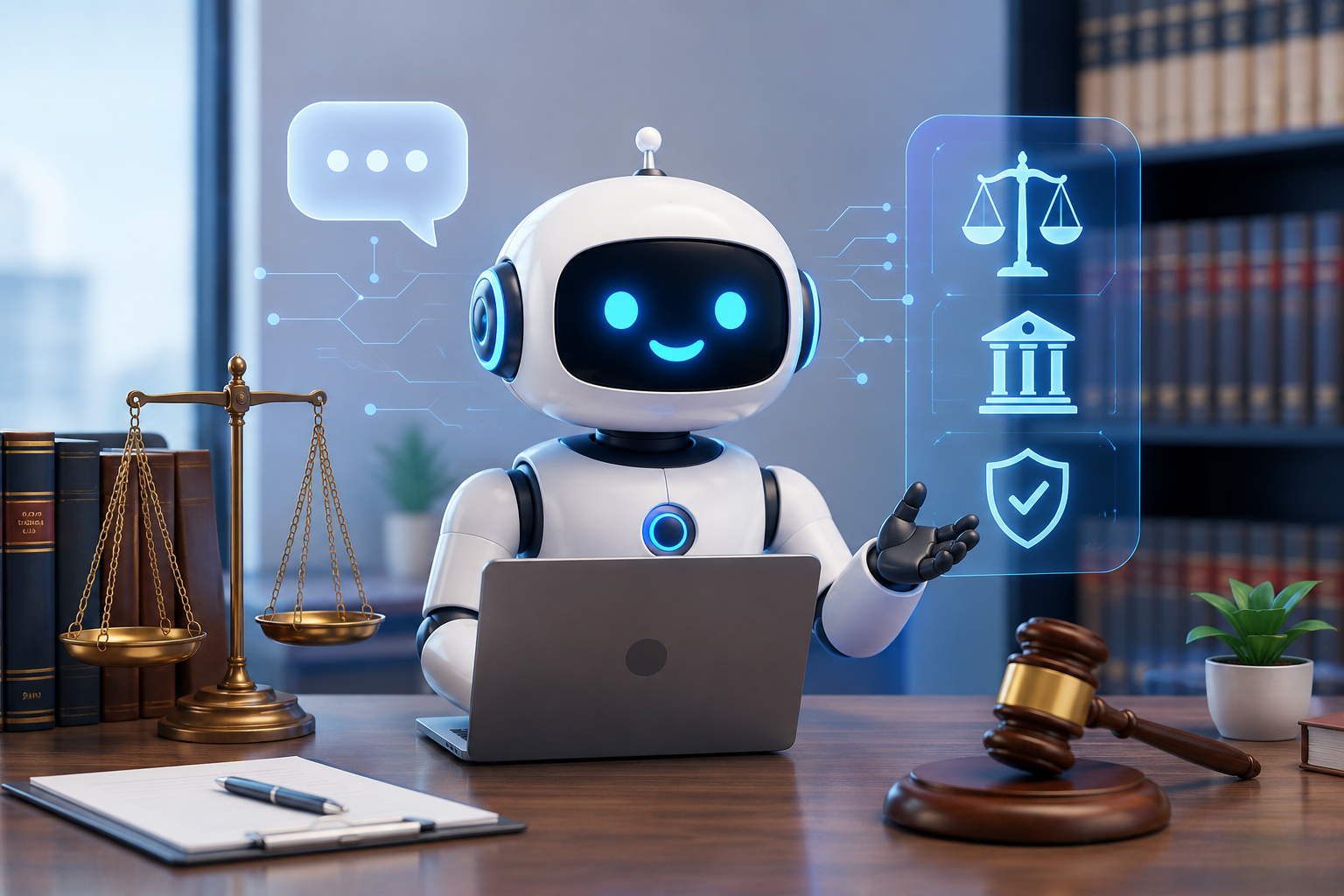

Legal Chatbot solutions are transforming law firms with AI-powered automation, improving client communication, compliance, and operational efficiency. Discover how Legal Chatbots work, their benefits, and implementation strategies for 2026.
Introduction
The legal industry is undergoing a transformative shift, driven by rapid advancements in artificial intelligence and automation. One of the most impactful innovations in recent years is the Legal Chatbot, a smart, AI-powered system designed to streamline legal services, enhance client communication, and improve operational efficiency. Platforms like Chatbotz are at the forefront of this evolution, helping law firms and legal professionals adopt intelligent automation solutions that deliver measurable results.
A Legal Chatbot is not just a digital assistant; it represents a new era of legal service delivery. By leveraging technologies such as Natural Language Processing (NLP) and machine learning, these chatbots can understand user queries, provide instant responses, and even assist with complex legal processes. From answering frequently asked legal questions to assisting with document generation and client onboarding, Legal Chatbots are reshaping how legal services are delivered.
As client expectations continue to evolve, law firms must adapt to remain competitive. Today’s clients demand faster responses, 24/7 availability, and seamless digital experiences. A Legal Chatbot addresses all these demands while reducing operational costs and improving productivity. In this comprehensive guide, we will explore everything you need to know about Legal Chatbots, including their features, benefits, implementation strategies, and best practices for maximizing their potential.
What is a Legal Chatbot and How Does It Work?
A Legal Chatbot is an AI-driven virtual assistant specifically designed to handle legal-related queries and tasks. Unlike general-purpose chatbots, Legal Chatbots are trained using legal datasets, terminology, and workflows, enabling them to provide accurate and context-aware responses. These systems can operate on websites, mobile applications, and messaging platforms, offering instant support to clients and legal professionals.
At the core of a Legal Chatbot is Natural Language Processing (NLP), which allows the system to understand and interpret human language. When a user submits a query, the chatbot analyzes the intent, identifies relevant keywords, and retrieves the most appropriate response from its knowledge base. Advanced systems also use machine learning to improve over time, learning from interactions to deliver more precise and personalized responses.
In addition to answering questions, Legal Chatbots can perform a wide range of tasks. These include client intake, appointment scheduling, document automation, case status updates, and compliance checks. By integrating with legal management systems, chatbots can access real-time data and provide users with up-to-date information. This seamless integration makes Legal Chatbots an invaluable tool for modern law firms looking to enhance efficiency and client satisfaction.
Key Features of an Advanced Legal Chatbot
Modern Legal Chatbots are equipped with a wide range of features designed to meet the complex needs of legal professionals. One of the most important features is intelligent query handling, which enables the chatbot to understand and respond to a variety of legal questions. This capability ensures that clients receive accurate and timely information without the need for human intervention.
Another critical feature is document automation. Legal Chatbots can generate contracts, agreements, and legal forms based on user inputs. This not only saves time but also reduces the risk of human error. By automating repetitive tasks, law firms can focus on more strategic activities that require human expertise. Additionally, chatbots can assist with compliance by ensuring that documents adhere to relevant legal standards and regulations.
Integration capabilities are also a key aspect of advanced Legal Chatbots. These systems can connect with CRM platforms, case management tools, and other software used by law firms. This integration allows for seamless data exchange and enhances the overall efficiency of legal operations. Furthermore, features such as multilingual support, secure data handling, and analytics dashboards make Legal Chatbots a comprehensive solution for modern legal practices.
Benefits of Using a Legal Chatbot for Law Firms
The adoption of Legal Chatbots offers numerous benefits for law firms, starting with improved efficiency. By automating routine tasks such as answering frequently asked questions and scheduling appointments, chatbots free up valuable time for legal professionals. This allows lawyers to focus on high-value tasks that require their expertise, ultimately improving productivity and profitability.
Another significant benefit is enhanced client experience. Legal Chatbots provide instant responses, ensuring that clients do not have to wait for assistance. This 24/7 availability is particularly valuable in today’s fast-paced digital environment, where clients expect immediate support. By delivering quick and accurate responses, chatbots help build trust and improve client satisfaction.
Cost reduction is also a major advantage of Legal Chatbots. By automating repetitive tasks, law firms can reduce the need for additional staff, leading to lower operational costs. Moreover, chatbots can handle multiple queries simultaneously, making them a scalable solution for growing firms. This combination of efficiency, improved client experience, and cost savings makes Legal Chatbots an essential tool for modern legal practices.
Legal Chatbots vs Traditional Legal Support Systems
Traditional legal support systems rely heavily on human intervention, which can be time-consuming and resource-intensive. In contrast, Legal Chatbots offer a more efficient and scalable solution. By automating routine tasks, chatbots reduce the workload on legal staff and enable faster response times. This shift from manual processes to automated systems represents a significant advancement in the legal industry.
One of the key differences between Legal Chatbots and traditional systems is accessibility. While traditional systems often require clients to schedule appointments or wait for responses, chatbots provide instant support. This immediate access to information improves the overall client experience and ensures that users can get the help they need when they need it.
Another important distinction is the ability to handle large volumes of queries simultaneously. Traditional systems are limited by human capacity, whereas chatbots can manage multiple interactions at once. This scalability makes Legal Chatbots an ideal solution for law firms looking to expand their services without increasing costs. As a result, more firms are transitioning from traditional systems to AI-powered solutions to stay competitive in the digital age.
Use Cases of Legal Chatbots in Different Legal Domains

Legal Chatbots are versatile tools that can be applied across various legal domains. In the field of corporate law, chatbots can assist with contract management, compliance checks, and regulatory updates. By automating these tasks, companies can ensure that they remain compliant with legal requirements while reducing administrative burdens.
In family law, Legal Chatbots can provide guidance on issues such as divorce, child custody, and alimony. These systems can offer general information and help users understand their options, making legal processes more accessible. While chatbots do not replace legal professionals, they serve as a valuable resource for individuals seeking initial guidance.
Another important use case is in immigration law, where chatbots can assist with visa applications, document requirements, and status updates. By providing accurate and up-to-date information, chatbots help users navigate complex legal processes more efficiently. This ability to cater to different legal domains highlights the flexibility and effectiveness of Legal Chatbots.
How Legal Chatbots Improve Client Communication
Effective communication is a cornerstone of successful legal services, and Legal Chatbots play a crucial role in enhancing this aspect. By providing instant responses to client queries, chatbots eliminate delays and ensure that users receive timely assistance. This real-time interaction significantly improves the overall client experience.
Legal Chatbots also enable personalized communication by analyzing user data and preferences. For example, a chatbot can tailor its responses based on a client’s previous interactions, providing more relevant and accurate information. This level of personalization helps build stronger relationships between law firms and their clients.
Additionally, chatbots can handle multilingual communication, making legal services accessible to a broader audience. This feature is particularly valuable for firms that serve diverse client bases. By breaking down language barriers and ensuring consistent communication, Legal Chatbots contribute to a more inclusive and efficient legal system.
The Role of AI and Machine Learning in Legal Chatbots
Artificial Intelligence (AI) and Machine Learning (ML) are the driving forces behind the functionality of Legal Chatbots. AI enables chatbots to understand and process human language, while ML allows them to learn from interactions and improve over time. This combination of technologies ensures that chatbots can deliver accurate and context-aware responses.
Machine learning algorithms analyze user interactions to identify patterns and trends. This data is then used to refine the chatbot’s responses and enhance its performance. Over time, the chatbot becomes more efficient and capable of handling complex queries, making it an increasingly valuable tool for law firms.
AI also plays a crucial role in ensuring compliance and accuracy. By continuously updating its knowledge base with the latest legal information, a chatbot can provide reliable and up-to-date responses. This ability to stay current with legal developments is essential for maintaining trust and credibility in the legal industry.
Security and Compliance Considerations for Legal Chatbots
Security and compliance are critical considerations when implementing a Legal Chatbot. Law firms handle sensitive client information, making data protection a top priority. Legal Chatbots must be designed with robust security measures, including encryption, secure authentication, and access controls.
Compliance with data protection regulations is also essential. For example, guidelines outlined in General Data Protection Regulation (GDPR) emphasize the importance of safeguarding personal data and ensuring transparency in data processing. Legal Chatbots must adhere to these standards to avoid legal and reputational risks.
Additionally, regular audits and updates are necessary to maintain security and compliance. By continuously monitoring the system and addressing vulnerabilities, law firms can ensure that their chatbots remain secure and reliable. This proactive approach to security helps build trust with clients and reinforces the credibility of the legal practice.
How to Choose the Right Legal Chatbot for Your Firm
Selecting the right Legal Chatbot is a crucial decision that can significantly impact your firm’s operations. The first step is to identify your specific needs and objectives. Whether you are looking to improve client communication, automate document generation, or enhance compliance, understanding your requirements will help you choose the right solution.
Another important factor to consider is the chatbot’s features and capabilities. Look for a system that offers advanced NLP, integration with existing tools, and robust security measures. Additionally, consider the scalability of the solution to ensure that it can grow with your firm.
It is also essential to evaluate the provider’s expertise and reputation. A reliable provider will offer ongoing support, regular updates, and customization options to meet your needs. By carefully assessing these factors, you can select a Legal Chatbot that aligns with your firm’s goals and delivers long-term value.
Integration of Legal Chatbots with Existing Systems
Integrating a Legal Chatbot with your existing systems is essential for maximizing its effectiveness. By connecting the chatbot with CRM platforms, case management tools, and document management systems, you can create a seamless workflow that enhances efficiency and productivity.
One of the key benefits of integration is real-time data access. This allows the chatbot to provide accurate and up-to-date information to users, improving the overall client experience. For example, a chatbot integrated with a case management system can provide clients with instant updates on their cases.
Integration also enables automation of complex workflows. By connecting different systems, the chatbot can perform tasks such as document generation, appointment scheduling, and compliance checks without manual intervention. This streamlined approach reduces errors and ensures consistency across operations.
Challenges and Limitations of Legal Chatbots
While Legal Chatbots offer numerous benefits, they also come with certain challenges and limitations. One of the primary challenges is ensuring accuracy. Legal information is complex and constantly evolving, making it essential for chatbots to stay updated with the latest developments.
Another limitation is the inability to handle highly complex or nuanced legal issues. While chatbots can provide general guidance and assist with routine tasks, they cannot replace the expertise of a qualified legal professional. It is important for users to understand the scope and limitations of chatbot-based assistance.
Additionally, implementation can be a challenge for some firms. Integrating a chatbot with existing systems and ensuring compliance with regulations requires careful planning and execution. Despite these challenges, the benefits of Legal Chatbots far outweigh their limitations when implemented correctly.
Future Trends in Legal Chatbot Technology

The future of the Legal Chatbot industry is rapidly evolving as artificial intelligence continues to advance. One of the most significant trends is the integration of generative AI, which enables chatbots to produce more human-like, context-aware responses. This advancement allows Legal Chatbots to go beyond predefined scripts and provide dynamic, personalized assistance tailored to each user’s unique situation.
Another emerging trend is the adoption of voice-enabled legal assistants. With the increasing popularity of voice search and smart devices, Legal Chatbots are being designed to support voice interactions. This innovation enhances accessibility and convenience, allowing users to interact with legal systems in a more natural and intuitive way. As voice recognition technology improves, it will become a key component of modern legal service delivery.
Additionally, predictive analytics is shaping the future of Legal Chatbots. By analyzing historical data and user behavior, chatbots can anticipate client needs and provide proactive recommendations. This capability not only improves efficiency but also enhances the overall client experience. As these technologies continue to evolve, Legal Chatbots will become even more powerful tools for law firms, enabling them to deliver smarter, faster, and more reliable services.
Real-World Examples of Legal Chatbot Implementation
Legal Chatbots are no longer just a concept; they are being successfully implemented across various sectors of the legal industry. Many law firms are using chatbots to handle initial client consultations, reducing the time and effort required for manual intake processes. These systems can collect essential information, assess case eligibility, and even schedule appointments, streamlining the entire onboarding process.
Corporate organizations are also leveraging Legal Chatbots for compliance and risk management. By automating compliance checks and monitoring regulatory updates, these chatbots help businesses stay aligned with legal requirements. This proactive approach reduces the risk of legal issues and ensures that organizations can operate smoothly in a highly regulated environment.
Another notable example is the use of Legal Chatbots in public legal services. Governments and legal aid organizations are deploying chatbots to provide accessible legal information to citizens. These systems help individuals understand their rights, navigate legal procedures, and access relevant resources. This democratization of legal information is a significant step toward making legal services more inclusive and accessible.
Common Mistakes When Implementing a Legal Chatbot
Despite the numerous benefits, many organizations make critical mistakes when implementing a Legal Chatbot. One common error is lack of clear objectives. Without a defined purpose, the chatbot may fail to deliver meaningful results. It is essential to identify specific goals, such as improving client communication or automating document generation, before deployment.
Another frequent mistake is insufficient training data. Legal Chatbots rely on accurate and comprehensive datasets to function effectively. If the chatbot is not properly trained, it may provide incorrect or irrelevant responses, leading to poor user experiences. Continuous training and updates are necessary to ensure accuracy and reliability.
A third mistake is ignoring user experience (UX). A chatbot with a complex or confusing interface can frustrate users and reduce engagement. It is important to design a user-friendly interface that provides clear navigation and intuitive interactions. By avoiding these common pitfalls, organizations can maximize the effectiveness of their Legal Chatbot implementation.
Best Practices for Maximizing Legal Chatbot Performance
To achieve optimal results, it is important to follow best practices when implementing a Legal Chatbot. One of the most important practices is continuous improvement. Regularly updating the chatbot’s knowledge base and analyzing user interactions can help identify areas for enhancement and ensure that the system remains accurate and relevant.
Another key practice is ensuring compliance with industry standards. Following guidelines such as Google Search Central Guidelines ensures that your digital content and systems meet high-quality standards. Additionally, adhering to data protection regulations helps maintain trust and credibility with users.
It is also essential to integrate human support. While chatbots can handle many tasks, there should always be an option for users to connect with a human professional when needed. This hybrid approach ensures that complex issues are handled appropriately while maintaining efficiency. By implementing these best practices, organizations can maximize the value of their Legal Chatbot.
FAQs
1. What is a Legal Chatbot?
A Legal Chatbot is an AI-powered tool designed to assist with legal queries, automate tasks, and improve client communication.
2. Can a Legal Chatbot replace a lawyer?
No, Legal Chatbots cannot replace lawyers. They are designed to assist with routine tasks and provide general information, but complex legal matters require professional expertise.
3. Are Legal Chatbots secure?
Yes, when properly implemented with encryption and compliance measures, Legal Chatbots can securely handle sensitive information.
4. How much does a Legal Chatbot cost?
The cost varies depending on features, customization, and integration requirements. However, it is generally more cost-effective than hiring additional staff.
5. Can Legal Chatbots handle multiple clients simultaneously?
Yes, one of the key advantages of Legal Chatbots is their ability to manage multiple interactions at the same time.
6. Do Legal Chatbots support multiple languages?
Most advanced Legal Chatbots offer multilingual support, making them accessible to a wider audience.
7. How long does it take to implement a Legal Chatbot?
Implementation time depends on the complexity of the system, but it typically ranges from a few weeks to several months.
8. What industries benefit from Legal Chatbots?
Law firms, corporate legal departments, government agencies, and legal aid organizations all benefit from Legal Chatbots.
Conclusion
The adoption of Legal Chatbot technology is transforming the legal industry by enhancing efficiency, improving client communication, and reducing operational costs. As artificial intelligence continues to evolve, these systems are becoming more sophisticated, offering advanced capabilities that were once unimaginable. Platforms like Chatbotz are helping organizations embrace this transformation and stay ahead in a competitive market.
By understanding the features, benefits, and implementation strategies of Legal Chatbots, law firms and organizations can unlock new opportunities for growth and innovation. From automating routine tasks to providing instant client support, Legal Chatbots are redefining how legal services are delivered in the digital age.
As we move into the future, the importance of adopting intelligent automation solutions will only continue to grow. Organizations that invest in Legal Chatbot technology today will be better positioned to meet the demands of tomorrow, ensuring long-term success and sustainability.
Want to Implement This Easily?
Prompt:
You are an expert consultant. Based on the blog post titled “Legal Chatbot”, provide a step-by-step, practical implementation guide. Include tools, best practices, common mistakes to avoid, and advanced tips. Assume the reader wants to implement everything discussed in this article effectively.
Call to Action:
Want our help implementing this? Just reach out to us via our website contact form: https://appledew.co.uk/cb/contact-us/