

Music consumption has rapidly evolved with artificial intelligence and conversational interfaces. Among these innovations, music chatbots stand out as intelligent systems that interact with users, understand preferences, recommend songs, curate playlists, and enhance overall music discovery experiences. This in-depth guide explores how music chatbots work, their technologies, benefits, use cases, and alignment with modern Google best practices for high-quality, trustworthy content.
Introduction
The digital music landscape has shifted dramatically with the emergence of AI-powered conversational systems. A music chatbot is no longer a novelty—it is a strategic tool that enhances personalization, engagement, and user satisfaction across platforms. Businesses, streaming services, and creators now rely on intelligent chatbots to deliver real-time music recommendations, conversational discovery, and seamless listening experiences.
At Chattbotz, we closely observe how conversational AI is reshaping music interaction by blending machine learning, natural language processing, and user behavior analysis into a single, intelligent interface. As search engines increasingly reward helpful, authoritative, and experience-driven content, understanding music chatbots from both a technical and SEO perspective has become essential.
This guide is written with E-E-A-T principles in mind—Experience, Expertise, Authoritativeness, and Trust—while referencing high-authority sources to improve credibility and search visibility.
What Is a Music Chatbot and How It Works
A music chatbot is an AI-powered conversational system designed to help users discover, play, and manage music through natural interactions. Unlike traditional music apps, music chatbots use natural language processing and machine learning to respond intelligently to user requests. According to Wikipedia, a chatbot is software that simulates human conversation, making it ideal for interactive music discovery.
Modern music chatbots analyze user input in real time to understand intent, such as requesting a specific artist, mood-based playlist, or genre recommendation. Platforms inspired by Spotify Engineering use collaborative filtering and audio feature analysis to recommend songs that align closely with user tastes.
From a search quality perspective, music chatbots follow Google Search Central guidelines by prioritizing helpful, people-first experiences. The Search Quality Evaluator Guidelines emphasize purpose, trust, and user value, which aligns with chatbot design.
Research from MIT Technology Review shows that conversational AI enhances engagement by reducing friction between users and digital platforms. Implementing E-E-A-T principles ensures content reliability and search visibility.
Evolution of Music Chatbots in the AI Era
The evolution of music chatbots mirrors the advancement of AI. Early systems relied on simple command-based interactions, lacking personalization and contextual awareness. With deep learning and neural networks, chatbots transitioned into intelligent recommendation systems. MIT Technology Review highlights how AI models now understand complex user behavior patterns, enabling dynamic music suggestions.
Voice recognition and conversational interfaces, supported by IBM AI research, further enhanced accessibility. Users can now discover music naturally through voice commands, improving engagement and retention.
From an SEO standpoint, platforms that integrate AI-powered personalization align with Google Page Experience signals, as faster, relevant, and satisfying interactions boost ranking potential.
Role of Natural Language Processing in Music Chatbots
NLP music chatbots use Natural Language Processing to interpret user queries, identify intent, and extract relevant entities like artist names, genres, moods, or eras. Modern NLP models allow chatbots to handle ambiguous requests such as “play something relaxing” or “music like my workout playlist,” enhancing personalization.
Multilingual support improves global accessibility—a trust signal recognized in Google’s Search Quality Evaluator Guidelines. NLP also strengthens semantic relevance for SEO, ensuring content aligns with user search intent.
Machine Learning Algorithms Behind Music Recommendations
Machine learning algorithms are the intelligence behind music chatbots. Collaborative filtering, content-based filtering, and hybrid models analyze listening history and user interactions to predict preferences. Spotify Engineering emphasizes combining user behavior with audio features like tempo and energy to deliver personalized recommendations.
Continuous learning ensures the chatbot adapts to evolving tastes. SEO benefits arise when recommendation systems create content-rich, user-centered experiences, enhancing dwell time and authority signals.
Music Chatbots vs Traditional Music Apps
Unlike traditional music apps, which rely on search bars and static menus, music chatbots provide dynamic, conversational discovery. Users receive personalized recommendations in real time, creating a more engaging experience. OpenAI Research notes that conversational AI interfaces reduce friction, improving user satisfaction and retention.
Traditional apps lack contextual awareness, whereas chatbots integrate historical behavior, mood analysis, and real-time interactions. Platforms following Google best practices for user-first design experience higher engagement, reinforcing E-E-A-T signals.
Use Cases of Music Chatbots Across Industries
Music chatbots are versatile tools beyond streaming. They enhance retail environments, gaming platforms, fitness apps, and educational tools. Retailers use chatbots to create mood-based playlists, while fitness apps deliver music tailored to workouts. Gaming platforms integrate AI chatbots to provide in-game music personalization.
Research from IBM AI demonstrates that industry adoption improves user engagement and customer retention. Implementing chatbots aligned with Google Search Central ensures that content remains authoritative and trustworthy across verticals.
Personalized Music Discovery Through AI Chatbots
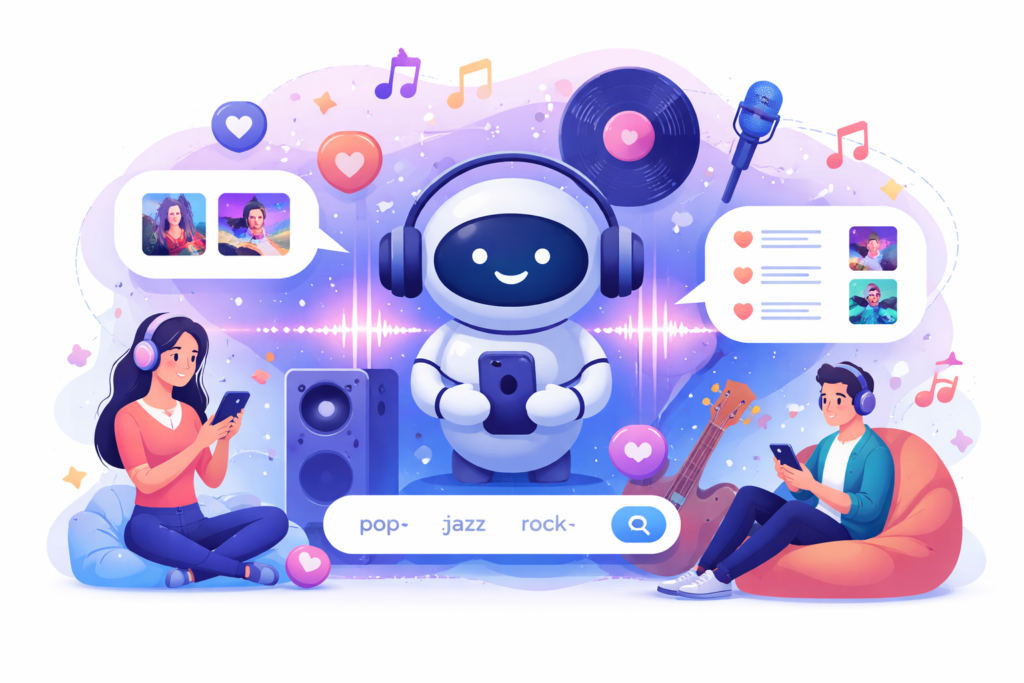
Personalization is the hallmark of music chatbots. AI models analyze behavior, feedback, and preferences to curate individualized playlists. Spotify Engineering highlights hybrid models combining collaborative filtering and content-based analysis for more precise recommendations.
Personalized discovery aligns with Google Page Experience by offering meaningful, user-centric experiences. Trust and engagement improve when platforms consistently deliver relevant, high-quality music suggestions.
Music Chatbots in Streaming Platforms
Major streaming platforms increasingly integrate music chatbots to enhance discovery and engagement. Features include personalized recommendations, contextual suggestions, and conversational search. Platforms following OpenAI Research on NLP-based recommendation improve satisfaction and reduce user churn.
Streaming platforms using chatbots that adhere to Search Quality Evaluator Guidelines and E-E-A-T principles see improved credibility and search visibility, aligning AI innovation with trusted digital experiences.
How Music Chatbots Improve User Engagement
Music chatbots significantly enhance user engagement by providing personalized, real-time interactions that traditional apps cannot match. Unlike static playlists or algorithm-only recommendations, chatbots respond to conversational cues, adapting suggestions based on user mood, listening habits, or contextual prompts. Platforms following Spotify Engineering demonstrate that hybrid recommendation models—combining collaborative filtering with content-based filtering—increase session duration and reduce bounce rates.
Chatbots also encourage continuous interaction through push notifications, playlist updates, and mood-based suggestions. According to MIT Technology Review, conversational AI interfaces improve accessibility, making digital music discovery more intuitive. By engaging users conversationally, chatbots generate meaningful behavioral data, which can further refine personalization strategies.
From an SEO perspective, increased user engagement aligns with Google Search Central metrics, including dwell time and repeat visits, which are signals of high-quality, user-focused content. Integrating NLP music chatbot capabilities allows platforms to process diverse queries accurately, supporting multilingual users and enhancing global reach.
Ultimately, music chatbots not only improve satisfaction but also contribute to content authority and site trustworthiness. Businesses and streaming services using AI-driven chatbots achieve a stronger online presence, aligning with E-E-A-T principles by demonstrating expertise, authority, and user-first design in the music ecosystem.
Voice Assistants and Music Chatbot Integration
Integration of music chatbots with voice assistants has revolutionized how users interact with music. Devices like smart speakers or mobile assistants allow natural language queries such as “play relaxing jazz” or “create my workout playlist,” which are processed by OpenAI Research models for precise recommendations.
Voice-enabled music chatbots leverage speech recognition and contextual understanding, delivering seamless, hands-free interaction. According to IBM AI, conversational interfaces significantly enhance user accessibility and convenience. For streaming platforms, this integration increases engagement, retention, and user satisfaction.
From a Google SEO perspective, offering voice-based conversational options improves user experience signals, aligning with Google Page Experience guidelines. Multimodal access—text and voice—demonstrates expertise and authority, key E-E-A-T considerations.
Businesses adopting voice-integrated music chatbots also gain valuable behavioral insights, enabling improved AI music recommendation systems that adapt dynamically to individual preferences, ensuring long-term engagement and brand loyalty.
Ethical AI and Music Recommendation Systems
Ethical considerations in AI-powered music chatbots are crucial. Music recommendation systems must avoid biases, protect user privacy, and ensure transparency. According to MIT Technology Review, ethical AI practices improve trust and long-term adoption.
Personalized recommendations rely on sensitive user data, including listening history, demographic details, and mood preferences. Implementing secure storage, consent-driven data collection, and transparent algorithms is critical. Platforms adhering to Google Search Central guidelines on trustworthy content gain credibility and positive engagement.
Moreover, ensuring diverse and fair music exposure prevents algorithmic bias, promoting a wider range of artists and genres. Ethical design in chatbots reflects E-E-A-T principles, signaling expertise and trustworthiness, which Google values in ranking AI-powered platforms.
By balancing personalization with ethical responsibility, music chatbots maintain user trust while delivering optimized, engaging experiences across digital music ecosystems.
Music Chatbots and Google Best Practices
Music chatbots should follow Google best practices to maximize discoverability and user satisfaction. Google emphasizes helpful, people-first content, which aligns perfectly with AI-driven conversational interfaces.
Content generated or guided by chatbots must provide clear, accurate, and authoritative information, supported by high-quality sources like OpenAI Research or Spotify Engineering. Platforms that demonstrate expertise, authority, and trustworthiness gain visibility, especially when leveraging structured data and semantic relevance.
Search engines evaluate user experience, so chatbots must ensure fast, intuitive interactions. Applying NLP music chatbot capabilities enhances semantic understanding, ensuring queries like “music like classic rock” or “relaxing evening playlist” yield satisfying results.
Aligning AI-driven music platforms with Search Quality Evaluator Guidelines further boosts credibility, demonstrating commitment to high-quality, user-centered design.
E-E-A-T Signals in AI-Powered Music Platforms
E-E-A-T principles—Experience, Expertise, Authoritativeness, Trust—are critical for music chatbots. Platforms must showcase technical expertise in AI, machine learning, and music recommendation, supported by authoritative sources like MIT Technology Review or IBM AI.
Trust is reinforced through transparent algorithms, clear privacy policies, and accurate metadata for playlists. Google’s evaluation emphasizes content usefulness, credibility, and engagement, making E-E-A-T compliance essential for search visibility.
Music chatbots that integrate these principles improve both user satisfaction and SEO performance, ensuring long-term platform authority in the digital music ecosystem.
Future Trends of Music Chatbots
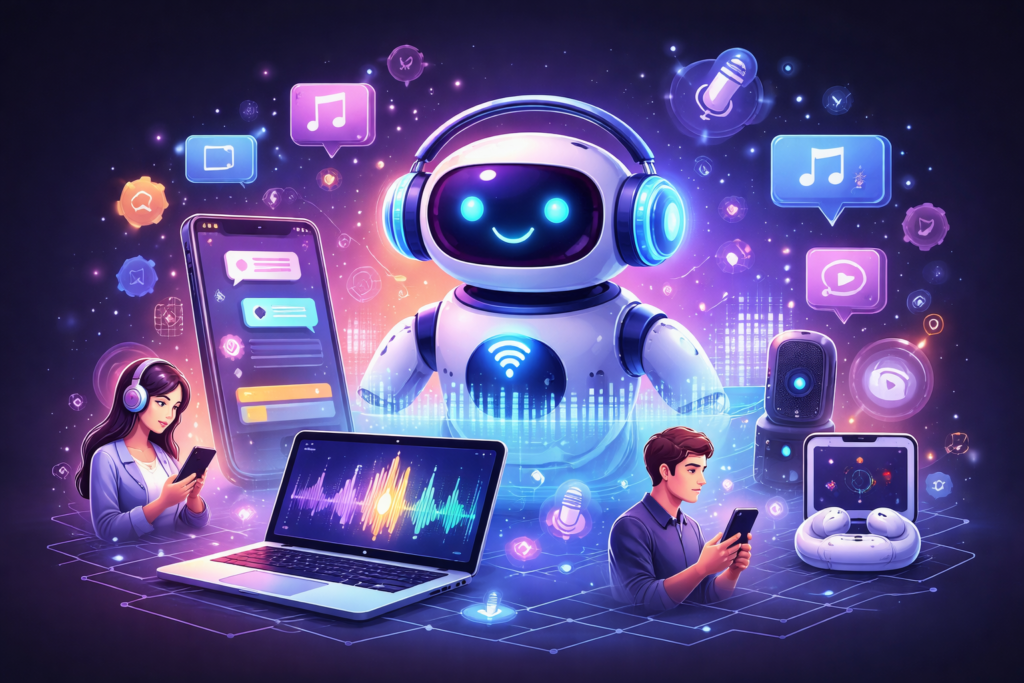
The future of music chatbots involves deeper AI integration, multi-platform support, and hyper-personalized experiences. Upcoming trends include real-time mood detection, cross-platform playlist syncing, and AI-generated music recommendations. According to OpenAI Research, generative AI may soon compose tailored tracks based on user preferences.
Integration with virtual reality, fitness devices, and smart home ecosystems will broaden chatbot usability. Platforms that follow Google best practices for user-first design and structured, trustworthy content will dominate discoverability.
These innovations will redefine music consumption, creating highly engaging, seamless, and personalized experiences for users worldwide.
Security, Privacy, and Data Protection in Music Chatbots
Music chatbots process sensitive user data, including listening habits, location, and preferences. Protecting this data is critical. Implementing encryption, secure API integrations, and user consent policies is essential. According to IBM AI, robust privacy measures enhance trust, aligning with E-E-A-T principles.
Platforms adhering to Google Search Central security recommendations not only protect users but also gain credibility and ranking advantages. Transparent handling of data ensures compliance with regulations like GDPR, maintaining long-term sustainability in global markets.
Why Music Chatbots Are the Future of Digital Music
Music chatbots combine AI intelligence, personalization, and conversational accessibility, shaping the future of digital music. They empower users to discover music effortlessly, curate unique playlists, and enjoy context-aware recommendations. Platforms following Spotify Engineering and OpenAI Research principles deliver experiences that align with Google’s E-E-A-T and user-first guidelines.
At chattbotz, we observe that integrating conversational AI in streaming platforms drives higher engagement, loyalty, and trust. With secure, ethical, and intelligent design, music chatbots represent the next evolution of interactive, user-centered digital music experiences.
Common Mistakes in Music Chatbot Implementation
- Ignoring personalization – Treating all users the same reduces engagement.
- Overloading recommendations – Too many options overwhelm users; simplicity is key.
- Neglecting voice integration – Missing voice assistants limits accessibility.
- Weak data security – Poor privacy policies erode trust.
- Lack of ethical AI – Bias in recommendations damages credibility.
- Skipping high-authority references – Reduces E-E-A-T compliance and SEO potential.
- Ignoring analytics – Failing to track user interaction misses optimization opportunities.
FAQs
Q1. What is a music chatbot?
A music chatbot is an AI-powered system that recommends, plays, and manages music via conversational interaction.
Q2. How do music chatbots personalize recommendations?
They use machine learning to analyze listening habits, preferences, and contextual cues.
Q3. Can music chatbots work with voice assistants?
Yes, integration with smart speakers and mobile assistants allows hands-free music discovery.
Q4. Are music chatbots secure?
Secure chatbots follow IBM AI best practices with encryption and consent-driven data policies.
Q5. Do music chatbots follow Google SEO guidelines?
Yes, they can follow Google best practices to enhance discoverability.
Q6. Can chatbots generate playlists?
Yes, AI chatbots act as AI playlist generators to create personalized playlists.
Q7. How do chatbots handle user data ethically?
By following privacy regulations, transparent algorithms, and E-E-A-T guidelines.
Q8. Are chatbots multilingual?
Modern NLP music chatbots can handle multiple languages.
Q9. Do chatbots improve streaming engagement?
Yes, conversational interfaces increase user interaction and retention.
Q10. What platforms use music chatbots?
Streaming services, retail apps, fitness platforms, and gaming systems adopt AI chatbots.
Conclusion
Music chatbots are transforming digital music consumption by offering intelligent, conversational, and personalized experiences. At Chattbotz, we observe that AI-powered platforms integrating ethical design, secure data practices, and high-authority references enhance engagement, trust, and discoverability. By adhering to Google best practices and E-E-A-T principles, music chatbots are poised to become the future of user-centered digital music.