
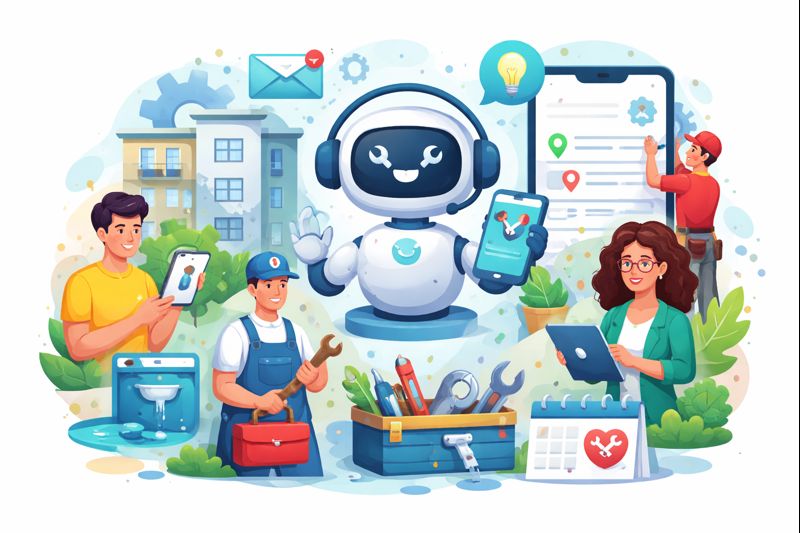
Property maintenance businesses are under increasing pressure to respond faster, manage multiple properties efficiently, and maintain clear communication with tenants and vendors. Manual systems often lead to delays, miscommunication, and rising operational costs. A Property Maintenance Chatbot solves these challenges by automating conversations, streamlining maintenance workflows, and delivering real-time support. This technology aligns closely with modern digital expectations and Google’s Helpful Content principles by prioritizing user experience, accuracy, and efficiency.
Introduction
As the property management industry becomes more digital, automation is no longer a luxury—it is a necessity. Businesses managing residential, commercial, or mixed-use properties must handle tenant requests, maintenance scheduling, emergency reporting, and vendor coordination without delays. This is where Chattbotz enables a smarter approach by offering AI-powered Property Maintenance Chatbots that operate 24/7 and scale effortlessly. These chatbots improve response times, reduce operational stress, and ensure consistent communication while aligning with Google’s quality and trust guidelines. By focusing on user-first automation, property maintenance chatbots help businesses deliver reliable service experiences while maintaining efficiency and long-term growth.
What Is a Property Maintenance Chatbot?
A Property Maintenance Chatbot is an AI-driven conversational tool designed specifically to automate communication and task handling within property maintenance operations. Unlike generic chatbots, it understands maintenance-related queries such as plumbing issues, electrical faults, HVAC problems, inspection requests, and general service updates. Using natural language processing, the chatbot can interpret tenant messages, collect essential details, and route requests to the appropriate team without human intervention.
Modern chatbots are built to function across websites, mobile apps, and messaging platforms, allowing tenants to submit requests using their preferred communication channel. According to IBM, conversational AI improves service efficiency by reducing response times and eliminating repetitive manual tasks.
From an operational perspective, property maintenance chatbots act as a centralized communication hub. They log requests, generate service tickets, send automated acknowledgments, and track progress in real time. This structured approach minimizes errors and ensures accountability across teams.
From a Google best-practice standpoint, chatbots enhance user satisfaction, content accessibility, and task completion efficiency, which are key signals of helpful digital experiences. By delivering immediate, accurate responses, property maintenance chatbots support trust, transparency, and consistent service delivery.
Why Property Maintenance Businesses Need Chatbots
Property maintenance businesses operate in a time-sensitive environment where delays can lead to tenant dissatisfaction, property damage, and reputational risk. Traditional communication methods such as phone calls and emails often fail to meet modern expectations. Chatbots solve this problem by providing instant responses and structured workflows.
Research published by Harvard Business Review shows that automation improves service consistency when applied to repetitive operational tasks.
Chatbots ensure that no maintenance request is overlooked. Every interaction is recorded, categorized, and tracked, reducing the risk of missed or forgotten tasks. This is especially valuable for property managers handling multiple locations or high tenant volumes.
Additionally, chatbots reduce staff workload by handling routine inquiries such as request status updates, appointment confirmations, and service timelines. This allows human teams to focus on complex issues that require judgment and expertise. From an SEO and Google Helpful Content perspective, this improves user experience by delivering fast, accurate, and relevant information without friction.
How Property Maintenance Chatbots Work
Property maintenance chatbots operate through structured decision logic combined with AI-powered language understanding. When a tenant submits a message, the chatbot identifies intent, extracts relevant details, and guides the user through a short conversational flow. This ensures that all required information—such as issue type, urgency, and location—is captured correctly.
According to Google Cloud, conversational AI systems perform best when paired with structured data and predefined workflows.
Once the data is collected, the chatbot automatically creates a maintenance ticket and assigns it to the appropriate department or vendor. Notifications are sent to tenants and staff, keeping everyone informed throughout the process. This real-time visibility improves transparency and reduces follow-up inquiries.
Chatbots can also integrate with property management systems, enabling seamless data synchronization. From a compliance and quality standpoint, this structured process aligns with Google’s emphasis on accuracy, reliability, and user-centric digital solutions.
Enhancing Tenant Experience With Chatbots
Tenant satisfaction is directly linked to how quickly and effectively maintenance issues are resolved. Chatbots enhance tenant experience by providing immediate access to support without waiting for office hours or call queues. Tenants can report issues, receive updates, and ask follow-up questions at any time.
A study by PwC highlights that customer experience is a key driver of loyalty and trust in service-based industries.
Chatbots provide consistent communication, ensuring tenants receive clear confirmations, estimated timelines, and resolution updates. This reduces frustration and builds confidence in property management services. Additionally, multilingual chatbots improve accessibility for diverse tenant communities.
From a Google Helpful Content perspective, chatbots improve usability and satisfaction by delivering relevant, easy-to-understand information quickly. This user-first approach strengthens trust signals and supports long-term digital performance.
Automating Maintenance Requests and Work Orders
Manual maintenance request handling is inefficient and prone to errors. Chatbots automate the entire work order lifecycle, from submission to resolution. When a tenant reports an issue, the chatbot instantly generates a work order, assigns priority, and routes it to the appropriate team.
According to Gartner, automation plays a critical role in improving operational resilience and service efficiency.
Automation ensures consistent documentation, accurate categorization, and faster resolution times. It also enables performance tracking, helping property managers identify recurring issues and improve service planning.
By reducing administrative overhead, chatbots help businesses lower costs while maintaining high service standards. This structured automation approach aligns with Google’s quality guidelines by emphasizing clarity, reliability, and user benefit.
Emergency Handling and Priority Classification
Property maintenance emergencies such as water leaks, electrical failures, or gas issues require immediate action. A Property Maintenance Chatbot plays a critical role in identifying and escalating urgent cases without delay. By using predefined logic and keyword detection, the chatbot can recognize emergency-related language and automatically assign high-priority status to critical requests.
According to McKinsey & Company, AI-driven prioritization improves response times and operational efficiency in service-based industries.
Once an emergency is identified, the chatbot instantly notifies the appropriate maintenance team or vendor while sending real-time confirmation updates to tenants. This eliminates manual triage delays and ensures rapid intervention. Additionally, the chatbot can provide immediate safety instructions to tenants while help is on the way, enhancing risk management.
From a Google Helpful Content perspective, emergency prioritization demonstrates user-first design by addressing high-risk situations promptly. This builds trust, improves satisfaction, and reinforces reliability—key indicators of high-quality digital experiences.
Vendor Coordination and Scheduling Automation
Managing multiple vendors can be challenging, especially when coordinating schedules, service confirmations, and follow-ups. A property maintenance chatbot automates vendor coordination by matching requests with the right service provider based on availability, expertise, and location.
Research published by Forbes emphasizes that automation improves operational efficiency by reducing manual scheduling errors.
Chatbots handle appointment confirmations, rescheduling requests, and automated reminders, ensuring smooth communication between vendors and tenants. This reduces missed appointments and improves overall service reliability. Vendors benefit from clear instructions and timely updates, while property managers gain visibility into service progress.
From an SEO and quality standpoint, automated vendor coordination supports Google’s emphasis on efficiency, transparency, and consistency. These factors contribute to improved user satisfaction and stronger trust signals.
Integration With Property Management Systems
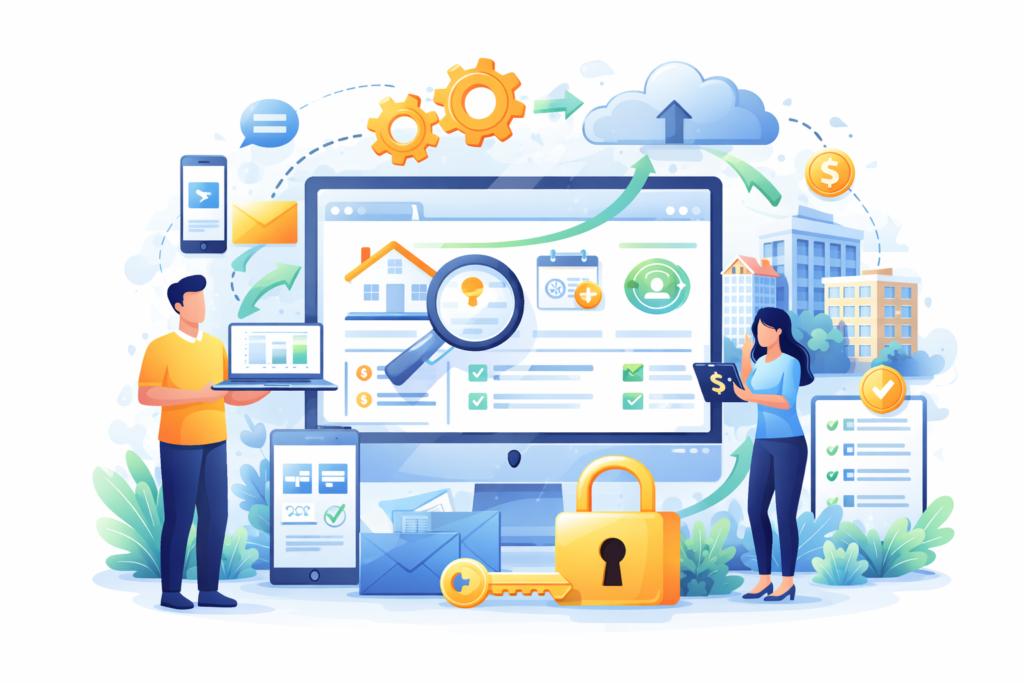
A property maintenance chatbot delivers maximum value when integrated with existing property management systems (PMS), CRMs, and maintenance platforms. Integration ensures that data flows seamlessly between systems, eliminating silos and duplication.
According to Salesforce, integrated digital platforms improve service efficiency and customer engagement.
With proper integration, chatbots can access tenant records, property details, maintenance history, and vendor databases in real time. This enables more accurate responses and faster issue resolution. Property managers gain a centralized dashboard that improves oversight and decision-making.
From a Google best-practice perspective, integrated systems enhance accuracy, reliability, and user experience—key attributes of high-quality content and digital services.
Data Collection and Predictive Maintenance Insights
Property maintenance chatbots continuously collect structured data from every interaction, including issue frequency, response times, and resolution outcomes. This data becomes a powerful resource for predictive maintenance strategies.
According to MIT Technology Review, predictive analytics helps organizations reduce maintenance costs and prevent equipment failures.
By analyzing historical patterns, chatbots help property managers identify recurring issues and schedule preventive maintenance before failures occur. This proactive approach reduces downtime, extends asset lifespan, and improves tenant satisfaction.
From a Google Helpful Content perspective, predictive insights demonstrate value-driven automation by solving problems before users even report them—enhancing trust and perceived expertise.
Cost Reduction and Operational Efficiency
Operational costs are a major concern for property maintenance businesses. Chatbots significantly reduce expenses by automating repetitive tasks, minimizing manual errors, and improving resource allocation.
According to Deloitte, AI-driven automation leads to measurable cost savings and productivity gains.
Chatbots reduce call center volume, administrative workload, and staffing pressures. They also optimize vendor utilization and maintenance scheduling, further lowering operational costs. The result is a leaner, more efficient operation that scales without proportional cost increases.
From an SEO and Google quality standpoint, efficiency-focused solutions support user satisfaction, reliability, and long-term value—key components of high-performing digital content.
Security, Privacy, and Data Protection in Chatbots
Security and data protection are critical when implementing a property maintenance chatbot. These systems handle sensitive tenant information, including personal details, property addresses, and maintenance histories. A well-designed chatbot follows strict security protocols such as encrypted communication, secure authentication, and controlled access permissions.
According to GDPR, organizations must ensure transparency and responsible handling of personal data.
Chatbots help enforce data protection by automatically logging interactions, limiting human exposure to sensitive information, and ensuring consistent compliance. Role-based access controls prevent unauthorized data usage, while secure hosting environments protect against breaches.
From a Google Helpful Content perspective, trust and safety are essential quality signals. Secure chatbot implementation improves user confidence and reinforces credibility. Property maintenance businesses that prioritize privacy not only meet regulatory requirements but also strengthen long-term tenant relationships.
Scalability for Growing Property Portfolios
As property maintenance businesses expand, operational complexity increases. Chatbots provide a scalable solution that grows alongside property portfolios without requiring additional staff or infrastructure.
According to Accenture, AI-driven scalability allows businesses to manage growth efficiently while maintaining service quality.
Chatbots handle increased interaction volumes effortlessly, ensuring consistent response times even during peak demand. Whether managing ten properties or thousands, chatbot workflows remain stable and efficient. This scalability is especially valuable for property management companies operating across multiple regions.
From an SEO and quality standpoint, scalable systems ensure consistent user experiences—an important factor in Google’s evaluation of reliable digital services.
Compliance, Documentation, and Audit Readiness
Compliance and documentation are essential in property maintenance operations. Chatbots automatically record every interaction, creating a detailed audit trail that supports regulatory compliance and dispute resolution.
According to ISO, structured documentation improves operational transparency and accountability.
Chatbots ensure standardized data entry, accurate timestamps, and consistent reporting. This reduces compliance risks and simplifies audits. Property managers benefit from improved visibility and easier access to historical records.
From a Google quality perspective, structured documentation reflects expertise, accuracy, and trustworthiness—key indicators of high-quality digital content and services.
Common Mistakes Property Businesses Make With Chatbots
Despite their benefits, chatbots can fail if implemented incorrectly. Common mistakes include over-automation without human fallback, poor chatbot training, lack of system integration, and ignoring performance monitoring.
According to Harvard Business Review, successful automation requires strategic planning and continuous optimization.
Businesses should ensure chatbots complement human teams rather than replace them entirely. Regular updates, user feedback analysis, and performance audits are essential for long-term success.
Avoiding these mistakes ensures chatbots deliver real value while maintaining user trust and satisfaction—key Google Helpful Content principles.
Frequently Asked Questions
Q1. What is a Property Maintenance Chatbot?
A Property Maintenance Chatbot is an AI-powered digital assistant designed to automate communication between tenants, property managers, and maintenance teams. It handles tasks such as maintenance requests, service updates, scheduling, and status tracking. By using natural language understanding, the chatbot allows users to report issues easily without technical knowledge, improving efficiency and response times.
Q2. How does a Property Maintenance Chatbot handle tenant requests?
The chatbot collects essential details such as issue type, urgency, and location through guided conversation. It then creates a maintenance ticket, assigns priority, and routes the request to the appropriate team or vendor. This structured approach ensures no request is missed and every issue is tracked from start to resolution.
Q3. Can a chatbot manage emergency maintenance issues?
Yes, chatbots are designed to identify emergency keywords such as leaks, power failures, or gas issues. These requests are automatically marked as high priority and escalated instantly to maintenance teams. The chatbot can also send immediate confirmation messages and basic safety guidance to tenants while help is dispatched.
Q4. Is a Property Maintenance Chatbot available 24/7?
Yes, one of the biggest advantages of a chatbot is 24/7 availability. Tenants can report issues, check request status, or receive updates at any time, including nights, weekends, and holidays. This ensures uninterrupted service and improved tenant satisfaction.
Q5. Can a chatbot integrate with property management software?
Modern property maintenance chatbots can integrate with property management systems, CRMs, and maintenance platforms. This integration enables real-time data sharing, accurate record keeping, and centralized control, helping property managers make informed decisions faster.
Q6. How does a chatbot improve tenant satisfaction?
Chatbots improve tenant satisfaction by providing instant responses, clear communication, and real-time updates. Tenants no longer need to wait on phone calls or emails. Consistent and transparent communication builds trust and enhances the overall living or working experience.
Q7. Is tenant data secure when using a chatbot?
Yes, when properly implemented, chatbots follow strong security practices such as encrypted communication, role-based access control, and compliance with data protection regulations. This ensures tenant information remains protected and confidential.
Q8. Can a chatbot reduce operational costs?
Absolutely. Chatbots reduce costs by automating repetitive tasks, minimizing manual errors, and reducing the need for large support teams. They also optimize vendor coordination and maintenance scheduling, leading to more efficient resource utilization.
Q9. Does a chatbot replace human maintenance staff?
No, a chatbot does not replace human staff. Instead, it supports teams by handling routine communication and administrative tasks. Human staff can then focus on complex issues, inspections, and decision-making that require expertise and judgment.
Q10. Is a Property Maintenance Chatbot suitable for small property businesses?
Yes, chatbots are highly scalable and suitable for both small and large property maintenance businesses. Small companies benefit from automation without hiring additional staff, while larger organizations use chatbots to manage high volumes efficiently and consistently.
The Future of Property Maintenance Chatbots
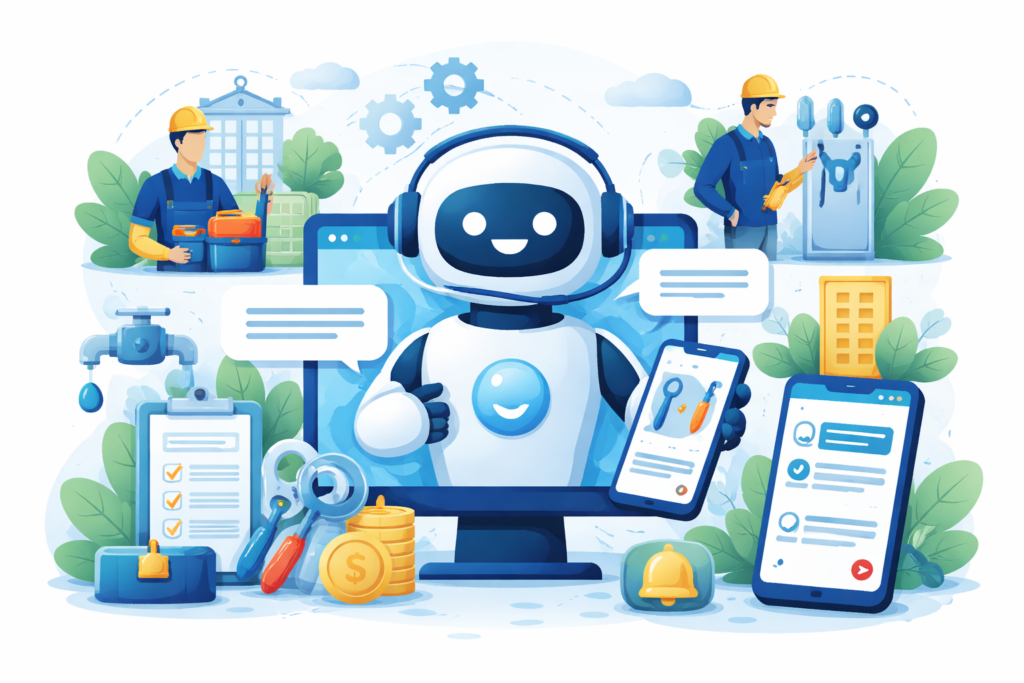
The future of property maintenance lies in intelligent, predictive, and user-first automation. Chatbots will evolve from reactive tools into proactive assistants that anticipate maintenance needs and prevent issues before they occur.
According to McKinsey & Company, AI-driven automation will continue transforming service industries.
Future chatbots will integrate deeper analytics, voice interfaces, and IoT connectivity, creating smarter property ecosystems. This evolution aligns with Google’s emphasis on innovation, usefulness, and long-term value.
Conclusion
Property maintenance chatbots are redefining how businesses manage operations, communicate with tenants, and scale efficiently. By automating workflows, improving response times, and ensuring compliance, these chatbots deliver measurable value. With Chattbotz, property maintenance businesses can implement intelligent chatbot solutions that align with Google best practices, enhance user experience, and support sustainable growth in an increasingly digital property management landscape.