
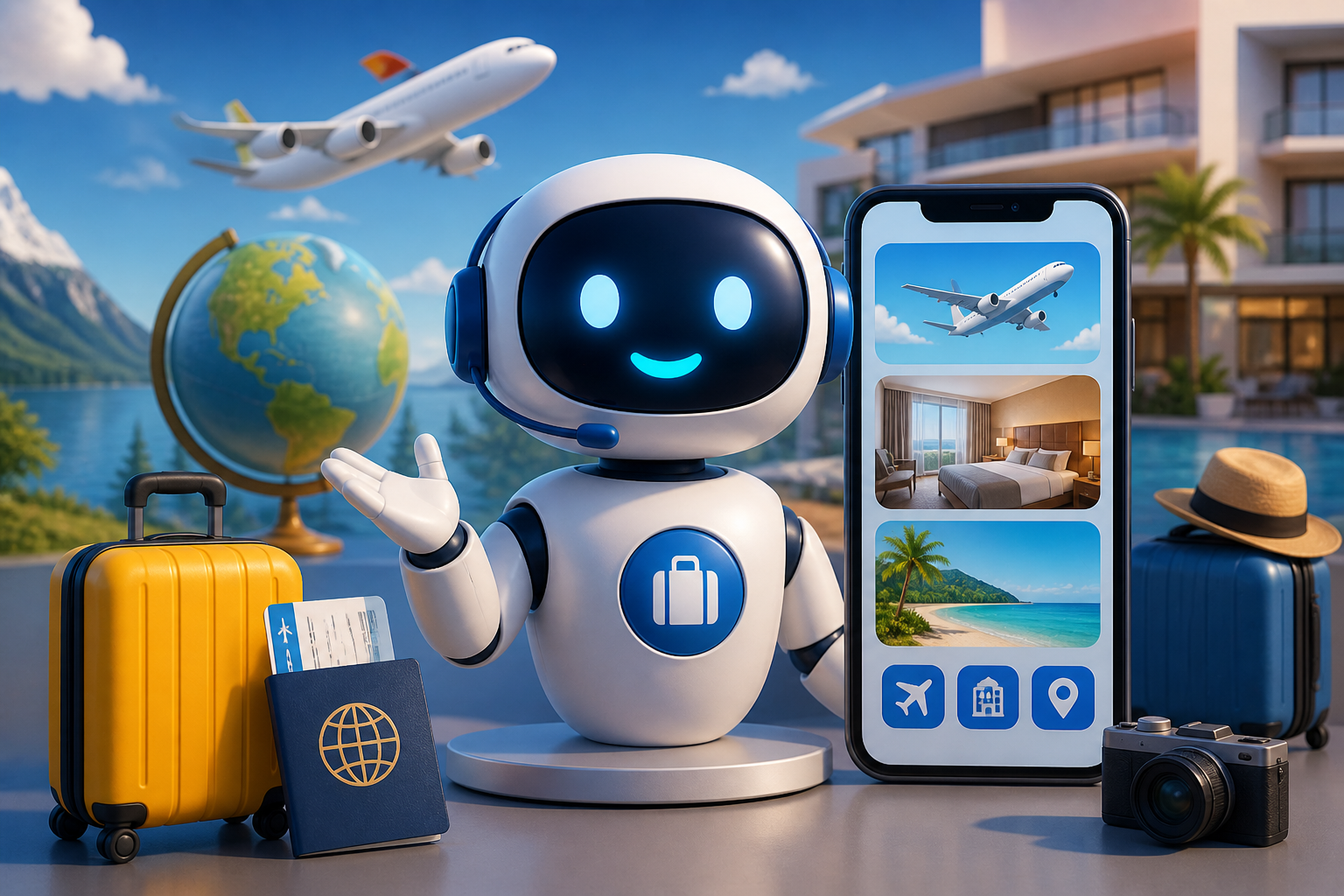

Travel Chatbot solutions are transforming the tourism industry by automating bookings, enhancing customer support, and delivering personalized travel experiences through AI-powered conversations.
Introduction
The travel industry has undergone a significant transformation over the past decade, driven by rapid advancements in artificial intelligence and automation. One of the most impactful innovations in this space is the rise of the travel chatbot—a powerful AI-driven tool designed to streamline communication, improve customer engagement, and automate repetitive tasks. As travelers demand faster responses, personalized recommendations, and seamless booking experiences, chatbots have emerged as a critical solution for modern travel businesses.
On Chattbotz, businesses are increasingly leveraging intelligent chatbot systems to stay competitive in a digital-first world. Whether it’s assisting customers with flight bookings, providing hotel recommendations, or handling itinerary changes, travel chatbots are reshaping how companies interact with their audience. These bots operate 24/7, ensuring that users receive instant support regardless of time zones or geographic limitations.
In this comprehensive guide, we will explore every aspect of travel chatbots—from their functionality and benefits to implementation strategies and future trends. By the end of this article, you will have a deep understanding of how travel chatbots can elevate your business and deliver exceptional user experiences.
What is a Travel Chatbot?
A travel chatbot is an AI-powered virtual assistant designed specifically for the travel and tourism industry. It interacts with users through messaging platforms, websites, or mobile applications, providing instant responses to queries related to travel planning, bookings, and customer support. These chatbots utilize technologies such as natural language processing (NLP) and machine learning to understand user intent and deliver accurate, relevant responses.
Unlike traditional customer service systems, travel chatbots are capable of handling multiple queries simultaneously. This scalability makes them an ideal solution for travel agencies, airlines, hotels, and tour operators that deal with high volumes of customer interactions. From answering frequently asked questions to processing reservations, chatbots significantly reduce operational workload while improving response times.
Another key advantage is their ability to deliver personalized travel experiences. By analyzing user data, preferences, and past interactions, chatbots can recommend destinations, suggest activities, and even create customized itineraries. This level of personalization not only enhances user satisfaction but also increases conversion rates for travel businesses.
How Travel Chatbots Work
Travel chatbots operate using a combination of advanced technologies, primarily natural language processing (NLP), machine learning, and automation workflows. NLP enables the chatbot to interpret and understand human language, allowing it to respond in a conversational and intuitive manner. This ensures that users feel like they are interacting with a real human rather than a machine.
The chatbot begins by analyzing the user’s input, identifying keywords and intent. For example, if a user asks, “Find me cheap flights to Dubai,” the chatbot recognizes the intent (flight search) and extracts relevant parameters such as destination and budget. It then connects with backend systems or APIs to retrieve real-time data and present suitable options to the user.
Machine learning further enhances chatbot performance over time. As the system interacts with more users, it learns from previous conversations and improves its accuracy. This continuous learning process ensures that the chatbot becomes more efficient and reliable, delivering better results with each interaction.
Key Features of a Modern Travel Chatbot
Modern travel chatbots come equipped with a wide range of features designed to enhance user experience and streamline business operations. One of the most important features is instant booking assistance, allowing users to book flights, hotels, and tours directly through the chatbot interface. This eliminates the need for users to navigate multiple platforms, simplifying the booking process.
Another essential feature is multilingual support. Since travel is a global industry, chatbots must be able to communicate with users in different languages. This capability not only expands market reach but also ensures inclusivity, enabling businesses to cater to a diverse audience.
Additionally, travel chatbots offer real-time updates and notifications. Users can receive alerts about flight delays, gate changes, weather conditions, and booking confirmations instantly. This proactive communication enhances customer satisfaction and builds trust, as users are kept informed at every step of their journey.
Benefits of Travel Chatbots for Businesses
Implementing a travel chatbot offers numerous advantages for businesses in the tourism sector. One of the most significant benefits is cost reduction. By automating repetitive tasks such as answering FAQs and handling booking inquiries, businesses can reduce the need for large customer support teams, resulting in substantial cost savings.
Another major advantage is 24/7 availability. Unlike human agents, chatbots do not require breaks or sleep. They can provide continuous support to customers across different time zones, ensuring that no query goes unanswered. This is particularly important in the travel industry, where customers may need assistance at any time.
Travel chatbots also improve customer engagement and retention. By delivering quick responses and personalized recommendations, chatbots create a seamless user experience that encourages repeat business. Satisfied customers are more likely to return and recommend the service to others, driving long-term growth.
Enhancing Customer Experience with Travel Chatbots
Customer experience is a critical factor in the success of any travel business, and chatbots play a pivotal role in enhancing it. By providing instant responses, chatbots eliminate the frustration of long waiting times, ensuring that users receive the information they need without delay.
Personalization is another key aspect of customer experience. Travel chatbots can analyze user preferences, past bookings, and browsing behavior to deliver tailored recommendations. For example, if a user frequently books beach vacations, the chatbot can suggest similar destinations and exclusive deals.
Moreover, chatbots create a frictionless user journey. From initial inquiry to final booking, users can complete all steps within a single interface. This streamlined process reduces drop-off rates and increases the likelihood of conversions, making it easier for businesses to achieve their goals.
Travel Chatbots in Flight Booking Systems

Flight booking is one of the most common use cases for travel chatbots. These bots simplify the entire process by allowing users to search for flights, compare prices, and make reservations within seconds. By integrating with airline databases and booking platforms, chatbots provide real-time availability and pricing information.
One of the key advantages of using chatbots for flight booking is speed and efficiency. Users no longer need to visit multiple websites or spend time comparing options manually. The chatbot does all the work, presenting the best choices based on user preferences and budget.
Additionally, chatbots can handle post-booking services such as ticket modifications, cancellations, and refunds. This end-to-end support ensures that users have a smooth experience, even when plans change. As a result, travel businesses can improve customer satisfaction and build stronger relationships with their audience.
Hotel Booking and Reservation Automation
Travel chatbots have revolutionized hotel booking by making the process faster and more convenient. Users can search for hotels, check availability, and complete reservations directly through the chatbot interface. This eliminates the need for complex navigation and multiple steps, enhancing the overall user experience.
Another important feature is dynamic pricing and recommendations. Chatbots can analyze user preferences and suggest hotels that match their budget, location, and amenities. This personalized approach not only improves user satisfaction but also increases booking conversions.
Furthermore, chatbots can assist with pre-arrival and post-stay services. From providing check-in instructions to collecting feedback after the stay, chatbots ensure continuous engagement with customers. This ongoing interaction helps businesses build loyalty and improve their services based on user feedback.
Personalization in Travel Planning
Personalization is one of the most powerful capabilities of travel chatbots. By leveraging data analytics and AI, chatbots can create highly customized travel experiences tailored to individual preferences. This includes recommending destinations, suggesting activities, and even designing complete itineraries.
For example, a chatbot can analyze a user’s travel history and identify patterns such as preferred destinations, travel dates, and budget range. Based on this information, it can offer personalized suggestions that align with the user’s interests. This level of customization enhances user satisfaction and increases the likelihood of bookings.
Additionally, personalization extends to communication style. Chatbots can adapt their tone and language based on user behavior, creating a more engaging and human-like interaction. This not only improves user experience but also strengthens the relationship between the customer and the brand.
Integration with Travel APIs and Platforms
A high-performing travel chatbot is only as powerful as the ecosystem it connects to. Integration with travel APIs and third-party platforms enables chatbots to deliver real-time data, automate bookings, and provide accurate travel information. These integrations include flight databases, hotel booking engines, payment gateways, and itinerary management systems, all working together to create a seamless user experience.
Travel APIs allow chatbots to access live data such as flight schedules, ticket prices, hotel availability, and weather conditions. This ensures that users receive up-to-date information, which is critical when making travel decisions. Without proper integration, chatbots would be limited to static responses, reducing their effectiveness and reliability.
Moreover, integrating chatbots with CRM systems allows businesses to store and analyze customer data. This enables better personalization, targeted marketing, and improved customer service. When implemented correctly, API integration transforms a simple chatbot into a powerful digital assistant capable of handling complex travel scenarios with ease.
AI and Machine Learning in Travel Chatbots
Artificial intelligence and machine learning are the backbone of modern travel chatbots. These technologies enable chatbots to understand user intent, learn from interactions, and continuously improve their performance. Unlike rule-based systems, AI-driven chatbots can handle complex queries and provide more accurate responses.
Machine learning allows chatbots to analyze large volumes of data, identify patterns, and make predictions. For instance, a chatbot can predict user preferences based on past behavior and suggest relevant travel options. This predictive capability enhances personalization and increases conversion rates.
Additionally, AI-powered chatbots can handle sentiment analysis, detecting user emotions and responding accordingly. This ensures that frustrated customers receive empathetic responses, improving overall satisfaction. As AI technology continues to evolve, travel chatbots will become even more sophisticated, offering smarter and more intuitive interactions.
Security and Data Privacy in Travel Chatbots
Security and data privacy are critical considerations when implementing travel chatbots. These systems handle sensitive information such as personal details, payment data, and travel itineraries. Ensuring that this data is protected is essential for maintaining user trust and complying with global regulations.
Businesses must follow secure development practices and adhere to standards such as creating helpful content when building chatbot systems. This ensures that the chatbot not only provides valuable content but also operates within ethical and secure frameworks.
Encryption, secure APIs, and authentication protocols play a key role in protecting user data. Additionally, compliance with regulations such as GDPR and other data protection laws is essential. By prioritizing security, businesses can build trust with their customers and create a safe environment for digital interactions.
SEO Benefits of Travel Chatbots
Travel chatbots can significantly enhance a website’s SEO performance by improving user engagement and reducing bounce rates. When users interact with a chatbot, they spend more time on the website, signaling to search engines that the content is valuable and relevant.
Chatbots also contribute to voice search optimization, as they are designed to understand natural language queries. This aligns with modern search behavior, where users prefer conversational search phrases. By integrating chatbots, businesses can better capture long-tail keywords and improve their visibility in search results.
For technical optimization, following guidelines such as SEO starter guide ensures that chatbot implementations support overall SEO strategies. Proper indexing, structured data, and fast-loading interfaces all contribute to better search rankings and user experience.
Future Trends in Travel Chatbots
The future of travel chatbots is filled with exciting possibilities. One of the most promising trends is the integration of voice assistants. As voice search continues to grow, chatbots will evolve to support voice interactions, allowing users to plan trips using simple voice commands.
Another emerging trend is the use of augmented reality (AR) and virtual reality (VR). Chatbots may soon be able to provide immersive travel experiences, allowing users to explore destinations virtually before making a booking. This will revolutionize how people plan and experience travel.
Additionally, advancements in AI will lead to more hyper-personalized experiences. Chatbots will be able to anticipate user needs, offer proactive suggestions, and create fully customized travel plans. These innovations will further enhance user satisfaction and drive growth in the travel industry.
Choosing the Right Travel Chatbot for Your Business
Selecting the right travel chatbot requires careful consideration of several factors. Businesses must evaluate their specific needs, target audience, and budget before choosing a solution. A one-size-fits-all approach does not work, as different businesses have unique requirements.
Key factors to consider include scalability, integration capabilities, and ease of use. The chatbot should be able to handle increasing volumes of interactions without compromising performance. It should also integrate seamlessly with existing systems and platforms.
Additionally, businesses should look for solutions that offer advanced features such as AI capabilities, multilingual support, and analytics. These features ensure that the chatbot can deliver a high-quality user experience and provide valuable insights for continuous improvement.
Implementing a Travel Chatbot Successfully

Successful implementation of a travel chatbot requires a strategic approach. Businesses must start by defining clear objectives, such as improving customer support, increasing bookings, or enhancing user engagement. These goals will guide the development and deployment process.
Next, it is important to design intuitive conversation flows that align with user needs. The chatbot should provide clear, concise responses and guide users through the booking process seamlessly. Testing and optimization are also crucial to ensure that the chatbot performs effectively.
Finally, continuous monitoring and improvement are essential. By analyzing user interactions and feedback, businesses can identify areas for improvement and enhance chatbot performance over time. This iterative approach ensures long-term success and maximum return on investment.
Common Mistakes to Avoid
One of the most common mistakes businesses make is implementing a chatbot without a clear strategy. Without defined goals, the chatbot may fail to deliver meaningful results. It is essential to align chatbot functionality with business objectives.
Another mistake is neglecting user experience. Poorly designed conversation flows, slow responses, and limited functionality can frustrate users and lead to abandonment. Businesses must prioritize usability and ensure that the chatbot provides value at every interaction.
Additionally, failing to update and optimize the chatbot can limit its effectiveness. Technology evolves rapidly, and chatbots must be continuously improved to stay relevant. Regular updates, testing, and performance analysis are key to maintaining a successful chatbot system.
Best Practices Summary
To maximize the effectiveness of a travel chatbot, businesses should focus on delivering value, personalization, and efficiency. The chatbot should be designed to meet user needs and provide accurate, relevant information at all times.
Integration with reliable data sources and platforms is essential for ensuring real-time functionality. Additionally, prioritizing security and compliance helps build trust and protect user data.
Finally, continuous improvement is crucial. By analyzing performance metrics and user feedback, businesses can refine their chatbot and achieve better results over time. Following these best practices ensures long-term success and a competitive advantage in the travel industry.
FAQs
1. What is a travel chatbot used for?
A travel chatbot is used to assist users with travel-related tasks such as booking flights, reserving hotels, planning itineraries, and providing customer support.
2. How do travel chatbots improve customer experience?
They provide instant responses, personalized recommendations, and seamless booking processes, reducing wait times and enhancing user satisfaction.
3. Are travel chatbots secure?
Yes, when implemented correctly with encryption and secure protocols, travel chatbots can safely handle sensitive user data.
4. Can travel chatbots handle multiple languages?
Yes, most modern travel chatbots support multiple languages, allowing businesses to serve a global audience.
5. Do travel chatbots replace human agents?
No, they complement human agents by handling routine tasks, allowing staff to focus on more complex issues.
6. How much does it cost to implement a travel chatbot?
Costs vary depending on features, complexity, and integration requirements, but they often provide a strong return on investment.
7. Can chatbots increase travel bookings?
Yes, by simplifying the booking process and providing personalized recommendations, chatbots can significantly boost conversions.
8. What industries benefit from travel chatbots?
Airlines, hotels, travel agencies, tour operators, and online booking platforms all benefit from chatbot technology.
Conclusion
Travel chatbots are no longer a luxury—they are a necessity for businesses looking to thrive in the modern tourism landscape. By automating processes, enhancing customer experience, and providing personalized interactions, these AI-powered tools deliver immense value. On Chattbotz, businesses can harness the full potential of travel chatbots to stay ahead of the competition and meet evolving customer expectations.
As technology continues to advance, travel chatbots will become even more intelligent and capable. Businesses that invest in this technology today will be better positioned to succeed in the future, offering seamless, efficient, and engaging travel experiences.
Want to Implement This Easily?
Prompt
You are an expert consultant. Based on the blog post titled “(Travel Chatbot)”, provide a step-by-step, practical implementation guide. Include tools, best practices, common mistakes to avoid, and advanced tips. Assume the reader wants to implement everything discussed in this article effectively.
Call to Action
Want our help implementing this? Just reach out to us via our website contact form: https://appledew.co.uk/cb/contact-us/