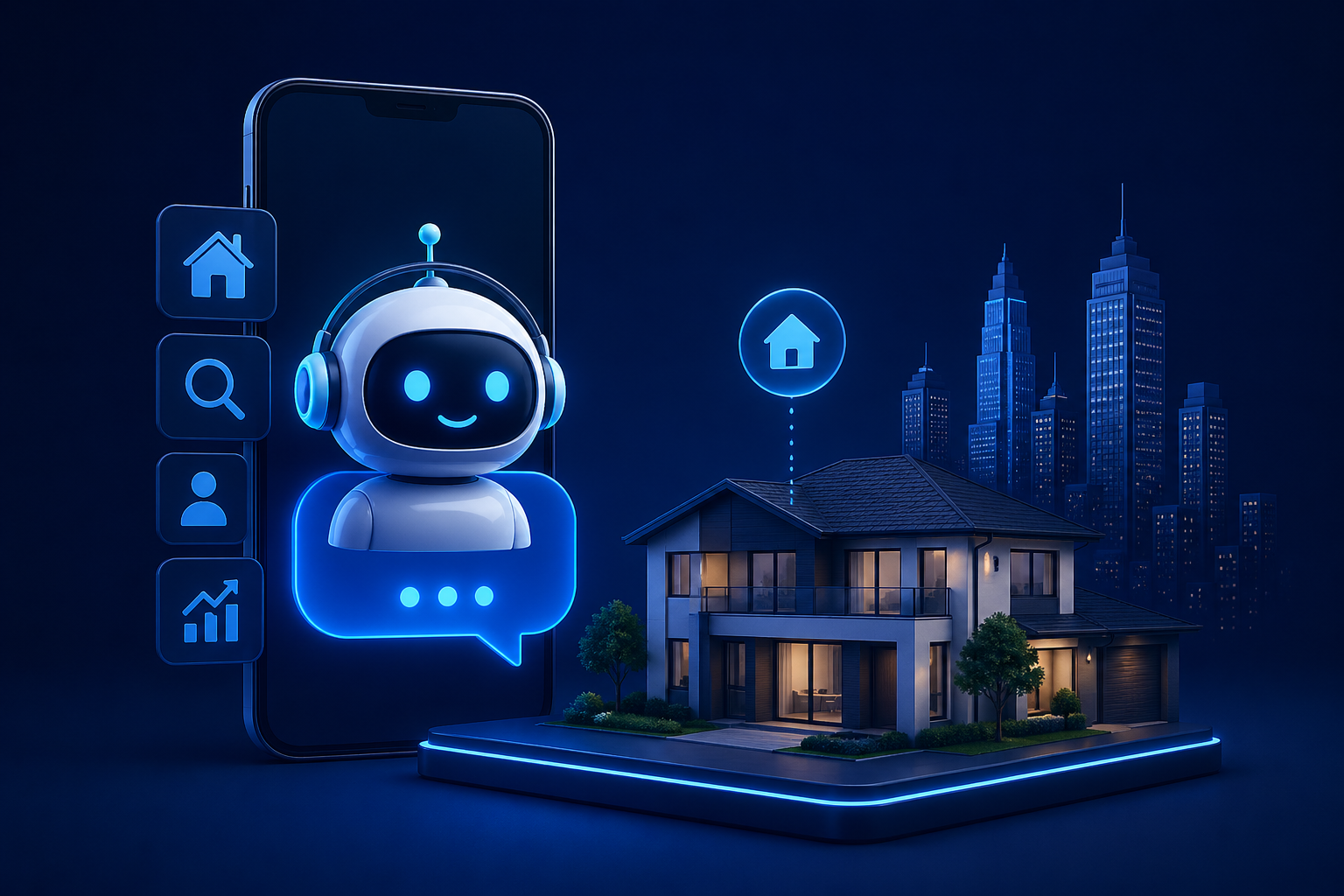

Real Estate Chatbot solutions are transforming property sales, lead generation, and customer engagement with AI-powered automation, improving conversion rates and operational efficiency.
Introduction: The Rise of AI in Real Estate Communication
The real estate industry has always been driven by relationships, timing, and communication. However, in today’s digital-first landscape, traditional communication methods are no longer sufficient to meet the expectations of modern buyers and sellers. This is where Real Estate Chatbot technology emerges as a powerful solution. By leveraging artificial intelligence, these chatbots streamline interactions, provide instant responses, and significantly improve customer experience across platforms.
For businesses like Chattbotz, implementing AI-driven chatbot solutions is not just about automation—it’s about delivering personalized, efficient, and scalable communication. Real estate professionals often struggle with handling multiple inquiries simultaneously, especially during peak times. Chatbots eliminate this bottleneck by ensuring every lead is acknowledged instantly, reducing response times and increasing engagement.
Moreover, the integration of chatbots aligns with evolving consumer behavior. Today’s buyers expect immediate answers, virtual tours, and seamless digital experiences. A well-designed chatbot not only meets these expectations but also builds trust by offering consistent and accurate information. As competition intensifies, adopting chatbot technology is no longer optional—it is a strategic necessity for growth and sustainability.
What Is a Real Estate Chatbot and How Does It Work?
A Real Estate Chatbot is an AI-powered virtual assistant designed specifically to interact with property buyers, sellers, and renters through messaging platforms. These chatbots use <u>natural language processing (NLP)</u> to understand user queries and deliver relevant responses in real-time. Unlike traditional chat systems, they are capable of learning from interactions, improving their accuracy over time.
At its core, a real estate chatbot functions through predefined workflows and machine learning algorithms. When a user initiates a conversation—whether on a website, social media platform, or mobile app—the chatbot analyzes the input and matches it with the most appropriate response. For instance, if a user asks about “2-bedroom apartments in downtown,” the chatbot can instantly provide listings, pricing details, and even schedule property visits.
Additionally, advanced chatbots integrate with CRM systems, property databases, and marketing tools. This allows them to capture lead data, segment audiences, and personalize recommendations. By automating repetitive tasks such as answering FAQs, booking appointments, and sending follow-ups, chatbots free up real estate agents to focus on high-value activities like closing deals and building relationships.
Why Real Estate Businesses Need Chatbots in 2026
The real estate landscape in 2026 is more competitive and digitally driven than ever before. Buyers are no longer dependent on physical visits or manual inquiries—they expect instant access to information. A Real Estate Chatbot bridges this gap by providing 24/7 assistance, ensuring that no lead goes unattended regardless of time zones or business hours.
One of the biggest advantages of chatbots is their ability to handle high volumes of inquiries simultaneously. During property launches or marketing campaigns, agents often receive hundreds of messages. Managing these manually can lead to missed opportunities and delayed responses. Chatbots eliminate this issue by responding instantly, improving customer satisfaction and increasing the likelihood of conversions.
Furthermore, chatbots contribute to cost efficiency. Hiring and training customer support staff can be expensive, especially for growing agencies. By automating routine interactions, businesses can reduce operational costs while maintaining high service standards. This makes chatbots a scalable solution, capable of supporting business growth without proportional increases in resources.
Key Features of a High-Performing Real Estate Chatbot
A successful Real Estate Chatbot is more than just a messaging tool—it is a comprehensive digital assistant equipped with features designed to enhance user experience and drive conversions. One of the most critical features is <u>intelligent property search</u>. This allows users to filter listings based on preferences such as location, budget, and property type, delivering highly relevant results.
Another essential feature is <u>lead qualification</u>. Chatbots can ask targeted questions to understand user intent, such as whether they are buyers, sellers, or renters. This information helps agents prioritize high-quality leads and tailor their approach accordingly. By capturing detailed insights during conversations, chatbots improve the efficiency of the sales process.
Additionally, integration capabilities are crucial. A high-performing chatbot should seamlessly connect with CRM systems, email marketing tools, and analytics platforms. This ensures that all interactions are tracked and utilized for data-driven decision-making. Features like appointment scheduling, automated follow-ups, and multilingual support further enhance the chatbot’s effectiveness, making it an indispensable tool for modern real estate businesses.
How Real Estate Chatbots Improve Lead Generation
Lead generation is the backbone of any successful real estate business, and chatbots play a pivotal role in optimizing this process. By engaging website visitors the moment they arrive, a Real Estate Chatbot captures attention and encourages interaction. This proactive approach significantly increases the chances of converting visitors into qualified leads.
One of the most effective strategies used by chatbots is conversational lead capture. Instead of presenting static forms, chatbots guide users through a dynamic conversation, making the process more engaging and less intrusive. For example, a chatbot might ask about preferred property type, budget range, and location before collecting contact details. This not only improves user experience but also results in higher completion rates.
Moreover, chatbots enable real-time engagement across multiple channels, including websites, social media, and messaging apps. This omnichannel presence ensures that businesses can reach potential clients wherever they are. By integrating with marketing campaigns and landing pages, chatbots act as powerful lead magnets, driving consistent growth in inquiries and conversions.
Enhancing Customer Experience with AI Chatbots
Customer experience is a critical differentiator in the real estate industry. A Real Estate Chatbot enhances this experience by providing instant, accurate, and personalized responses. Unlike human agents who may be unavailable or overwhelmed, chatbots ensure consistent communication at all times.
Personalization is one of the key strengths of AI chatbots. By analyzing user behavior and preferences, chatbots can recommend properties that align with individual needs. For instance, if a user frequently searches for luxury apartments, the chatbot can prioritize similar listings in future interactions. This level of customization creates a more engaging and satisfying experience for users.
Additionally, chatbots reduce friction in the customer journey. From answering initial queries to scheduling property visits, they streamline every step of the process. This not only saves time but also builds trust by demonstrating professionalism and efficiency. In a competitive market, delivering exceptional customer experience can be the deciding factor in winning clients.
Real Estate Chatbots for Property Search and Recommendations

Property search is often a time-consuming process for buyers and renters. A Real Estate Chatbot simplifies this by offering instant access to curated listings based on user preferences. By leveraging advanced algorithms, chatbots can analyze multiple data points to deliver highly relevant recommendations.
One of the key advantages of chatbot-driven property search is its conversational nature. Instead of navigating complex menus or filters, users can simply type their requirements in natural language. The chatbot interprets these inputs and provides matching options, making the process intuitive and user-friendly.
Furthermore, chatbots can enhance recommendations through continuous learning. As users interact with the system, the chatbot gathers insights into their preferences and refines its suggestions. This ensures that recommendations become more accurate over time, improving user satisfaction and increasing the likelihood of successful transactions.
Automating Property Inquiries and FAQs
Handling property inquiries is one of the most repetitive tasks in real estate. A Real Estate Chatbot automates this process by instantly responding to common questions about pricing, availability, location, and amenities. This not only saves time but also ensures consistency in communication.
Chatbots are particularly effective in managing frequently asked questions (FAQs). By maintaining a comprehensive knowledge base, they can provide accurate answers to a wide range of queries. This reduces the workload on human agents, allowing them to focus on more complex interactions.
In addition, automation improves response speed, which is crucial in real estate. Delayed responses can lead to lost opportunities, as potential buyers may move on to competitors. By providing immediate answers, chatbots keep users engaged and increase the chances of conversion.
Integrating Chatbots with CRM and Marketing Tools
Integration is a key factor in maximizing the effectiveness of a Real Estate Chatbot. By connecting with CRM systems, chatbots can store and organize lead data, providing valuable insights for sales and marketing teams. This enables businesses to track customer interactions and tailor their strategies accordingly.
Marketing automation is another area where chatbots excel. By integrating with email campaigns and social media platforms, chatbots can deliver personalized messages and follow-ups. This ensures that leads are nurtured effectively, increasing the likelihood of conversion.
For best practices in integration and performance optimization, refer to Google’s Web Performance Best Practices. Ensuring fast-loading chatbot interfaces and seamless functionality is essential for maintaining user engagement and meeting search engine standards.
The Role of AI and Machine Learning in Real Estate Chatbots
Artificial intelligence and machine learning are the driving forces behind modern Real Estate Chatbots. These technologies enable chatbots to understand complex queries, learn from interactions, and continuously improve their performance.
Machine learning algorithms analyze user behavior, identifying patterns and preferences. This allows chatbots to deliver more accurate responses and personalized recommendations over time. For example, if users frequently inquire about properties in a specific area, the chatbot can prioritize listings from that location.
Additionally, AI-powered chatbots can handle multilingual interactions, making them accessible to a diverse audience. This is particularly important in global real estate markets, where clients may come from different linguistic backgrounds. By breaking language barriers, chatbots expand the reach of real estate businesses and enhance their competitiveness.
Real Estate Chatbots for Appointment Scheduling and Virtual Tours
Scheduling property visits is often a time-consuming process that involves multiple back-and-forth communications. A Real Estate Chatbot eliminates this friction by automating appointment booking and integrating directly with calendars. Prospective buyers can instantly select available time slots, confirm visits, and receive reminders—all without human intervention. This streamlined approach reduces missed opportunities and ensures a smoother customer journey.
In addition to scheduling, chatbots play a crucial role in facilitating <u>virtual property tours</u>. With the growing demand for remote property exploration, chatbots can guide users through interactive tours, provide detailed descriptions, and answer questions in real time. This not only saves time for both buyers and agents but also expands the reach of property listings to international audiences.
Furthermore, automation enhances efficiency and accuracy. Chatbots can sync with CRM systems to log appointments, update client records, and trigger follow-up communications. This level of organization ensures that no lead is overlooked. By combining scheduling and virtual tour capabilities, real estate chatbots create a seamless experience that meets the expectations of modern buyers.
Personalization and User Behavior Tracking
Personalization is no longer a luxury—it is an expectation. A Real Estate Chatbot leverages data analytics and user behavior tracking to deliver highly customized experiences. By monitoring user interactions, search history, and preferences, chatbots can tailor responses and recommendations to individual needs.
For instance, if a user consistently searches for properties within a specific price range or location, the chatbot can prioritize similar listings in future interactions. This not only saves time but also increases the relevance of recommendations. Personalization fosters engagement and builds trust, as users feel understood and valued.
Behavior tracking also provides valuable insights for real estate professionals. By analyzing patterns and trends, businesses can refine their marketing strategies and optimize their offerings. For guidance on responsible data usage and user privacy, refer to Google Privacy Guidelines. Adhering to these standards ensures that personalization efforts remain ethical and compliant with global regulations.
Security and Data Privacy in Real Estate Chatbots
Security is a critical consideration when implementing a Real Estate Chatbot. These systems handle sensitive information, including personal details, financial data, and property preferences. Ensuring robust security measures is essential to protect user data and maintain trust.
One of the key aspects of chatbot security is <u>data encryption</u>. Encrypting data during transmission and storage prevents unauthorized access and reduces the risk of breaches. Additionally, implementing secure authentication protocols ensures that only authorized users can access sensitive information.
Compliance with industry standards and regulations is equally important. Real estate businesses must adhere to data protection laws and follow best practices for handling user information. For comprehensive guidelines, refer to Google Search Security Guidelines. By prioritizing security and privacy, businesses can build trust and establish themselves as reliable service providers in the digital landscape.
SEO Benefits of Implementing Real Estate Chatbots
While chatbots are primarily designed for user engagement, they also contribute significantly to search engine optimization (SEO). A Real Estate Chatbot enhances key performance metrics such as dwell time, bounce rate, and user interaction—all of which influence search rankings.
By providing instant responses and engaging content, chatbots encourage users to spend more time on a website. This increased engagement signals to search engines that the content is valuable and relevant. Additionally, chatbots can guide users to specific pages, improving internal linking and navigation.
Moreover, chatbots support content discovery by recommending relevant blog posts, property listings, and resources. For best practices on improving site visibility and performance, refer to Google Search Essentials. Integrating chatbots into an SEO strategy ensures a holistic approach to digital marketing, combining user experience with technical optimization.
Future Trends in Real Estate Chatbot Technology
The future of Real Estate Chatbots is shaped by continuous advancements in artificial intelligence and user experience design. One of the most notable trends is the integration of voice-based interactions. As voice search becomes more prevalent, chatbots will evolve to support natural voice conversations, making interactions even more intuitive.
Another emerging trend is the use of predictive analytics. By analyzing historical data and market trends, chatbots can provide insights into property values, investment opportunities, and market conditions. This transforms chatbots from simple assistants into powerful decision-making tools.
Additionally, the integration of augmented reality (AR) and virtual reality (VR) is set to revolutionize property exploration. Chatbots will act as guides, helping users navigate immersive virtual environments and explore properties in detail. These innovations will redefine the way buyers interact with real estate, creating more engaging and informative experiences.
How to Choose the Right Real Estate Chatbot for Your Business
Selecting the right Real Estate Chatbot is a critical decision that can significantly impact business outcomes. The first step is to identify your specific needs and objectives. Whether your focus is lead generation, customer support, or property management, the chatbot should align with your goals.
Scalability and customization are key factors to consider. A good chatbot solution should be flexible enough to adapt to changing business requirements and integrate seamlessly with existing systems. Features such as multilingual support, analytics, and automation capabilities are essential for maximizing value.
Finally, evaluate the provider’s expertise and support services. A reliable chatbot provider will offer ongoing assistance, updates, and optimization strategies. By choosing the right solution, businesses can unlock the full potential of chatbot technology and achieve sustainable growth.
Common Mistakes to Avoid When Using Real Estate Chatbots
One of the most common mistakes is over-automation. While chatbots are powerful tools, relying on them exclusively without human support can lead to poor user experiences. Complex queries and high-value interactions often require a human touch, and failing to provide this option can frustrate users.
Another mistake is neglecting personalization. Generic responses and irrelevant recommendations can disengage users and reduce trust. Businesses must invest in data-driven personalization to ensure that interactions are meaningful and relevant.
Additionally, poor integration is a frequent issue. A chatbot that operates in isolation without connecting to CRM systems or marketing tools limits its effectiveness. Ensuring seamless integration is essential for maximizing the benefits of chatbot technology.
Best Practices for Real Estate Chatbot Success

To achieve optimal results, businesses should focus on <u>user-centric design</u>. This involves creating intuitive conversation flows, using clear language, and ensuring that the chatbot addresses user needs effectively. Regular testing and optimization are crucial for maintaining performance.
Another best practice is combining automation with human support. Providing an option to connect with a live agent ensures that users receive the assistance they need, especially for complex inquiries. This hybrid approach enhances user satisfaction and builds trust.
Finally, continuous monitoring and improvement are essential. Analyzing chatbot performance metrics, user feedback, and interaction data helps identify areas for improvement. By staying proactive, businesses can ensure that their chatbot remains effective and relevant.
Frequently Asked Questions
1. What is a Real Estate Chatbot?
A Real Estate Chatbot is an AI-powered tool designed to interact with users, answer property-related queries, and automate tasks such as lead generation and appointment scheduling.
2. How do chatbots improve lead generation?
Chatbots engage users instantly, capture information through conversations, and qualify leads based on user responses, resulting in higher conversion rates.
3. Are real estate chatbots secure?
Yes, when implemented with proper encryption and compliance with data protection standards, chatbots can securely handle user information.
4. Can chatbots replace real estate agents?
No, chatbots are designed to assist agents by automating repetitive tasks, allowing them to focus on building relationships and closing deals.
5. How much does a real estate chatbot cost?
Costs vary depending on features, customization, and provider. However, they are generally cost-effective compared to hiring additional staff.
6. Do chatbots support multiple languages?
Yes, advanced chatbots can handle multiple languages, making them suitable for global audiences.
7. Can chatbots integrate with CRM systems?
Yes, most modern chatbots offer seamless integration with CRM and marketing tools for efficient data management.
8. How do I measure chatbot performance?
Performance can be measured using metrics such as response time, engagement rate, lead conversion rate, and user satisfaction.
Conclusion: Embracing the Future of Real Estate with Chatbots
The adoption of Real Estate Chatbot technology marks a significant تحول in how real estate businesses operate and engage with clients. By automating communication, enhancing personalization, and improving efficiency, chatbots provide a competitive edge in an increasingly digital marketplace.
For businesses like Chattbotz, leveraging chatbot solutions is not just about staying relevant—it’s about leading the industry with innovation and excellence. As technology continues to evolve, those who embrace AI-driven tools will be better positioned to meet customer expectations and achieve sustainable growth.
Want to Implement This Easily?
Prompt:
You are an expert consultant. Based on the blog post titled “(Real Estate Chatbot)”, provide a step-by-step, practical implementation guide. Include tools, best practices, common mistakes to avoid, and advanced tips. Assume the reader wants to implement everything discussed in this article effectively.
Call to Action:
Want our help implementing this? Just reach out to us via our website contact form: https://appledew.co.uk/cb/contact-us/