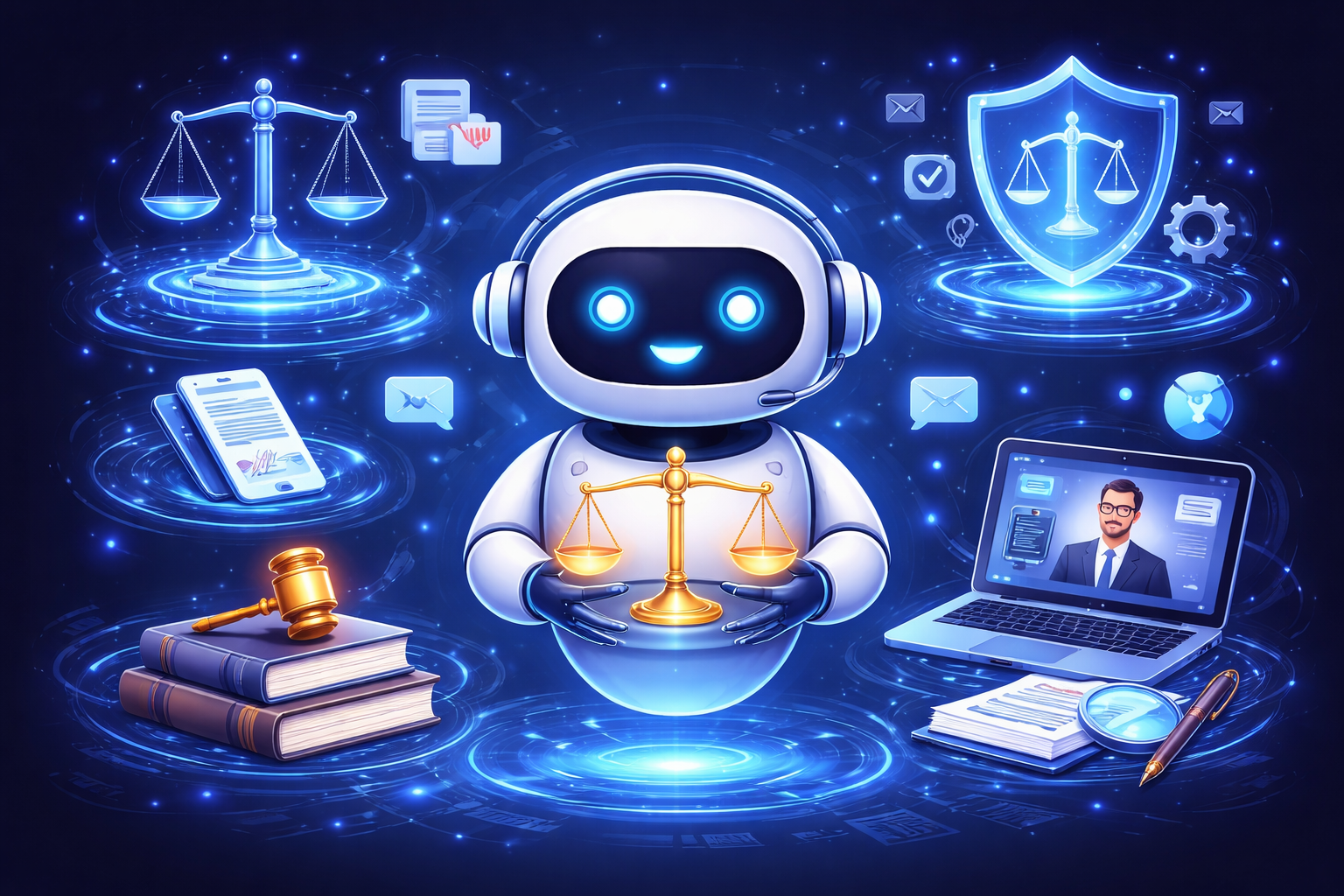

Legal Chatbot solutions are transforming the legal industry by automating consultations, improving client experience, and reducing operational costs. Discover how AI-powered legal chatbots work, their benefits, use cases, and implementation strategies.
Introduction: The Rise of Legal Chatbots in the Digital Age
The legal industry is undergoing a profound transformation driven by artificial intelligence, automation, and digital-first client expectations. Among the most impactful innovations is the Legal Chatbot, a powerful tool designed to streamline legal processes, enhance accessibility, and deliver instant responses to client inquiries. As law firms and legal departments face increasing pressure to improve efficiency while maintaining accuracy, chatbots are emerging as a critical solution.
At its core, a legal chatbot is an AI-powered virtual assistant trained to understand legal queries, provide relevant information, and guide users through complex processes. Unlike traditional customer service tools, these chatbots are designed with domain-specific intelligence, enabling them to handle legal terminology, compliance requirements, and procedural workflows. From answering frequently asked questions to assisting with document preparation, legal chatbots are redefining how legal services are delivered.
Businesses and law firms adopting chatbot solutions are witnessing measurable improvements in client engagement, response times, and operational efficiency. Platforms like Chattbotz are at the forefront of this transformation, offering tailored chatbot solutions that align with modern legal needs. As we explore this topic in depth, you’ll gain a comprehensive understanding of how legal chatbots work, why they matter, and how to implement them effectively.
What is a Legal Chatbot?
A Legal Chatbot is an advanced AI-driven system designed to simulate human conversation while addressing legal-related queries and tasks. These chatbots leverage natural language processing (NLP) and machine learning to interpret user inputs and deliver accurate, context-aware responses. Unlike generic chatbots, legal chatbots are trained on legal data, regulations, and case-specific scenarios, making them highly specialized.
Legal chatbots can operate across various platforms, including websites, mobile applications, and messaging services. They are capable of assisting users with tasks such as contract reviews, legal research, appointment scheduling, and preliminary case assessments. This functionality not only reduces the workload on legal professionals but also ensures clients receive timely assistance, even outside business hours.
The true power of legal chatbots lies in their ability to combine automation with intelligence. By continuously learning from interactions, they improve over time, becoming more accurate and efficient. This makes them an invaluable asset for law firms looking to scale their operations without compromising on service quality.
How Legal Chatbots Work: Technology Behind the Scenes
Understanding how legal chatbots function requires a closer look at the technologies powering them. At the heart of these systems is Natural Language Processing (NLP), which enables chatbots to interpret and respond to human language in a meaningful way. NLP allows the chatbot to understand context, intent, and even nuances in legal queries.
Machine learning algorithms play a crucial role in improving chatbot performance. These algorithms analyze past interactions to refine responses and enhance accuracy. Over time, the chatbot becomes more adept at handling complex legal inquiries, reducing the need for human intervention. This continuous improvement is essential for maintaining relevance in a rapidly evolving legal landscape.
Additionally, legal chatbots are often integrated with databases, legal knowledge bases, and document management systems. This integration allows them to retrieve and process information in real time, ensuring users receive up-to-date and accurate guidance. The combination of NLP, machine learning, and system integration makes legal chatbots a powerful tool for modern legal operations.
Key Benefits of Legal Chatbots for Law Firms
The adoption of legal chatbots offers numerous advantages for law firms aiming to improve efficiency and client satisfaction. One of the most significant benefits is 24/7 availability, which ensures clients can access legal assistance at any time. This is particularly valuable in urgent situations where immediate guidance is required.
Another major advantage is cost reduction. By automating routine tasks such as answering FAQs and scheduling appointments, legal chatbots free up valuable time for lawyers to focus on high-value activities. This not only improves productivity but also reduces operational expenses, making legal services more accessible to a broader audience.
Legal chatbots also enhance client experience by providing instant responses and personalized interactions. Clients no longer have to wait for callbacks or emails, leading to higher satisfaction and retention rates. These benefits collectively make legal chatbots a strategic investment for forward-thinking law firms.
Use Cases of Legal Chatbots Across the Legal Industry
Legal chatbots are versatile tools that can be applied across various areas of the legal industry. One common use case is client intake automation, where chatbots gather essential information from potential clients before scheduling consultations. This streamlines the onboarding process and ensures lawyers have all the necessary details upfront.
Another important application is in legal research assistance. Chatbots can quickly retrieve relevant laws, regulations, and case precedents, saving significant time for legal professionals. This capability is particularly useful in complex cases where extensive research is required.
Legal chatbots are also widely used for document generation and review. They can guide users through the process of creating legal documents such as contracts, agreements, and wills. By automating these tasks, chatbots reduce errors and ensure compliance with legal standards, making them an indispensable tool in modern legal practice.
Legal Chatbots vs Traditional Legal Support Systems
Traditional legal support systems often rely heavily on manual processes, which can be time-consuming and prone to errors. In contrast, legal chatbots offer a more efficient and reliable alternative by automating repetitive tasks and providing instant responses. This shift from manual to automated systems is transforming the way legal services are delivered.
One of the key differences lies in scalability. Traditional systems require additional resources to handle increased workloads, whereas chatbots can manage multiple interactions simultaneously without compromising performance. This makes them ideal for law firms experiencing rapid growth or high client volumes.
Furthermore, legal chatbots provide consistent and standardized responses, reducing the risk of miscommunication. While human expertise remains essential for complex cases, chatbots serve as a valuable support system, enhancing overall efficiency and accuracy in legal operations.
The Role of AI and Machine Learning in Legal Chatbots

Artificial Intelligence (AI) and machine learning are the driving forces behind the effectiveness of legal chatbots. AI enables chatbots to process and analyze vast amounts of legal data, allowing them to provide accurate and relevant responses. This capability is crucial in a field where precision and reliability are paramount.
Machine learning enhances the chatbot’s ability to adapt and improve over time. By analyzing user interactions, the chatbot can identify patterns and refine its responses accordingly. This continuous learning process ensures the chatbot remains up-to-date with changing legal requirements and client expectations.
The integration of AI and machine learning also enables advanced features such as predictive analytics and sentiment analysis. These features allow chatbots to anticipate user needs and provide proactive assistance, further enhancing their value in the legal industry.
Legal Chatbots and Client Experience Optimization
Client experience is a critical factor in the success of any legal practice, and legal chatbots play a significant role in enhancing it. By providing instant responses and personalized interactions, chatbots ensure clients feel valued and supported throughout their journey.
One of the key ways chatbots improve client experience is through real-time communication. Clients can receive immediate answers to their questions, eliminating the frustration of waiting for responses. This level of responsiveness is particularly important in today’s fast-paced digital environment.
Additionally, legal chatbots can be customized to align with a firm’s branding and communication style. This ensures a consistent and professional experience for clients, reinforcing trust and credibility. By prioritizing client experience, legal chatbots help law firms build stronger relationships and achieve long-term success.
Compliance, Data Privacy, and Legal Considerations
When implementing a Legal Chatbot, compliance and data privacy are not optional—they are critical. Legal professionals handle highly sensitive information, including personal data, contracts, and confidential case details. Any chatbot deployed in this environment must strictly adhere to regulatory frameworks such as GDPR, attorney-client privilege standards, and regional data protection laws.
One of the primary concerns is ensuring that user data is collected, stored, and processed securely. Encryption, secure APIs, and controlled access mechanisms are essential components of a compliant chatbot system. According to creating helpful content, trustworthiness is a major ranking factor, and this extends to how websites handle user data and interactions.
Additionally, legal chatbots must clearly define their role. They should not be presented as a replacement for licensed legal advice unless properly regulated. Instead, they should act as support tools, guiding users and assisting with preliminary information. Transparent disclaimers and clear communication help maintain ethical standards and build user trust.
Integration with Existing Legal Systems and CRM Tools
A successful legal chatbot does not operate in isolation—it integrates seamlessly with existing systems such as CRM platforms, case management software, and document repositories. This integration ensures that data flows smoothly between systems, improving efficiency and reducing duplication of effort.
For example, when a chatbot captures client information, it can automatically populate CRM records, schedule consultations, and even trigger follow-up workflows. This automation eliminates manual data entry and reduces the risk of errors. Integration also allows chatbots to access historical data, enabling more personalized and context-aware interactions.
From a technical perspective, APIs and middleware solutions play a crucial role in enabling these integrations. Ensuring compatibility and scalability is essential for long-term success. By connecting chatbots with existing infrastructure, law firms can create a unified digital ecosystem that enhances productivity and client satisfaction.
Customization and Personalization in Legal Chatbots
Customization is a key factor that determines the effectiveness of a legal chatbot. Every law firm has unique requirements, practice areas, and client demographics. A one-size-fits-all solution is rarely sufficient, making customization essential for delivering meaningful interactions.
Personalization takes this a step further by tailoring responses based on user behavior, preferences, and history. For instance, a returning client may receive different recommendations compared to a new visitor. This level of personalization enhances engagement and creates a more intuitive user experience.
Advanced chatbots also use dynamic workflows to adapt conversations in real time. By analyzing user inputs, they can adjust their responses and guide users through relevant processes. This adaptability not only improves accuracy but also ensures that users receive the most relevant information for their specific needs.
Challenges and Limitations of Legal Chatbots
While legal chatbots offer numerous benefits, they are not without challenges. One of the primary limitations is their inability to fully replace human expertise. Complex legal cases often require nuanced understanding and judgment that AI systems cannot yet replicate.
Another challenge is ensuring accuracy. Legal information must be precise, and even minor errors can have significant consequences. Continuous monitoring, updates, and validation are necessary to maintain the reliability of chatbot responses.
There is also the issue of user trust. Some clients may be hesitant to rely on automated systems for legal assistance. Addressing these concerns requires transparency, clear communication, and a seamless transition between chatbot interactions and human support when needed.
Future Trends in Legal Chatbot Technology
The future of legal chatbots is promising, with advancements in AI and automation driving continuous innovation. One emerging trend is the use of generative AI, which enables chatbots to produce more natural and contextually rich responses. This significantly enhances the quality of interactions and user satisfaction.
Another trend is the integration of voice-based interfaces. As voice assistants become more popular, legal chatbots are evolving to support voice interactions, making them more accessible and user-friendly. This is particularly beneficial for users who prefer conversational interfaces over text-based systems.
Predictive analytics is also shaping the future of legal chatbots. By analyzing data patterns, chatbots can anticipate user needs and provide proactive recommendations. These advancements are set to redefine the role of chatbots in the legal industry, making them even more valuable.
How to Implement a Legal Chatbot Successfully
Implementing a legal chatbot requires a strategic approach that aligns with business goals and client needs. The first step is defining clear objectives, such as improving client engagement, reducing response times, or automating specific processes. These objectives will guide the development and deployment of the chatbot.
Next, selecting the right technology and platform is crucial. Factors such as scalability, security, and ease of integration should be carefully evaluated. It is also important to train the chatbot using high-quality legal data to ensure accuracy and relevance.
Testing and optimization are essential in the implementation process. Continuous monitoring and feedback help identify areas for improvement, ensuring the chatbot delivers optimal performance. A well-implemented chatbot can significantly enhance efficiency and client satisfaction.
Measuring the ROI of Legal Chatbots
Measuring the return on investment (ROI) of a legal chatbot is essential for evaluating its effectiveness. Key performance indicators (KPIs) such as response time, client satisfaction, and conversion rates provide valuable insights into the chatbot’s impact.
Cost savings are another important metric. By automating routine tasks, chatbots reduce the need for additional staff, leading to significant cost reductions. These savings can be reinvested in other areas of the business, driving growth and innovation.
Analytics tools play a crucial role in tracking performance and identifying trends. By analyzing data, law firms can make informed decisions and continuously improve their chatbot strategies. A data-driven approach ensures that the chatbot delivers maximum value.
Why Legal Chatbots Are Essential for Modern Law Firms

In today’s competitive landscape, legal chatbots are no longer a luxury—they are a necessity. Clients expect fast, efficient, and accessible services, and chatbots provide a practical solution to meet these expectations.
By automating routine tasks and enhancing client interactions, legal chatbots enable law firms to focus on high-value activities. This not only improves productivity but also enhances the overall quality of legal services.
As technology continues to evolve, the adoption of legal chatbots will become increasingly widespread. Law firms that embrace this innovation will be better positioned to succeed in the digital age, gaining a competitive edge and delivering superior client experiences.
FAQs
1. What is a legal chatbot used for?
A legal chatbot is used to automate client interactions, provide legal information, assist with document preparation, and streamline workflows.
2. Are legal chatbots secure?
Yes, when properly implemented with encryption and compliance measures, legal chatbots can securely handle sensitive data.
3. Can a legal chatbot replace a lawyer?
No, legal chatbots are support tools and cannot replace the expertise and judgment of a qualified lawyer.
4. How much does it cost to implement a legal chatbot?
Costs vary depending on complexity, features, and integration requirements, but they often result in long-term savings.
5. Do legal chatbots improve client satisfaction?
Yes, they provide instant responses and personalized interactions, significantly enhancing client experience.
6. What industries can benefit from legal chatbots?
Law firms, corporate legal departments, real estate, and compliance-driven industries can all benefit.
7. How accurate are legal chatbots?
Accuracy depends on training data and continuous optimization, but modern systems can achieve high reliability.
8. Can legal chatbots integrate with other tools?
Yes, they can integrate with CRM systems, case management software, and other platforms.
Common Mistakes to Avoid When Using Legal Chatbots
One common mistake is relying too heavily on automation without human oversight. While chatbots are powerful, they should complement—not replace—human expertise. Failing to provide a seamless handoff to a human agent can lead to poor user experiences.
Another mistake is neglecting data privacy and compliance. Without proper safeguards, sensitive information may be at risk. Ensuring compliance with regulations and implementing strong security measures is essential.
Poor training and lack of updates can also limit chatbot effectiveness. Regularly updating the chatbot with new data and refining its responses ensures it remains accurate and relevant.
Best Practices Summary
To maximize the effectiveness of a legal chatbot, it is important to follow best practices. Start by defining clear objectives and aligning the chatbot with business goals. This ensures a focused and strategic implementation.
Invest in high-quality data and continuous training. The accuracy and reliability of a chatbot depend on the quality of its training data. Regular updates and monitoring are essential for maintaining performance.
Finally, prioritize user experience. A well-designed chatbot should be intuitive, responsive, and capable of delivering value to users. By following these best practices, law firms can unlock the full potential of legal chatbots.
Conclusion: Transforming Legal Services with AI
Legal chatbots are revolutionizing the way legal services are delivered, offering unparalleled efficiency, accessibility, and scalability. By leveraging AI and automation, law firms can enhance client experiences, reduce costs, and stay competitive in an increasingly digital world.
As discussed throughout this guide, the successful implementation of a legal chatbot requires careful planning, continuous optimization, and a commitment to quality. Platforms like Chattbotz provide the tools and expertise needed to navigate this transformation effectively.
By embracing legal chatbot technology, law firms can not only meet current demands but also prepare for the future of legal services.
Want to Implement This Easily?
Prompt:
You are an expert consultant. Based on the blog post titled “(Legal Chatbot)”, provide a step-by-step, practical implementation guide. Include tools, best practices, common mistakes to avoid, and advanced tips. Assume the reader wants to implement everything discussed in this article effectively.
Call to Action:
Want our help implementing this? Just reach out to us via our website contact form: https://appledew.co.uk/cb/contact-us/