

Introduction
In today’s hyper-connected digital ecosystem, IT environments are growing more complex, distributed, and mission‑critical than ever before. Organizations demand faster issue resolution, proactive system management, and always‑available technical assistance. This is where IT & Computing chatbots emerge as a transformative force. At Chattbotz, we believe intelligent conversational systems are no longer optional tools; they are foundational components of scalable and resilient IT strategies. By combining artificial intelligence, natural language processing, and automation, IT chatbots enable teams to streamline workflows, reduce operational overhead, and deliver consistent technical support across the enterprise.
Understanding IT & Computing Chatbots
IT & Computing chatbots are specialized conversational agents designed to support technical environments, infrastructure management, software systems, and end‑user computing needs. Unlike general-purpose chatbots, these systems are deeply integrated with IT tools such as ticketing platforms, monitoring systems, cloud dashboards, and knowledge bases. Their primary role is to interpret technical queries, execute predefined or intelligent actions, and deliver precise responses in real time.
From a functional perspective, these chatbots act as an intelligent interface between humans and machines. They translate complex system data into understandable language while also converting user intent into executable commands. This dual role significantly reduces friction between IT teams and the systems they manage. As organizations scale, IT & Computing chatbots ensure that operational efficiency scales with them rather than becoming a bottleneck.
Evolution of Chatbots in the IT Industry
The journey of chatbots in IT began with simple rule‑based scripts that answered predefined questions. Over time, advances in machine learning, artificial intelligence, and cloud computing have elevated these systems into intelligent assistants capable of learning, adapting, and reasoning. Modern IT chatbots leverage contextual understanding, historical data, and predictive analytics to deliver more accurate and proactive support.
This evolution mirrors the broader transformation of IT itself. As infrastructure shifted from on‑premise servers to hybrid and cloud‑native architectures, chatbots evolved to interact with APIs, microservices, and DevOps pipelines. Today, they are integral to continuous integration, continuous deployment, and automated incident response strategies, making them indispensable in agile IT environments.
Core Technologies Behind IT & Computing Chatbots
At the heart of every advanced IT chatbot lies a powerful technology stack. Natural Language Processing (NLP) enables the chatbot to understand technical language, abbreviations, and context. Machine Learning (ML) allows it to improve responses over time based on user interactions. Artificial Intelligence (AI) drives decision‑making, intent recognition, and predictive capabilities.
In addition, integration technologies such as REST APIs, webhooks, and event‑driven architectures allow chatbots to communicate seamlessly with IT systems. Security layers, including authentication and role‑based access control, ensure that sensitive operations are executed safely. Together, these technologies create a robust foundation for reliable and scalable IT & Computing chatbot solutions.
Role of IT Chatbots in Helpdesk Automation
One of the most impactful applications of IT chatbots is helpdesk automation. Traditional IT support models rely heavily on human agents, leading to delays, inconsistent responses, and high operational costs. Chatbots address these challenges by providing instant responses to common issues such as password resets, software installation requests, and connectivity problems.
By handling repetitive queries autonomously, IT chatbots free human agents to focus on complex, high‑value tasks. This not only improves resolution times but also enhances employee satisfaction. Over time, chatbot‑driven helpdesks become smarter as they learn from ticket histories and user feedback, creating a continuously improving support ecosystem.
IT & Computing Chatbots in System Monitoring
IT & Computing chatbots play an increasingly critical role in modern system monitoring by transforming how infrastructure health is observed, analyzed, and managed. Traditional monitoring tools often rely on dashboards filled with metrics that require constant human attention. Chatbots simplify this complexity by acting as an intelligent conversational layer on top of monitoring systems. Instead of manually checking graphs or logs, IT teams can ask direct questions and receive immediate, context-aware insights about system performance, uptime, and anomalies.
One of the biggest advantages of chatbot-driven monitoring is real-time alert interpretation. When an alert is triggered, the chatbot does not merely notify the team; it explains what happened, why it matters, and what actions can be taken. By correlating data from multiple sources such as servers, applications, and network devices, chatbots help teams understand root causes faster. This significantly reduces mean time to detection and resolution.
Additionally, IT chatbots can automate first-level responses to incidents. For example, they can restart services, scale cloud resources, or apply predefined fixes when specific thresholds are crossed. This proactive behavior prevents small issues from escalating into system-wide failures. Over time, as chatbots learn from historical incidents, they become smarter at predicting failures before they occur, making system monitoring more preventive than reactive.
Enhancing DevOps with Intelligent Chatbots
In DevOps environments, speed and collaboration are paramount. IT & Computing chatbots serve as collaborative agents within development pipelines. They assist with build notifications, deployment updates, and error diagnostics directly within communication platforms. Developers can interact with systems conversationally, triggering deployments or rollbacks with simple commands.
This integration reduces context switching and accelerates feedback loops. By embedding intelligence into workflows, chatbots help DevOps teams maintain momentum while ensuring stability and compliance. Over time, these systems contribute to a culture of automation and continuous improvement.
Security and Compliance in IT Chatbots
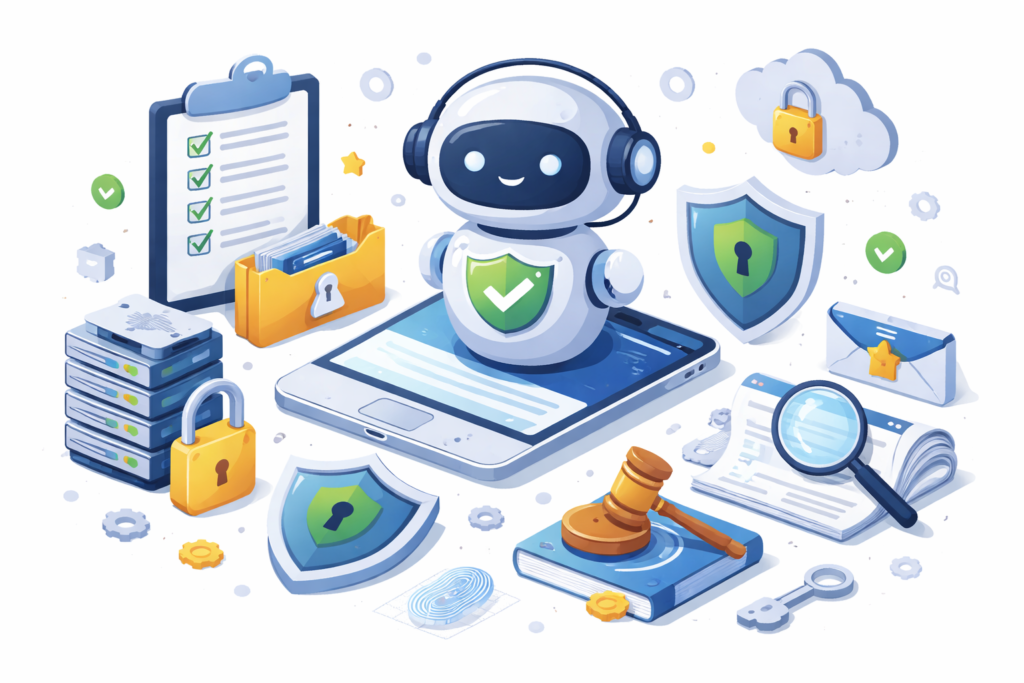
Security and compliance are foundational pillars of any IT & Computing chatbot implementation. Because these chatbots interact with sensitive systems, data, and user credentials, they must be designed with strong security controls from the ground up. A secure IT chatbot uses encrypted communication channels, robust authentication mechanisms, and role-based access control to ensure that only authorized users can perform critical actions.
Compliance is equally important, especially for organizations operating in regulated industries. IT chatbots can help enforce compliance by standardizing workflows and ensuring that policies are followed consistently. Every interaction can be logged, audited, and traced, which is essential for meeting regulatory requirements and internal governance standards. This level of transparency reduces risk and improves accountability across IT operations.
Another key advantage is the chatbot’s ability to reduce human error. Manual configuration changes and ad-hoc fixes are common sources of security vulnerabilities. Chatbots execute predefined, validated actions, minimizing mistakes caused by fatigue or miscommunication. They can also guide users through secure procedures step by step, ensuring best practices are followed.
When integrated with security monitoring tools, IT chatbots can assist in incident response by flagging suspicious activity and recommending remediation steps. This makes them valuable allies in maintaining a secure and compliant IT environment.
Knowledge Management and IT Chatbots
Effective knowledge management is essential for IT efficiency. Chatbots act as intelligent gateways to organizational knowledge bases. Instead of searching through documentation, users can ask questions in natural language and receive precise answers instantly. This democratizes access to technical knowledge across the organization.
By analyzing usage patterns, chatbots identify knowledge gaps and outdated content. This feedback loop ensures that documentation remains relevant and accurate. Over time, organizations build a living knowledge ecosystem powered by conversational intelligence.
Scalability Benefits of IT & Computing Chatbots
Scalability is one of the strongest advantages of deploying IT & Computing chatbots within enterprise environments. As organizations grow, the volume of IT requests, system events, and user interactions increases rapidly. Traditional support models struggle to keep pace, often requiring additional staff and resources. Chatbots solve this challenge by scaling instantly without compromising response time or service quality.
An IT chatbot can handle thousands of simultaneous conversations, providing consistent and accurate responses regardless of demand. This is particularly valuable for global organizations operating across multiple time zones. Chatbots ensure round-the-clock availability, eliminating downtime in IT support and system interaction.
From an infrastructure perspective, scalable chatbots are typically built on cloud-native architectures. This allows organizations to expand capabilities, integrate new systems, and support additional users without redesigning the solution. As workloads fluctuate, chatbot resources can scale up or down automatically, optimizing costs and performance.
Scalability also extends to knowledge and functionality. As new applications, policies, or workflows are introduced, chatbots can be updated centrally, ensuring all users benefit immediately. This adaptability makes IT chatbots future-proof tools that grow alongside the organization.
Improving User Experience with Conversational IT
User experience is often overlooked in IT systems, yet it significantly impacts productivity. Chatbots introduce a human‑centric interface that simplifies complex technical interactions. Users no longer need deep technical expertise to resolve issues; they simply converse with the system.
This approach reduces frustration, shortens learning curves, and fosters a more positive relationship between users and IT teams. Over time, conversational IT becomes a natural extension of daily workflows.
Integration with Enterprise IT Ecosystems
The true power of IT & Computing chatbots is unlocked through deep integration with enterprise IT ecosystems. A chatbot that operates in isolation offers limited value, whereas an integrated chatbot becomes a central access point for systems, data, and workflows. By connecting with IT service management platforms, monitoring tools, cloud environments, and collaboration software, chatbots enable seamless end-to-end automation.
Integration allows chatbots to retrieve real-time data, trigger actions, and synchronize information across multiple systems. For example, a user can request system status, create a support ticket, or deploy an application without leaving the chat interface. This unified experience reduces context switching and improves productivity.
Enterprise integration also enhances data consistency and visibility. Chatbots act as orchestration layers, ensuring that updates in one system are reflected across others. This reduces silos and improves decision-making. Additionally, integrated chatbots support extensibility, allowing organizations to add new tools and services as their IT landscape evolves.
When designed correctly, integration transforms chatbots into intelligent command centers that streamline complex IT operations.
AI Ethics and Responsibility in IT Chatbots
As AI‑driven systems gain influence, ethical considerations become increasingly important. IT chatbots must be designed with transparency, fairness, and accountability in mind. Clear guidelines on data usage, decision‑making, and user consent are essential.
Responsible AI practices ensure trust and long‑term adoption. By aligning chatbot behavior with organizational values, businesses create sustainable and ethical IT solutions.
Measuring Performance and ROI of IT Chatbots
Measuring the performance and return on investment of IT & Computing chatbots is essential for long-term success. Without clear metrics, organizations may struggle to understand the true value these systems provide. Common performance indicators include reduced ticket volumes, faster resolution times, improved user satisfaction, and lower operational costs.
IT chatbots often deliver immediate efficiency gains by automating repetitive tasks. These savings can be quantified by comparing support workloads before and after implementation. Over time, additional value emerges through improved system uptime, proactive incident management, and better knowledge sharing.
User engagement metrics also provide insight into chatbot effectiveness. High adoption rates and positive feedback indicate that users trust and rely on the system. Continuous monitoring of chatbot interactions helps identify areas for improvement and optimization.
By aligning performance metrics with business goals, organizations can clearly demonstrate ROI and justify further investment in intelligent IT automation.
Future Trends in IT & Computing Chatbots

The future of IT & Computing chatbots is defined by greater intelligence, autonomy, and strategic impact. As AI models continue to evolve, chatbots will move beyond reactive support into predictive and self-healing capabilities. Future chatbots will anticipate issues, recommend preventive actions, and resolve incidents with minimal human intervention.
Another key trend is deeper personalization. Chatbots will adapt responses based on user roles, preferences, and historical behavior. This will create more relevant and efficient interactions. Additionally, advancements in natural language understanding will enable chatbots to handle increasingly complex technical conversations.
Integration with advanced analytics and AI-driven insights will allow chatbots to support strategic IT planning. Rather than focusing solely on operations, they will provide recommendations for optimization, capacity planning, and risk management.
As these trends mature, IT chatbots will become indispensable partners in managing complex digital ecosystems.
Common Mistakes in Implementing IT Chatbots
Implementing an IT & Computing chatbot can deliver significant benefits, but many organizations fail to achieve expected results due to common mistakes. Understanding these pitfalls helps ensure a successful and sustainable deployment.
- Lack of clear objectives: One of the most frequent mistakes is launching a chatbot without clearly defined goals. Without specific use cases such as helpdesk automation, system monitoring, or DevOps support, the chatbot often becomes underutilized and confusing for users.
- Poor integration with existing systems: An IT chatbot that is not properly integrated with ticketing systems, monitoring tools, or cloud platforms cannot deliver real value. Limited integration results in shallow responses and manual follow-ups, defeating the purpose of automation.
- Ignoring security and access controls: Allowing broad access or weak authentication can expose critical systems to risk. IT chatbots must enforce role-based permissions and secure communication to prevent unauthorized actions.
- Over-automation without human oversight: While automation is powerful, relying entirely on a chatbot for complex decisions can lead to errors. Successful implementations balance automation with escalation paths to human experts.
- Insufficient training data and knowledge updates: Chatbots depend on accurate, up-to-date information. Poor documentation or outdated knowledge bases result in incorrect responses and loss of user trust.
- Neglecting user adoption and feedback: Even a well-built chatbot can fail if users are not trained or encouraged to use it. Continuous feedback and improvement are essential for long-term success.
Avoiding these mistakes ensures that IT chatbots remain reliable, secure, and valuable assets within the organization.
Building a Future‑Ready IT Chatbot Strategy
A future‑ready strategy aligns chatbot capabilities with long‑term business goals. This involves selecting scalable technologies, investing in data quality, and fostering a culture of automation. Training and change management are equally important to drive adoption.
By viewing chatbots as evolving partners rather than static tools, organizations unlock their full potential.
FAQs
Q1: What is an IT & Computing chatbot?
An intelligent conversational system designed to automate and support IT operations.
Q2: Are IT chatbots secure?
Yes, when built with proper encryption, authentication, and access controls.
Q3: Can chatbots replace IT staff?
No, they augment human teams by handling repetitive tasks.
Q4: Do IT chatbots support cloud systems?
Yes, they integrate seamlessly with cloud and hybrid environments.
Q5: How long does implementation take?
Timelines vary based on complexity and integration needs.
Conclusion
IT & Computing chatbots have evolved from simple support tools into strategic enablers of modern IT operations. By combining automation, artificial intelligence, and conversational interfaces, they simplify complex systems and empower both users and IT teams. From system monitoring and security to scalability and enterprise integration, chatbots deliver measurable efficiency and long-term value.
As organizations continue to adopt cloud technologies, DevOps practices, and distributed infrastructures, the demand for intelligent automation will only increase. IT chatbots address this demand by providing always-available, consistent, and scalable support. They reduce operational strain while improving service quality and responsiveness.
At Chattbotz, we view IT & Computing chatbots as foundational components of future-ready IT strategies. When implemented thoughtfully and aligned with business objectives, these intelligent assistants transform IT from a reactive function into a proactive, strategic force driving digital success.